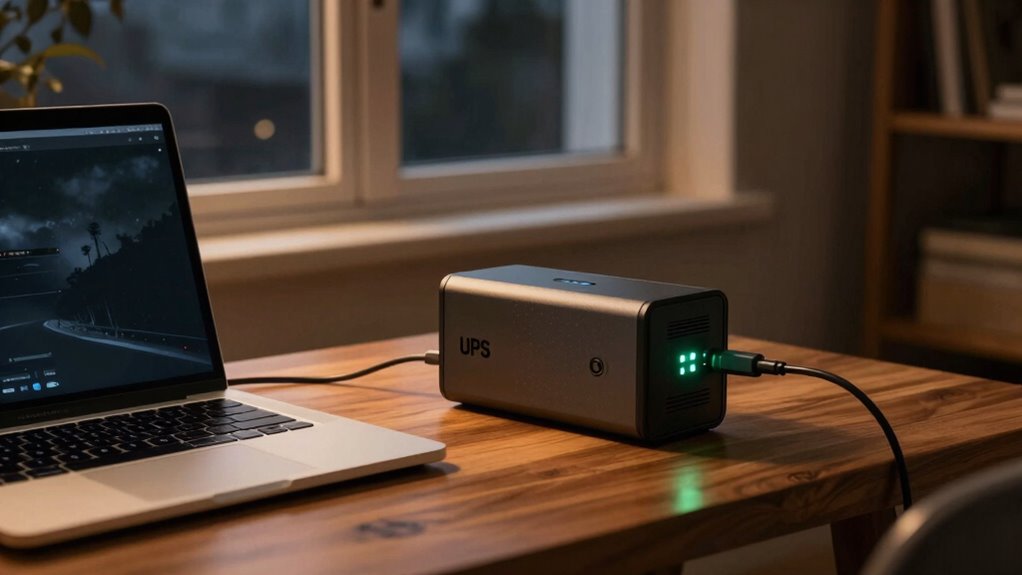

To keep your internet up during power outages, you should set up a backup system with a suitable UPS or portable battery that can power your modem and router. Consider combining solar panels, portable generators, or rechargeable battery packs for added resilience. Regularly test and maintain your equipment to guarantee quick, smooth switching when outages happen. Want to discover the best configurations and cost-effective options? Keep exploring for all the tips you need.
Key Takeaways
- Use uninterruptible power supplies (UPS) to keep modems and routers active temporarily during outages.
- Combine solar panels with energy storage and portable generators for reliable, eco-friendly backup power.
- Regularly test and maintain batteries, inverters, and backup equipment to ensure quick, seamless power transitions.
- Select sufficient capacity devices that match your internet equipment’s wattage and backup duration needs.
- Organize and label backup gear for quick deployment and conduct routine system checks to verify readiness.
Why You Need Backup Power to Keep Your Internet Running
Power outages can strike unexpectedly, leaving you without internet when you need it most. Without backup power, your connection drops, disrupting important work, communication, or entertainment. Installing solar panels can be a smart, eco-friendly way to generate renewable energy and keep your devices powered. However, if you want immediate, reliable backup, consider generator rentals. They provide instant power during outages, ensuring your internet remains active. Combining solar panels with portable generators creates a flexible, resilient system that keeps your internet continuous. This way, you won’t be caught off guard by outages, and your online activities stay uninterrupted. Having backup power isn’t just convenient; it’s essential for maintaining productivity and staying connected when the grid fails. safe backup power setup is crucial to prevent hazards like electrical fires or damage to your devices. Properly integrating backup power systems helps ensure your setup is both safe and effective in maintaining your internet connection during outages. Additionally, understanding power system sizing can help you choose the right capacity for your needs, avoiding over- or under-provisioning. Being aware of load‑planning tools can help you match your backup power system precisely to your internet and device requirements, ensuring reliability without unnecessary expense.
What Types of Backup Power Can Ensure Continuous Internet Access

When your main power source goes out, having the right backup options can make all the difference in keeping your internet running smoothly. You have several choices: solar panels can provide renewable energy, especially if paired with efficient storage systems. Generator options, such as portable gas or propane generators, offer quick, reliable power during outages. Uninterruptible Power Supplies (UPS) can keep your modem and router active for hours temporarily. Additionally, some advanced backup systems combine solar with generators for continuous, eco-friendly power. These options guarantee your internet stays connected without interruption, no matter the situation. Choosing the right backup depends on your needs and setup, but having a mix of solar, generator options, and UPS units guarantees continuous access, even in prolonged outages. Power management solutions can optimize energy use and extend backup duration during extended outages. Incorporating backup power systems designed specifically for internet devices can improve reliability and prevent data loss. A well-designed backup plan also considers power capacity and the specific energy requirements of your internet equipment to ensure seamless operation during outages. Additionally, understanding the energy consumption of your devices can help tailor the most effective backup solution for your needs. Properly assessing your energy needs can further enhance your outage preparedness and ensure uninterrupted connectivity.
How to Choose the Best Battery Backup or UPS for Your Home or Office
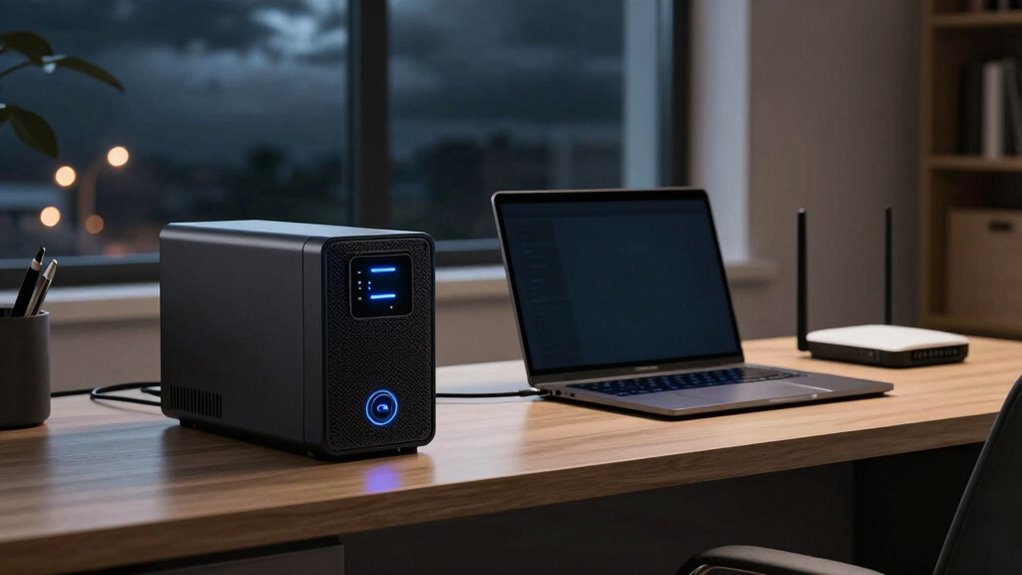
When selecting a battery backup or UPS, you need to take into account the power capacity to guarantee it can handle your essential devices during an outage. Understanding the different battery types available helps you choose one that offers the right balance of longevity and reliability. Knowing the science behind various battery technologies can help you select a backup that meets your specific needs. Additionally, considering the refresh rates and input lag of your devices ensures seamless performance during power interruptions. A battery management system can further optimize the lifespan and performance of your backup system. It’s also beneficial to consider compatibility with your devices to ensure optimal performance and safety. By focusing on these points, you can find a solution that keeps your internet running smoothly when the power goes out. Additionally, consider the importance of regular maintenance to ensure your backup system remains effective over time.
Power Capacity Considerations
Choosing the right battery backup or UPS begins with evaluating your power needs. You need to take into account your devices’ energy requirements and how long you want them to run during an outage. Power capacity determines how much energy the UPS can store and deliver. To select the best option, think about the total load you plan to support.
Consider these factors:
- The wattage of your essential devices
- The duration of backup power needed
- Future expansion plans
- The surge capacity for startup loads
Additionally, understanding industry trends can help you choose a system that remains effective and reliable over time. Incorporating free floating backup options can also provide flexibility and ease of maintenance, ensuring your system adapts to changing needs. Being aware of power capacity considerations helps you make informed decisions that match your specific backup requirements.
Battery Type Options
Selecting the right battery type for your UPS is key to ensuring reliable backup power during outages. Lithium-ion batteries are popular because they’re lightweight, long-lasting, and recharge quickly, making them ideal if you want a compact setup. Lead-acid batteries are more affordable upfront but require more maintenance and have a shorter lifespan. If you’re integrating solar panels, consider batteries that handle high cycles and deep discharges efficiently. Battery lifespan is an important factor to consider when choosing a battery type, as it directly impacts long-term reliability. Additionally, understanding battery maintenance can help extend the overall lifespan of your backup system. Proper battery management practices, such as regular inspections and proper charging, can significantly improve performance and durability. Incorporating renewable energy sources like solar panels can reduce reliance on traditional power sources and enhance sustainability. Fuel generators paired with certain battery types can provide extended backup, especially during long outages. Your choice depends on your power needs, space, and budget. Combining solar panels with a suitable battery type can create a clean, renewable backup system, while fuel generators offer a reliable backup for larger energy demands. Selecting a cryptid-inspired battery system can add an element of intrigue to your backup setup, blending folklore themes with modern technology. Choose wisely to keep your internet up when it counts.
Setting Up a Portable Power Source for Your Router and Modem
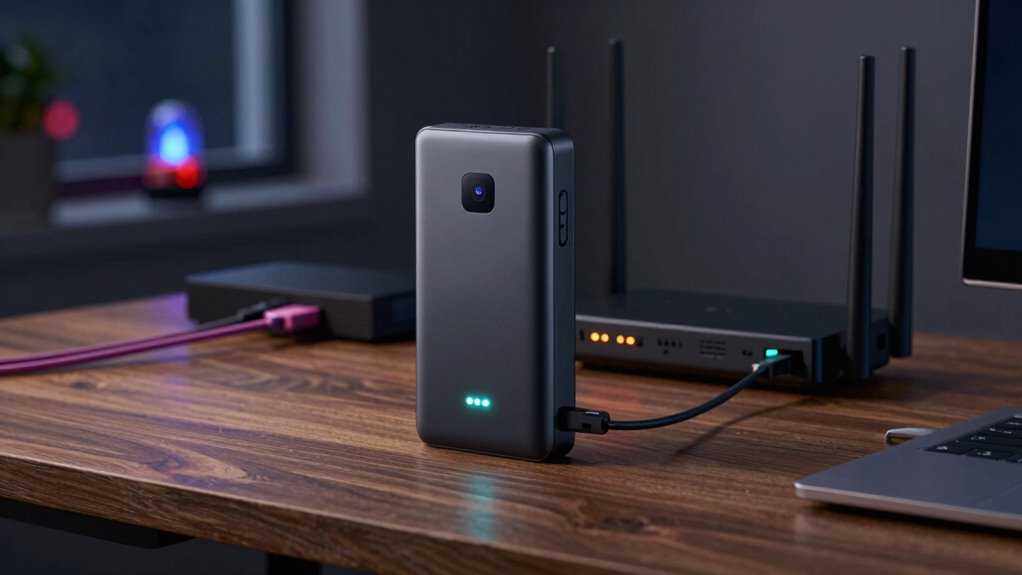
To keep your internet connection running during a power outage, setting up a portable power source for your router and modem is essential. A solar generator or a portable battery can provide reliable backup power, ensuring your devices stay online. First, choose a portable battery with enough capacity to power your modem and router for several hours. Connect your devices using the appropriate power adapters, and keep the portable power source charged and prepared. Consider using a solar generator for eco-friendly, renewable energy, especially if outages last longer. Make sure your power source has enough outlets or adapters to accommodate your equipment. Regularly test your setup so you’re confident it works when needed. To optimize your setup, understanding battery technologies can help you select the most efficient and reliable power solution. Additionally, understanding power management strategies can help you extend your backup time and improve energy efficiency. This simple step helps maintain your internet connection during unexpected outages.
How to Configure Your Equipment for Seamless Power Switching

Ensuring your equipment switches seamlessly to backup power during an outage is crucial for uninterrupted internet access. Proper equipment configuration allows for smooth power switching, preventing disruptions. Start by connecting your router and modem to a reliable uninterruptible power supply (UPS). Configure the UPS settings to automatically switch to backup power when the main supply fails. Make sure all devices are set to recognize the UPS as the primary power source. Use surge protectors with backup outlets to safeguard your equipment during switching. Test the setup regularly to confirm that power switching occurs instantly without manual intervention. Clear labeling of power cords and outlets helps you quickly identify and troubleshoot if needed. With these steps, you’ll ensure your equipment stays powered and your internet remains stable during outages.
Test Your Backup Power System Before the Power Goes Out

Testing your backup power system before an outage is essential to guarantee it works when you need it most. Regular checks ensure your solar panels are generating enough energy and that your generator is in good condition. A quick test can reveal issues like battery drain or faulty connections, preventing surprises during an outage. Remember to verify your generator maintenance schedule and perform a dry run to confirm smooth operation. Additionally, check that your transfer switches activate correctly, and your internet equipment switches seamlessly to backup power. Conducting these tests periodically helps you catch problems early, ensuring your system is reliable when power is lost. Being proactive saves you time, stress, and keeps your internet connection steady during emergencies.
Maintain and Extend the Life of Your Backup Power Devices
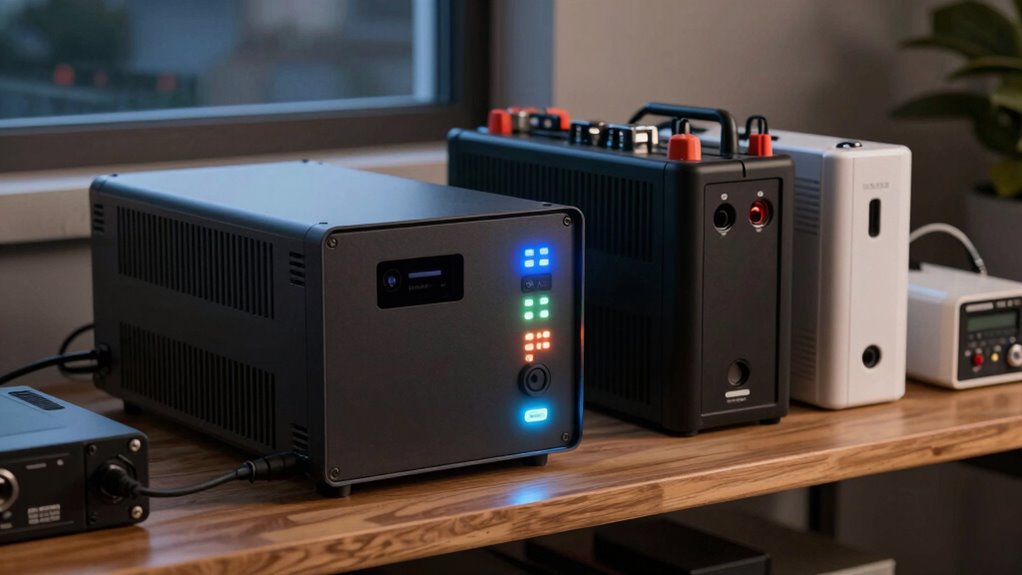
To keep your backup power devices ready when you need them, you should regularly test their functionality. Proper storage practices, like keeping batteries in a cool, dry place, help prevent damage and extend their lifespan. By staying proactive, you make certain your devices will perform reliably during an outage.
Regularly Test Devices
Regularly testing your backup power devices is essential to keep them ready when you need them most. Frequent testing ensures device compatibility and highlights any issues before a power outage strikes. It also helps verify that power surge protection features are functioning properly, safeguarding your equipment. To keep your devices in top shape, consider the following:
- Run a full test cycle periodically to identify potential failures
- Check connections and battery levels regularly
- Update firmware or software to maintain peak performance
- Replace batteries or components as recommended by the manufacturer
Proper Storage Practices
Proper storage is key to extending the lifespan and guaranteeing the reliability of your backup power devices. Store batteries and inverter units in a cool, dry place away from direct sunlight and extreme temperatures. Regularly check for signs of corrosion or damage, and clean terminals as needed. To protect sensitive data on your devices, use data encryption when storing or backing up information, especially if your devices are portable or connected to cloud storage services. Keep backup devices disconnected from power when not in use to prevent self-discharge. Label and organize your equipment for easy access during emergencies. Proper storage not only prolongs device life but also ensures they function flawlessly when you need them most, maintaining your internet connection during power outages.
Budget-Friendly Backup Power Solutions for Your Internet
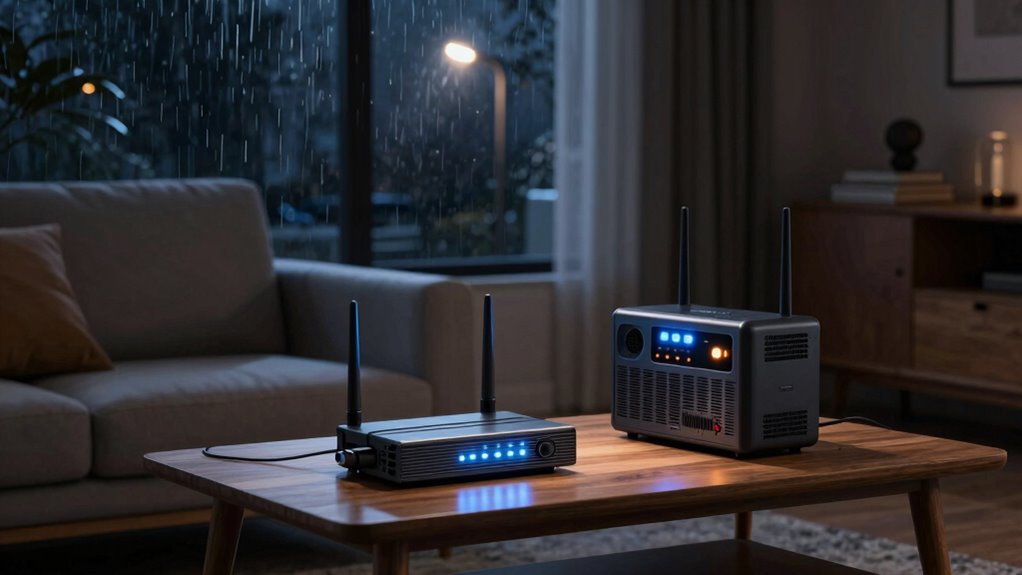
During a power outage, staying connected to the internet doesn’t have to break the bank. Budget-friendly backup solutions can keep you online without overspending. Consider solar panels, which can charge small devices or batteries during the day, providing a renewable energy source. A portable generator is another option; just remember regular generator maintenance to guarantee reliability when needed. You can also use uninterruptible power supplies (UPS) that provide short-term backup for modems and routers. Finally, look into rechargeable battery packs designed for electronics, offering a simple, affordable way to stay connected during outages. These options help you maintain internet access without costly investments, giving you peace of mind when the power fails.
Troubleshooting Common Internet Outage Backup Problems
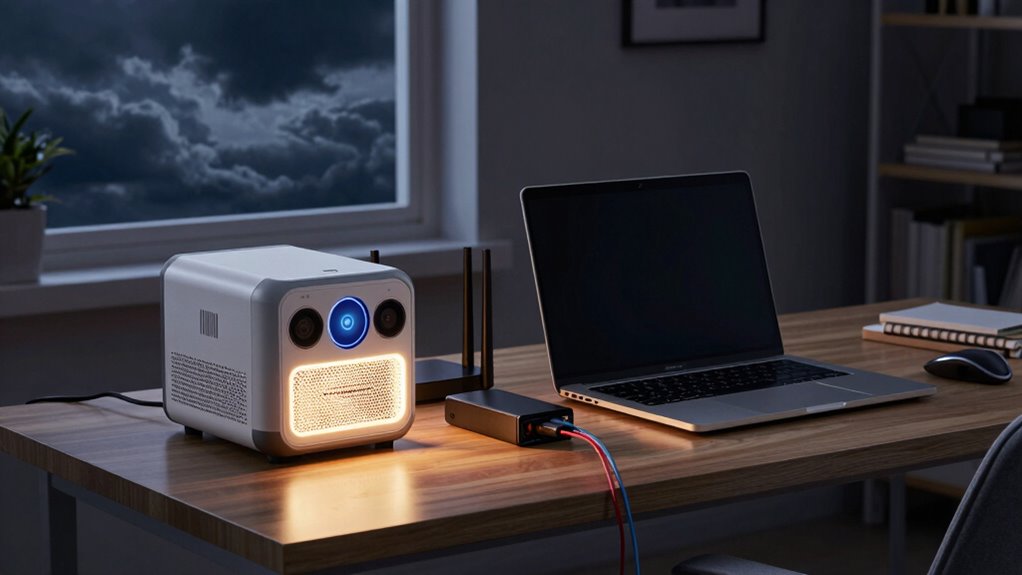
Even with backup power solutions in place, you might encounter issues that disrupt your internet connection during a power outage. Common problems include signal interference and poor cable management, which can cause drops or slow speeds. To troubleshoot, first check your cable connections; loose or damaged cables often lead to connectivity issues. Keep cables organized to prevent interference from nearby electronics. Also, ensure your backup power source isn’t causing signal interference—unplug devices that might disrupt your router’s signal. Use the table below to identify typical problems and solutions:
| Problem | Cause | Solution |
|---|---|---|
| Slow or dropped connection | Signal interference | Relocate router away from electronics |
| No internet during outage | Power source failure | Check backup power system |
| Cable issues | Loose or damaged cables | Secure or replace cables |
| Interference from devices | Nearby electronics | Adjust device placement |
Frequently Asked Questions
How Long Can My Backup Power Realistically Keep My Internet Operational?
Your backup power can realistically keep your internet running for several hours, depending on your battery duration and power capacity. If you use a portable UPS or generator, you might get anywhere from 4 to 24 hours of operation. To maximize this, choose a device with sufficient power capacity, and disconnect non-essential devices. Regularly test your backup system to guarantee it’s ready when needed.
Are There Safety Concerns When Using Portable Power Sources Near Electronics?
Yes, there are safety concerns when using portable power sources near electronics. You should always prioritize fire safety by keeping devices away from flammable materials and ensuring proper ventilation. Be cautious of electrical hazards like short circuits or overloads, which can cause shocks or fires. Use the right adapters and follow manufacturer instructions closely. Regularly inspect your power sources for damage, and never overload outlets to keep your setup safe.
Can I Automate the Switch Between Main Power and Backup?
Yes, you can automate the switch between main power and backup with an automatic transfer switch (ATS). This device detects power loss and seamlessly switches to backup power, ensuring your internet stays connected. Make sure it includes surge protection to guard your electronics during the switch. Installing an ATS simplifies the process, prevents downtime, and enhances safety by automatically managing power sources without manual intervention.
What Are Signs My Backup Power Device Needs Replacement or Maintenance?
You’ll want to check your backup power device’s battery health regularly—if it’s deteriorating, it won’t hold a charge properly. Pay attention to indicator lights; if they turn off, blink, or show a warning, it’s a sign maintenance or replacement is needed. Additionally, if the device fails to power your equipment during outages or makes strange noises, it’s time to substitute or service it to ensure reliable backup power.
Is Professional Installation Necessary for Complex Backup Power Systems?
Think of your backup power system as a complex puzzle needing expert placement. Professional installation is often necessary for such systems because it guarantees proper setup and safety. If your system’s complexity rivals assembling a challenging puzzle, you’ll benefit from specialized skills to avoid errors. With expert help, you get peace of mind, ideal performance, and long-term reliability—making professional installation a smart choice for intricate backup power solutions.
Conclusion
Don’t let a power outage cut your internet connection like a knife. With the right backup power plan, you’re safeguarding your digital life and staying connected when it matters most. Think of your backup system as a safety net—trust it to catch you when the power fails. Keep your devices ready, test regularly, and stay connected no matter what storms roll in. Your internet’s reliability depends on your preparedness—stay powered, stay connected.