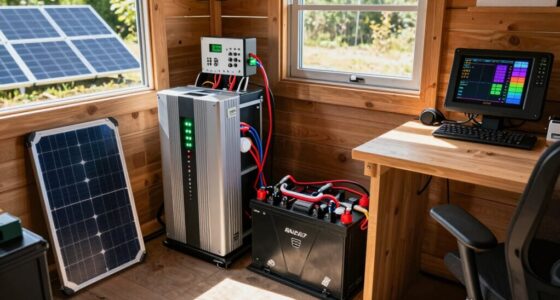
To get real numbers on your solar generator’s runtime, start by calculating your device’s watt consumption and your system’s total capacity in watt-hours. Factor in inverter efficiency and environmental conditions like weather and sunlight exposure. Keep in mind, overestimating capacity or ignoring real-world factors can give false hopes. For accurate predictions and better planning, understanding these calculations and how they interact will help you maximize your system’s performance. If you want detailed steps, keep exploring.
Key Takeaways
- Calculate usable capacity by multiplying battery capacity (Ah) by voltage (V) and adjusting for inverter efficiency.
- Determine device power consumption in watts and divide the usable battery capacity by this number for runtime estimates.
- Consider environmental factors like weather and shading that can reduce solar input and charging efficiency.
- Account for battery chemistry and age, as these affect overall capacity and energy retention over time.
- Use step-by-step calculations and real-world measurements to obtain accurate, reliable runtime predictions.

WAYNE PC4 1/2 HP Cast Iron Multi-Purpose Pump With Suction Strainer, Model:55832
Reliable 1/2 HP Water Transfer Power: Ideal for basement water removal, draining water heaters, flushing water lines, and...
As an affiliate, we earn on qualifying purchases.
What Is a Solar Generator and How Does It Work?

Have you ever wondered how a solar generator provides power without relying on traditional electricity sources? It works by converting sunlight into usable energy through solar panels, which charge a battery. The battery chemistry, like lithium-ion or lead-acid, determines how efficiently it stores and releases power. When you need electricity, the inverter converts the DC stored in the battery into AC, which powers your devices. Inverter efficiency plays a vital role, as higher efficiency means less energy is lost during this conversion, maximizing runtime. Essentially, a solar generator harnesses sunlight, stores it in specialized batteries, and uses an inverter to deliver power cleanly and quietly. This seamless process makes it a reliable and eco-friendly alternative to traditional generators. Smart energy management systems can further optimize the use of stored power, ensuring you get the most out of your solar generator. Additionally, understanding the battery capacity helps you estimate how long your devices can run on a single charge. Moreover, the battery chemistry impacts the overall longevity and performance of the system, making it an important factor to consider. For optimal performance, selecting the right projector technology can significantly enhance your home cinema experience. Furthermore, incorporating energy efficiency practices can extend your runtime and reduce energy waste.

Micosong 18” Portable Battery Operated Fan, Rechargeable Cordless Camping Fan Outdoor, USB Output, 360° Tilt, 10~60h Runtime, Quiet, Wireless, Metal Blade, For Travel Gazebo Home Garage Gym RV Barn
52600 mAh High-Capacity Battery: This portable battery operated fan can be fully charged in just 3 hours, delivering...
As an affiliate, we earn on qualifying purchases.
What Factors Affect Solar Generator Runtime?

Your solar generator’s runtime depends on how much power you use and the sunlight it receives. Higher consumption drains the battery faster, while overcast weather reduces charging efficiency. Understanding these factors helps you plan better and maximize your generator’s performance. Additionally, the battery capacity of your generator determines the total energy available for use. Knowing the performance metrics can help you compare different models and optimize your setup for better efficiency. For example, vacuum features to consider such as suction power and filters can influence overall energy consumption and runtime. Being aware of solar panel efficiency can also help in selecting the right setup for your needs, especially when considering how home energy integration can impact your overall power management.
Power Consumption Rates
What factors influence how long a solar generator can run? Power consumption rates are key. The devices you run determine how quickly your battery depletes. Higher wattage devices drain the battery faster, reducing runtime. Battery chemistry also impacts this, as different chemistries have varying efficiencies and discharge characteristics. For example, lithium-ion batteries typically handle deeper cycles better than lead-acid types. Additionally, inverter efficiency plays a significant role; an inverter with lower efficiency wastes more power converting DC to AC, thereby shortening runtime. To accurately estimate how long your generator will last, consider both the total power draw of your devices and the quality of your components. It’s also helpful to understand the Battery chemistry because it directly affects overall performance and longevity. Understanding these factors helps you optimize usage and get the most out of your solar generator. Moreover, component quality can influence overall efficiency and durability, further affecting runtime. Being aware of system efficiency can also guide you in selecting components that maximize runtime and reliability.
Sunlight and Weather Conditions
Sunlight and weather conditions play a crucial role in determining how long a solar generator can operate, as they directly influence the amount of energy your panels can harvest. Cloud cover, rain, and seasonal changes can reduce sunlight, lowering energy output. Proper solar panel orientation maximizes sunlight exposure, boosting efficiency and runtime. Overcast days diminish the solar energy captured, impacting battery recharge cycles and overall performance. Weather fluctuations also affect battery life cycles; extreme temperatures can shorten their longevity or reduce capacity. To optimize runtime, track weather patterns and position panels for maximum sun exposure. Being aware of these factors helps you set realistic expectations and manage your solar generator’s efficiency, ensuring you get the most reliable power possible despite changing weather conditions. Understanding weather impacts is essential for maintaining optimal performance and prolonging the lifespan of your system.

Solar Fan for Chicken Coop with Battery 25W Solar Panel Powered Exhaust Fans with 14.8ft On/Off Switch Cable for Greenhouse, Sheds, Pet Houses, Ventilation, Outside, Greenhouse Air Circulation Garages
【IP67 Waterproof Dustproof Perfect for Outdoor Use】The solar powered fan is IP67 waterproof and can resist all weather...
As an affiliate, we earn on qualifying purchases.
How to Calculate Your Device’s Power Consumption in Watts or Ah
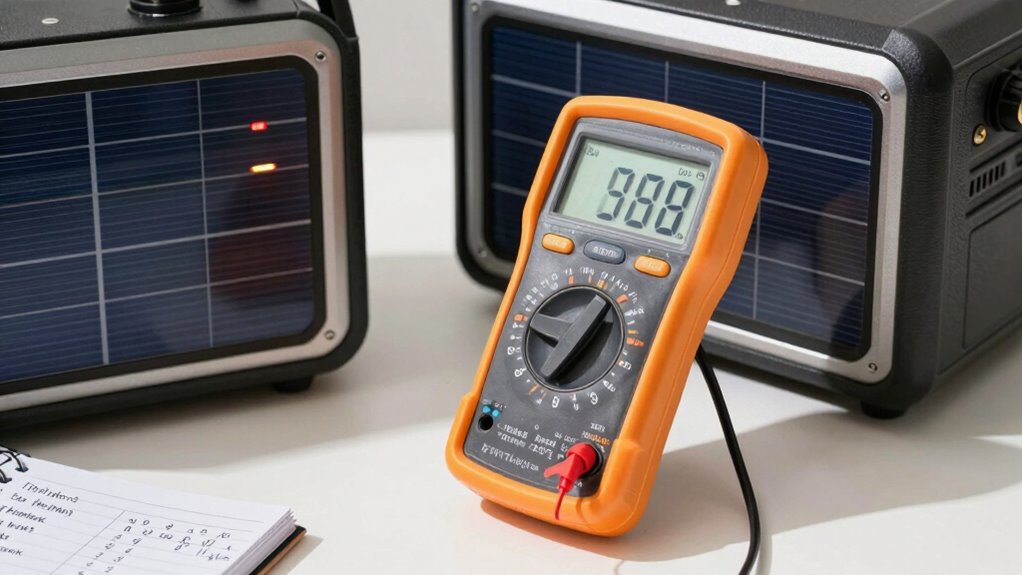
To determine how much power your device consumes, start by checking its specifications for voltage (V) and current (A) or capacity (Ah). If you have voltage and current, multiply these values to get watts (W): Watts = V × A. For devices rated in amp-hours (Ah), you’ll need to know the voltage to convert capacity into watt-hours (Wh): Wh = Ah × V. Keep in mind that inverter efficiency affects actual power consumption; if your inverter is 90% efficient, you’ll need to account for that loss. When calculating, consider the device’s typical runtime to ensure your solar generator provides enough power. Knowing your device’s power consumption in watts or Ah helps you select the right battery capacity and plan for runtime accurately. Understanding power consumption metrics enables more precise planning of your energy needs, especially when factoring in energy efficiency and potential power losses. Additionally, incorporating system efficiency considerations ensures you select a solar generator capable of meeting your energy demands under real-world conditions. Recognizing battery capacity requirements is also vital for optimizing your energy setup and avoiding shortages. To improve your planning, consider real-world factors such as temperature and device usage patterns, which can influence actual power consumption and runtime.

Tornado 24" Metal Drum Fan - High Velocity, 7700 CFM, 3-Speed, Heavy Duty for Industrial & Commercial Use, 1/3 HP Motor, 8 FT Cord, ETL Listed
High-Velocity Airflow: With airflow options of 7700/ CFM, 6,000 CFM, and 5,000 CFM, this industrial fan provides three...
As an affiliate, we earn on qualifying purchases.
Understanding Your Solar Generator’s Capacity and How It Impacts Runtime

Your solar generator’s capacity determines how much energy it can store, directly affecting how long it can power your devices. Understanding the difference between capacity and power output helps you estimate runtime more accurately. Keep in mind that environmental conditions, like sunlight and temperature, can also influence performance and duration. Additionally, considering total-cost clarity and maintenance schedules can help you optimize your system’s efficiency and longevity. Being aware of battery chemistry can further assist in understanding how different systems perform over time and under various conditions. Moreover, the efficiency of power conversion plays a crucial role in maximizing usable energy from your generator, especially when factoring in real-world system efficiency and losses. Recognizing how storage capacity impacts overall runtime allows for better planning and system sizing.
Capacity vs. Power Output
Understanding the difference between capacity and power output is essential for predicting how long your solar generator can run your devices. Battery capacity, measured in watt-hours (Wh), indicates how much energy your generator can store. Power output, usually in watts (W), shows how much energy your generator can deliver at once. A high battery capacity means you can run devices longer, but if the power output is low, you won’t be able to power high-wattage devices effectively. Conversely, a generator with high power output might handle larger devices but may have a smaller battery capacity, limiting runtime. Balancing these two factors helps you determine whether your generator can meet your needs and for how long it can keep your devices running without interruption.
Energy Consumption Rates
Knowing how much energy your devices consume is key to estimating how long your solar generator will last. To do this accurately, you need to understand their power ratings in watts. Devices with high energy consumption reduce your generator’s battery longevity, meaning it’ll run out faster. Keep in mind that inverter efficiency also impacts runtime; if your inverter isn’t efficient, some energy will be lost as heat, decreasing overall performance. By calculating the total watt-hours your devices require and comparing that to your generator’s capacity, you can better predict runtime. Monitoring energy consumption helps you manage loads effectively, conserving battery life and maximizing the generator’s usefulness during outages or trips. Knowing these factors ensures you get the most accurate estimate of your solar generator’s endurance.
Environmental Conditions Effect
Environmental conditions can substantially influence your solar generator’s capacity and runtime. Poor solar panel orientation, such as facing away from the sun or shading, reduces energy absorption, decreasing overall power input. This means your generator’s battery receives less charge, shortening runtime during critical moments. Additionally, battery degradation over time diminishes capacity, making it less efficient at storing and delivering energy. Extreme temperatures, high humidity, or cloudy days further impair performance by lowering the solar panel’s efficiency. To maximize runtime, guarantee proper solar panel orientation toward the sun and regularly check for signs of battery degradation. Addressing these environmental factors helps you get the most out of your solar generator, ensuring reliable power when you need it most.
Estimating Daily Solar Input and Recharging Potential

Estimating your daily solar input is essential for determining how much energy your solar generator can recharge. To maximize efficiency, ensure regular battery maintenance and clean your solar panels frequently. Proper cleaning removes dirt and dust that block sunlight, boosting energy absorption. Consider your location, weather patterns, and panel orientation to gauge average sunlight hours. Use the table below to visualize how different factors influence daily input:
| Factor | Effect on Solar Input | Action Needed |
|---|---|---|
| Weather Conditions | Cloud cover reduces sunlight | Monitor forecast, clean panels |
| Panel Orientation | Affects sun exposure | Adjust for optimal angles |
| Maintenance Frequency | Keeps panels efficient | Schedule regular cleaning |
This approach helps you get accurate estimates, ensuring your generator stays charged.
Step-by-Step: How to Calculate Your Solar Generator’s Expected Runtime
To determine how long your solar generator can run on a full charge, you’ll need to perform some straightforward calculations. First, identify your battery chemistry, as it affects capacity and voltage; for example, lithium-ion batteries typically offer higher energy density and longer lifespan. Next, find your battery’s total watt-hours (Wh) by multiplying voltage (V) by amp-hours (Ah). Then, factor in your inverter efficiency—most inverters operate at around 85-95%. Divide the usable battery capacity (accounting for inverter losses) by the power consumption of the device you’re running. This calculation will give you an estimated runtime. Remember, higher efficiency in your inverter and better battery chemistry can markedly extend your generator’s operating time. Precise calculations help you plan realistically and avoid overestimating performance.
Common Mistakes That Overestimate Solar Generator Performance
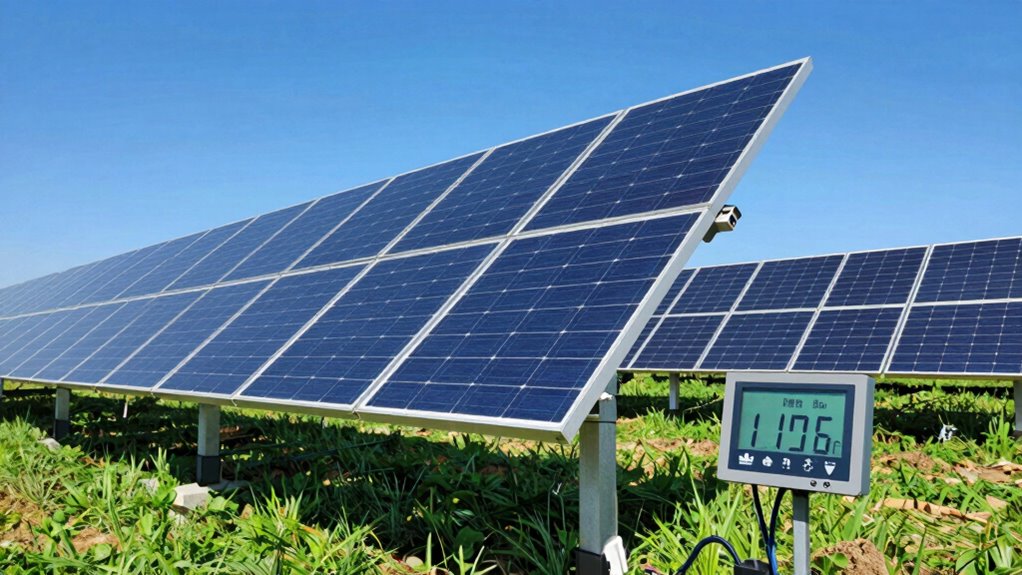
Many people overestimate their solar generator’s runtime by assuming it will perform exactly as the theoretical calculations suggest. They often overlook real-world factors like solar panel efficiency, which decreases over time due to dirt, shading, or aging. This means your panels won’t produce maximum power consistently. Additionally, battery degradation reduces storage capacity, meaning your battery won’t hold as much charge as when it was new. Relying on ideal conditions and ignoring these factors leads to overly optimistic estimates. To get a more accurate picture, account for reduced solar panel efficiency and the effects of battery degradation. Recognizing these common mistakes helps set realistic expectations and prevents disappointment when your solar generator doesn’t perform as perfectly as the initial calculations implied.
Tips to Maximize Your Solar Generator’s Runtime in Real Life

Maximizing your solar generator’s runtime requires proactive strategies that account for real-world conditions. Start by understanding that battery efficiency isn’t perfect; some energy is lost during storage and discharge. To optimize, avoid deep discharges that strain the battery and reduce overall capacity. Also, be mindful of inverter losses, which occur when converting DC to AC power—these losses typically range from 5-15%. Using appliances with lower power demands and running them efficiently can help reduce these losses. Keep your solar panels clean and properly angled to maximize sunlight exposure, ensuring your batteries stay charged longer. Regularly monitor your generator’s performance and adjust usage habits accordingly. Small changes, like limiting high-power appliance use during peak sunlight hours, can considerably extend your runtime in real life.
Adjusting Your Calculations for Changing Power Needs

As your power needs evolve throughout the day, it’s important to adjust your calculations accordingly. Battery efficiency can vary based on temperature and age, affecting how much usable power remains. To maintain accurate runtime estimates, factor in these efficiency changes. Load balancing is also vital—you might use some devices intermittently or reduce usage during peak sunlight hours. By shifting or staggering your power consumption, you optimize your solar generator’s performance. Regularly reassess your device demands and update your calculations to reflect current conditions. This proactive approach helps prevent unexpected shutdowns and guarantees you’re not overestimating your generator’s capacity. Ultimately, adjusting for changing power needs keeps your system running smoothly and gives you a realistic understanding of your solar generator’s runtime.
Frequently Asked Questions
How Often Should I Recharge My Solar Generator for Optimal Performance?
You should recharge your solar generator whenever its battery drops to about 20-30%, balancing battery longevity and performance. Avoid letting it fully drain or stay fully charged too long, as both can shorten your battery’s life by affecting its charge cycle. Regular, moderate recharges help maintain ideal performance and prolong the lifespan, ensuring you get reliable power whenever you need it.
Can Multiple Devices Be Safely Connected Simultaneously Without Affecting Runtime?
Connecting multiple devices is like juggling, but you need to guarantee device compatibility and proper power distribution. If your solar generator can handle the combined load, you can safely power several devices at once without hurting runtime. Always check the maximum output capacity and match it to your devices’ power needs. Proper distribution prevents overloads, so you get reliable performance without sacrificing runtime.
What Maintenance Is Required to Ensure Accurate Runtime Calculations?
To guarantee accurate runtime calculations, you should regularly perform battery calibration and inverter inspections. Battery calibration involves testing and adjusting the battery’s capacity for precise readings, while inverter inspections help identify potential issues affecting performance. You should check these components at least every few months, especially if you notice discrepancies in runtime estimates or irregular device operation. Consistent maintenance keeps your solar generator running efficiently and provides reliable runtime data.
How Do Weather Conditions Impact Solar Generator Efficiency and Runtime?
Weather impact considerably affects your solar generator’s efficiency and runtime. Cloudy days, rain, or snow reduce sunlight, lowering energy production and shortening runtime. High temperatures can also decrease efficiency, while cooler, sunny conditions boost performance. To get accurate runtime calculations, consider these efficiency factors, monitor weather patterns, and adjust your expectations accordingly. Properly accounting for weather impact helps you plan better and ensures your solar generator performs effectively in varying conditions.
Are There Specific Brands or Models Known for More Accurate Runtime Estimates?
Ever wondered which solar generator brands give you reliable estimates? You’ll want to look for models with a strong reputation for accuracy. Brands like Goal Zero and Renogy are known for providing more precise runtime estimates because of their focus on detailed specifications and testing. When choosing, prioritize models with good reviews and transparent data—this guarantees you get a realistic picture of their performance, helping you plan better.
Conclusion
Knowing how to accurately calculate your solar generator’s runtime keeps you prepared and avoids surprises. Did you know that on average, solar generators can provide power for 4 to 8 hours depending on your device and sunlight conditions? By understanding the math behind it, you can better plan for outages or outdoor adventures. Take control of your power needs with real numbers—so you’re never left in the dark when it matters most.