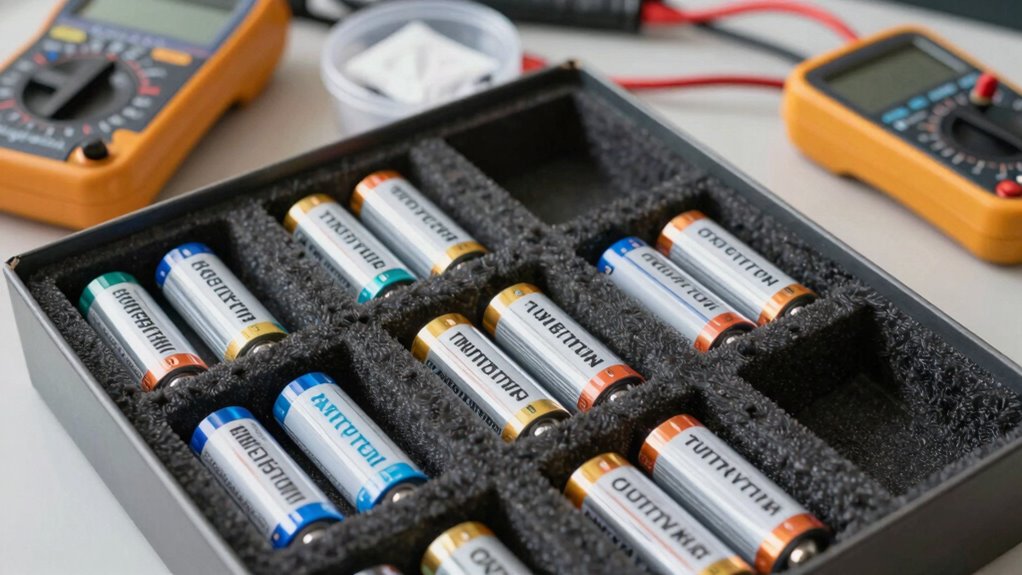

To store backup batteries properly, keep them in a cool, dry place around 50°F to 77°F, avoiding hot or humid areas. Store batteries in appropriate containers and make certain they are partially charged—around 50%—if storing for a long period. Check on them regularly, recharge if needed, and monitor temperature and humidity to prevent deterioration. Following these steps helps extend their life. Learn more tips to maintain your batteries effectively.
Key Takeaways
- Store batteries in a cool, dry environment at 50°F to 77°F (10°C to 25°C).
- Keep batteries partially charged (around 40-60%) for long-term storage.
- Use appropriate, non-metallic containers to prevent physical damage and short circuits.
- Regularly check and recharge batteries to prevent self-discharge and capacity loss.
- Avoid exposing batteries to high temperatures, humidity, or direct sunlight.
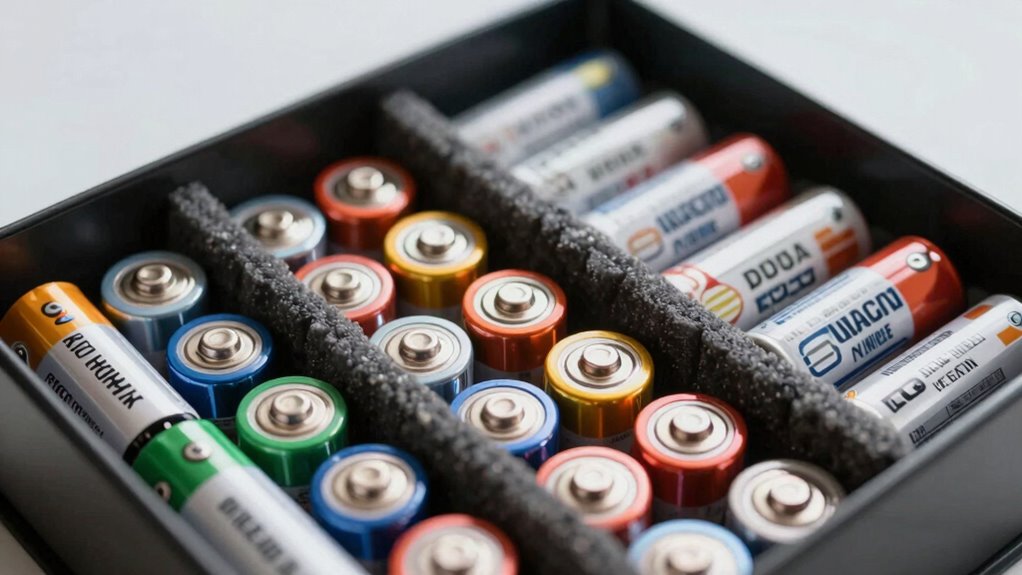
Storing backup batteries properly is essential to guarantee they remain reliable when you need them most. When it comes to preserving their lifespan, understanding the role of battery chemistry is vital. Different types of batteries, like lithium-ion, nickel-metal hydride, or lead-acid, have unique characteristics and requirements. For instance, lithium-ion batteries are sensitive to overcharging and deep discharges, which can degrade their capacity over time. Nickel-metal hydride batteries, on the other hand, tend to suffer from memory effects if not stored correctly. Recognizing the specific chemistry of your backup batteries helps you decide how to store them properly, ensuring maximum performance when needed.
One of the most important factors in storing batteries is controlling the storage temperature. Extreme temperatures can accelerate chemical reactions inside the battery, leading to capacity loss, swelling, or even leakage. Ideally, you should store batteries in a cool, dry place where temperatures stay between 50°F and 77°F (10°C to 25°C). High temperatures, such as those found in hot attics or near heaters, can cause batteries to deteriorate quickly, while very cold environments might temporarily reduce their capacity, though they usually recover when warmed up. Consistently maintaining an appropriate temperature minimizes aging and helps preserve the chemical stability of the battery’s components. Additionally, understanding the importance of battery chemistry helps you make informed decisions about storage conditions to extend their lifespan. Proper storage practices can also include periodically checking the batteries and recharging them to prevent self-discharge, which is common in many battery types over time. Regularly monitoring battery health can further ensure their reliability and readiness when needed. Monitoring storage conditions regularly, such as temperature and humidity, also plays a crucial role in maintaining their longevity.
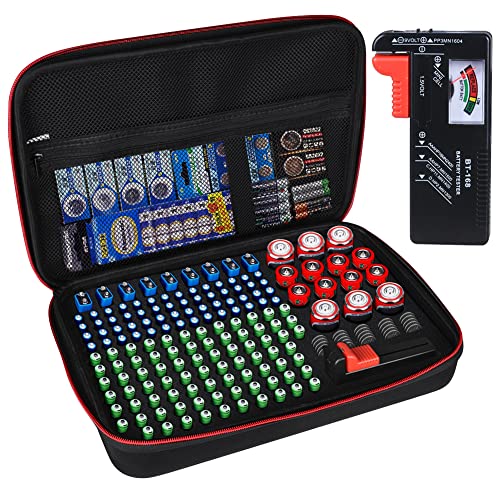
Battery Organizer Storage Box with Tester, Battery Vault Case Fireproof Waterproof Explosionproof Holder Box with Tester BT-168 Checker Carrying Case Container Bag Fit for 200+ Batteries AA AAA C D 9V
- Fireproof and Waterproof Material: Made of silicone-coated fiberglass for safety
- Holds Over 200 Batteries: Stores AA, AAA, C, D, 9V, and button batteries
- Secure and Safe Storage: Double zipper and handle for safety and convenience
As an affiliate, we earn on qualifying purchases.
As an affiliate, we earn on qualifying purchases.
Frequently Asked Questions
How Long Can Backup Batteries Be Stored Before Replacement?
You can typically store backup batteries for about 3 to 5 years before needing replacement, but this depends on storage conditions. To maintain battery capacity, keep them in a cool, dry place and at about 40-60% charge. Storage duration varies based on temperature and humidity; extreme conditions can shorten their lifespan. Regularly check batteries, and replace them if you notice reduced performance or signs of deterioration.
Do Temperature Fluctuations Affect Backup Battery Lifespan?
Temperature fluctuations definitely affect backup battery lifespan. When temperature stability isn’t maintained, environmental factors like heat and cold accelerate chemical reactions inside batteries, causing faster degradation. You want to keep batteries in a cool, dry place, avoiding extreme temperatures and rapid shifts. Consistent temperatures help preserve chemistry, prevent capacity loss, and extend overall lifespan. By controlling environmental factors, you protect your backup batteries from unnecessary wear and keep them ready when you need them most.
Is It Necessary to Fully Discharge Batteries Before Storage?
You don’t need to fully discharge batteries before storage. In fact, a partial discharge during the discharge process is better, as fully discharging can harm the battery’s health. Follow storage precautions by keeping batteries at a cool, dry place and avoiding extreme temperatures. This helps maintain their capacity and lifespan. Always store batteries at around 40-60% charge, and check them periodically to verify they’re in good condition.
How Often Should Stored Batteries Be Checked or Maintained?
You should check your stored batteries every 3 to 6 months to guarantee ideal battery shelf life. During inspections, look for signs of corrosion or leakage and recharge if needed. Keep storage humidity low to prevent damage, and store batteries in a cool, dry place. Regular maintenance helps prolong their lifespan, prevents capacity loss, and keeps them ready for use when you need them most.
Are There Specific Storage Containers Recommended for Backup Batteries?
Think of your backup batteries as delicate treasures, needing a safe haven. Use plastic or rubber containers designed for electrical components, as they resist corrosion and regulate humidity. Avoid metal boxes that can accelerate battery corrosion. Keep storage humidity low with silica gel packs or dehumidifiers. Proper containers protect your batteries from moisture, extending their life, and ensuring they’re ready when you need them most.
Conclusion
By following these storage tips, you’ll keep your backup batteries fresh as a daisy and ready for action when needed. Remember to store them in a cool, dry place, away from metal objects and extreme temperatures—think of it as a modern-day treasure chest. With a little care, your batteries will stay charged and reliable, just like a trusty lantern guiding you through a dark night in a bygone era. Keep them well-maintained, and they’ll serve you faithfully for years to come.