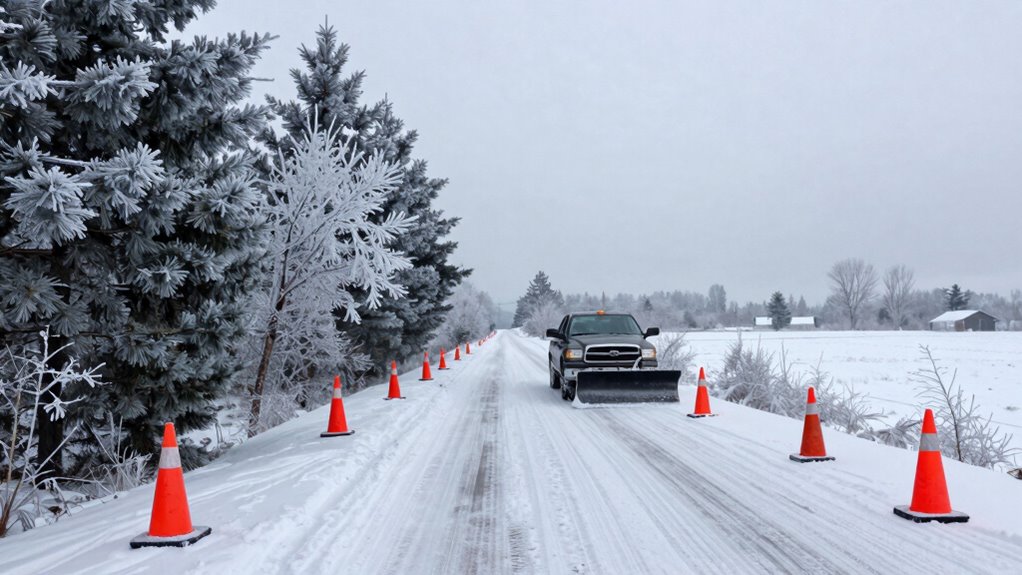

To prepare for winter road closures, stockpile essential supplies like non-perishable food, water, blankets, and fuel, and keep a well-maintained first aid kit nearby. Make certain your livestock transport vehicles are ready with snow tires, and enclosures are secure and heated. Have alternative routes mapped out, stay updated on road conditions, and keep communication devices charged. Staying proactive helps protect your farm during storms—continue exploring for more tips to stay fully prepared.
Open a free Amazon Business account
Business pricing, bulk buying and tax-exempt orders.
As an affiliate, we earn on qualifying purchases.
Key Takeaways
- Maintain an updated list of alternative routes and stay informed on local road conditions during winter storms.
- Stockpile emergency supplies, including fuel, food, water, and medical kits, in an accessible location on the farm.
- Ensure livestock transportation vehicles are winter-ready with snow tires and functional heating systems.
- Keep communication devices charged and establish a backup plan to stay connected during road closures.
- Plan ahead for livestock safety and movement during daylight to reduce stress and prevent injuries.
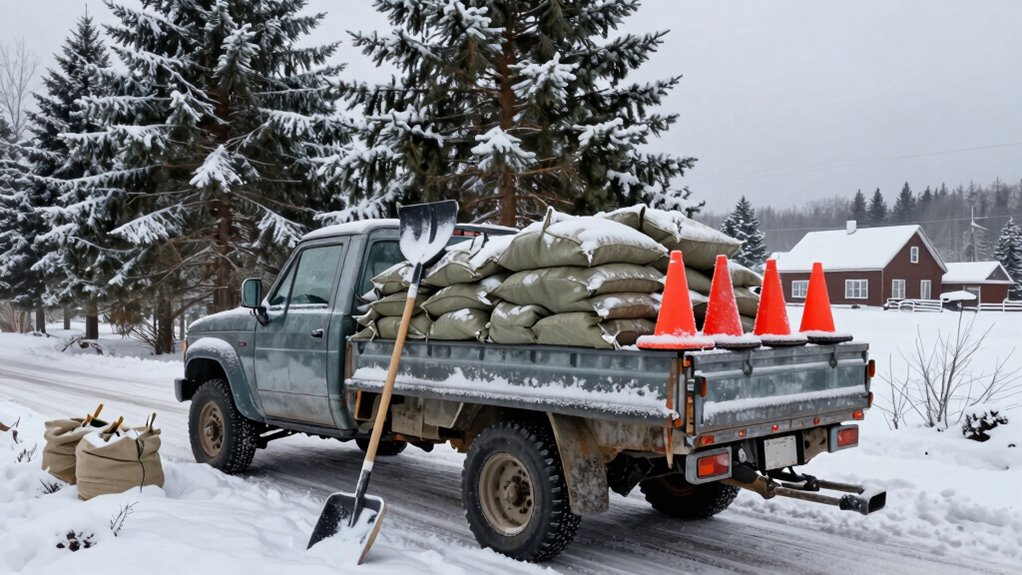
As winter approaches, it’s essential for farm families to prepare for road closures that can impact daily operations and safety. Snow and ice can make rural roads impassable, stranding you or delaying vital activities like feeding livestock or delivering supplies. To stay ahead, you need to have a clear plan that includes stocking emergency supplies and ensuring livestock transportation is secure and reliable. These preparations will help you handle unexpected closures smoothly and protect your animals and family.
Start by gathering emergency supplies, including non-perishable food, bottled water, blankets, flashlights, batteries, and a first aid kit. Winter storms can cut power or block roads unexpectedly, so it’s crucial to have enough essentials on hand for at least a few days. Keep these supplies in a designated, accessible location on your farm, and periodically check and replenish them. Don’t forget to include extra fuel for generators or vehicles, especially if you rely on them during emergencies. Having a well-stocked emergency kit ensures that you can manage unforeseen circumstances without panic or delay. Additionally, understanding biodiversity can help you identify natural barriers or wildlife considerations that might influence your preparedness plans. Recognizing these factors can also aid in maintaining environmental balance and protecting local ecosystems during winter disruptions.
Stock emergency supplies like food, water, blankets, and fuel to stay prepared during winter storms.
Livestock transportation is another key aspect you must prioritize. When roads become impassable, moving animals safely becomes a challenge. Ensure your transportation equipment is in good condition and capable of handling winter conditions. This might mean installing snow tires on your trucks or trailers, checking that the heating systems work, and securing all enclosures to prevent animals from escaping or getting injured. Keep a list of alternative routes that might be less affected by snow or ice, and stay in touch with local authorities or road maintenance services for updates on road conditions. If you anticipate a road closure, plan your livestock movements in advance, preferably during daylight hours, to minimize stress and risk. Being aware of local infrastructure can help you identify available support systems and resources that might be necessary during emergencies. Additionally, having a contingency plan in place can further reduce the impact of road closures on your farm operations.
Communication is essential during winter closures. Make sure your phone is charged and you have a backup power source like a portable charger or radio. Notify family members, employees, or neighbors about your plans and where your emergency supplies are stored. Establish a communication plan for emergencies, so everyone knows how to stay in touch if roads are blocked or power is out. Being aware of rural infrastructure can also help you understand the available resources and support systems in your area during winter emergencies. Regularly reviewing your communication plan and practicing it can ensure everyone remains informed and prepared when it matters most.
Ultimately, being proactive in stocking emergency supplies and securing livestock transportation will give you peace of mind during winter road closures. Preparing ahead of time not only keeps your animals safe but also helps you maintain control over your farm’s operations, even in the harshest conditions. Stay vigilant, stay prepared, and remember that a little planning now can save you significant trouble later.
As an affiliate, we earn on qualifying purchases.
Frequently Asked Questions
How Early Should I Start Preparing for Winter Road Closures?
You should start preparing for winter road closures at least a month in advance. Early seasonal planning guarantees you address winter safety concerns and gather necessary supplies. Check weather forecasts regularly, inspect your vehicles, and clear pathways beforehand. By taking these steps early, you minimize disruptions and stay safe during winter, making sure your farm operations continue smoothly despite the snow and ice. Planning ahead is key to a safe, efficient winter season.
What Specific Tools Are Essential for Emergency Road Repairs?
You should have essential tools like a sturdy shovel for emergency patching and snow removal equipment such as a snow blower or plow. These tools help you quickly address potholes, cracks, or snow buildup that can block access. Keep a toolkit with repair materials like asphalt patches, tools for minor fixes, and extra fuel. Being prepared guarantees you can handle emergencies promptly and keep your farm accessible during winter storms.
How Can I Ensure My Farm Vehicles Are Winter-Ready?
You need to guarantee your farm vehicles are winter-ready to avoid costly delays. Start with winter tire maintenance—check tread depth and ensure proper inflation for safe traction. Don’t forget vehicle battery checks; cold weather can weaken batteries, leaving you stranded. Keep emergency supplies in your trucks, and regularly inspect fluids and brakes. Preparing now helps you stay ahead of winter challenges, keeping your farm operations smooth and safe.
Who Should I Contact for Real-Time Road Closure Updates?
You should subscribe to local weather forecasting services and community alerts for real-time road closure updates. Many regions offer apps, SMS alerts, or social media updates that notify you about road conditions. Check with your local transportation department or municipal website, as they often provide current closure statuses and alerts. Staying connected through these sources guarantees you’re promptly informed and can plan your farm activities accordingly during winter.
Are There Financial Assistance Programs for Winter Road Maintenance?
Did you know that nearly 60% of farm families allocate part of their seasonal budgeting for winter road maintenance? Yes, there are financial assistance programs available, including grants that can help cover these costs. Check with local agricultural agencies or government departments to explore grant availability. Planning ahead and securing funding can ease the financial strain of winter road closure prep, ensuring your farm stays accessible and safe during harsh weather.
Conclusion
As winter approaches, think of your farm’s roads as the veins that keep your livelihood alive. Proper prep is like tightening a valve—preventing leaks and blockages that could halt your flow. I once heard a farmer say that early winter maintenance saved her from being snowed in during a storm, proving that proactive planning is your best safeguard. When you prepare ahead, you’re not just ready for winter—you’re ensuring your farm’s resilience through every storm.
Fall Picks
fall essentials
As an affiliate, we earn on qualifying purchases.