To prevent mold in your grow room, keep humidity levels below 60%, ideally around 40-50%. Use precise hygrometers to monitor fluctuations and avoid sudden changes, which can promote mold growth. Employ dehumidifiers and ensure proper ventilation to maintain stable, dry air. Regularly check and adjust environmental controls, as neglecting this threshold could lead to costly mold issues. Want to know how to optimize your setup? Keep exploring for essential tips.
Key Takeaways
- Maintaining humidity below 60% is crucial to prevent mold growth in grow rooms.
- Regular monitoring with hygrometers helps detect humidity spikes before mold develops.
- Proper ventilation and dehumidifiers work together to keep humidity within safe levels.
- Fluctuations and high humidity above 60% significantly increase mold risk during flowering.
- Proactive humidity management minimizes mold risk, ensuring healthy plant development and higher yields.

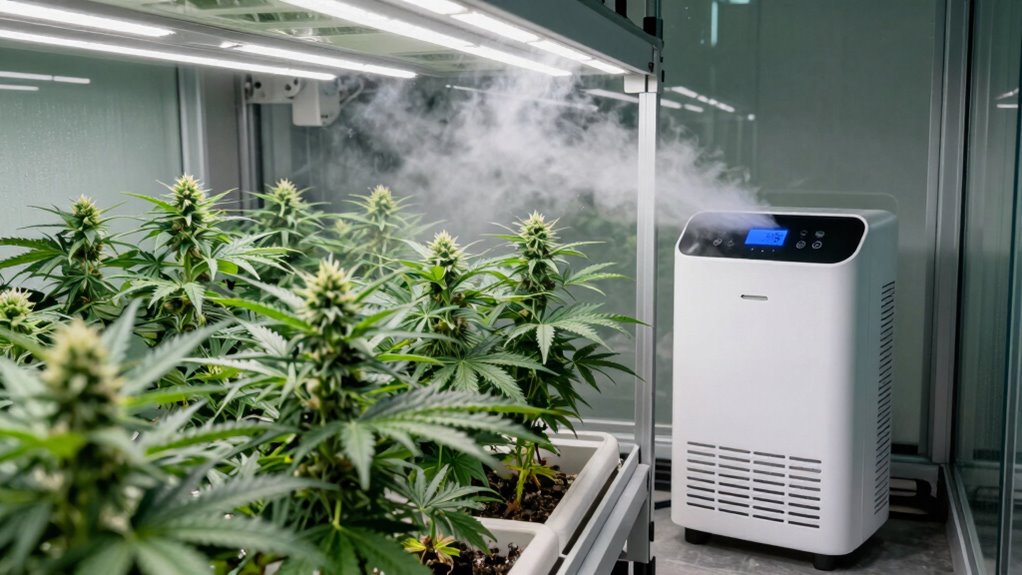
VIVOSUN AeroDrain D12 Smart Environmental Dehumidifier, up to 12L/day, 2L Water Tank, with Temperature & Humidity Sensor Probe, Smart Remote Control, Designed for Grow Tents
- High Moisture Removal: Removes up to 12L of moisture daily
- Precise Environment Monitoring: Includes temperature and humidity sensors
- Remote App Control: Control via Vivosun app remotely
As an affiliate, we earn on qualifying purchases.
As an affiliate, we earn on qualifying purchases.
Why Proper Humidity Is Essential for Healthy Cannabis Growth
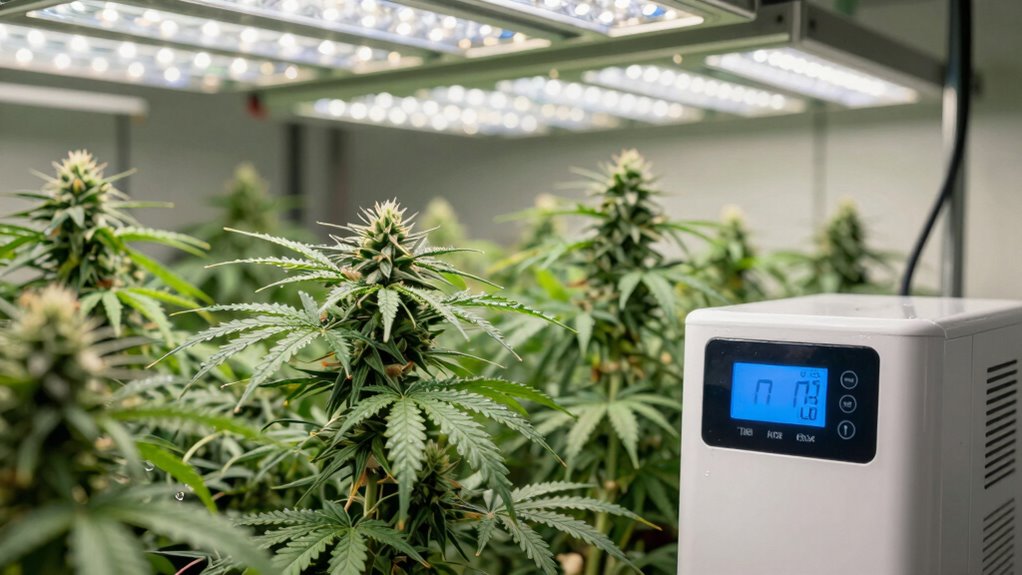
Maintaining proper humidity levels is essential for healthy cannabis growth because it directly affects plant development and overall yield. Many humidity myths suggest that high humidity always benefits plants, but excessive moisture actually increases mold risk and hampers growth. Proper humidity prevents mold prevention issues by reducing excess moisture, which can lead to mold spores thriving. Conversely, too low humidity stresses plants, causing slow growth and nutrient deficiencies. Ensuring the right humidity level promotes healthy transpiration, nutrient uptake, and robust development. Additionally, understanding air quality and monitoring environmental factors can help optimize conditions further for healthy cultivation. Recognizing moisture control techniques is crucial to creating an ideal environment that supports vigorous growth while reducing mold risks. Proper humidity management also involves understanding how environmental monitoring tools can assist in maintaining precise conditions. By dispelling humidity myths, you can create an ideal environment that supports vigorous growth while reducing mold risks. Incorporating humidity sensors can provide accurate readings and enable real-time adjustments to maintain optimal levels. Staying informed about climate control technologies allows growers to implement automated solutions for consistent environmental regulation.
How to Recognize the Humidity Level That Promotes Mold
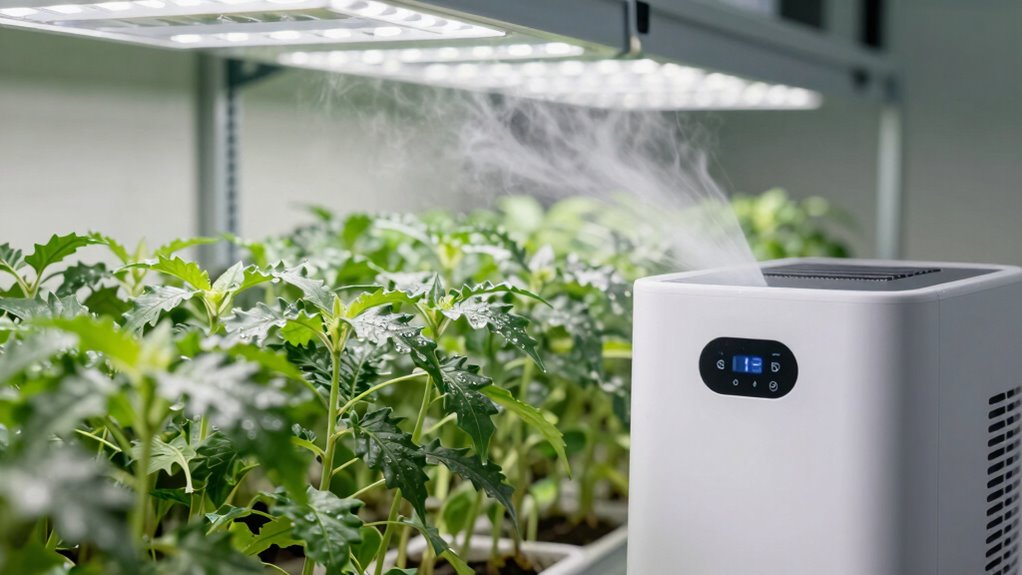
Understanding the humidity levels that foster mold growth is key to keeping your grow room safe. Mold thrives when humidity surpasses the humidity threshold of around 60%. At this level, mold growth accelerates, risking crop health. You should watch for signs like musty odors or visible spots. Use a hygrometer to monitor humidity closely. To help visualize this, consider the table below:
| Humidity Level | Mold Growth Risk |
|---|---|
| Below 50% | Low risk |
| 50-60% | Moderate risk |
| 60-70% | High risk, mold likely |
| Above 70% | Very high risk, urgent action |
| Optimal Range | 40-50%, minimizes mold risk |
Maintaining proper humidity levels is crucial for European cloud innovation and overall crop health. Paying attention to humidity thresholds can help prevent mold from becoming a serious problem. Additionally, understanding environmental considerations can guide effective humidity management strategies. Recognizing the ideal humidity range is essential for optimal growth conditions and mold prevention. Proper ventilation and dehumidification systems are also critical in maintaining these levels, especially in environments prone to excess moisture.
Measuring and Monitoring Humidity in Your Grow Room
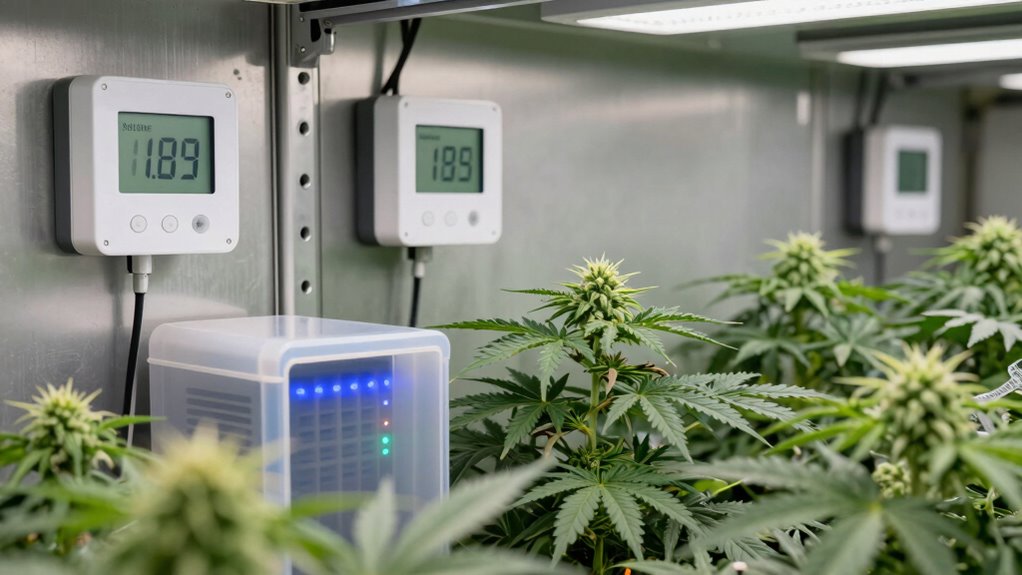
To keep your grow room healthy, you need to measure and monitor humidity levels accurately. Understanding the ideal humidity range and choosing the right monitoring tools helps you stay in control, even as conditions fluctuate. Recognizing how humidity swings affect your plants is key to maintaining a consistent environment. Incorporating media literacy support for breakfast options, such as nutritious snacks or meals, can also help maintain your energy levels during long monitoring sessions. Additionally, selecting the appropriate style tools ensures your grow space remains optimized and free from issues caused by excess moisture. Properly calibrated monitoring devices can provide more precise readings, helping you make informed adjustments to maintain optimal humidity levels. Developing a routine for breaking into voice over jobs can also make your monitoring more efficient and effective.
Optimal Humidity Range
Monitoring the humidity levels in your grow room is essential for healthy plant development, and knowing the ideal range can make all the difference. The optimal humidity range generally falls between 40-60%, with 50-55% often recommended for most crops. Maintaining humidity consistency within this range helps prevent mold and other issues caused by fluctuating moisture levels. Too high, and you risk mold growth; too low, and plants may suffer from dehydration or stress. Regularly tracking humidity ensures you can adjust your dehumidification efforts accordingly, creating a stable environment that supports vigorous growth. Being aware of Free Floating conditions can help you better manage humidity and airflow. Understanding how inner guidance influences your environmental decisions can also empower you to create healthier growing conditions. Additionally, using reliable humidity measurement tools allows for more precise control and monitoring. Incorporating proper ventilation strategies can further improve airflow and humidity regulation in your grow room. Educating yourself about market trends in dehumidification technology can help you select the most effective equipment. By staying within this ideal range, you reduce the chances of mold development, safeguard your crop, and promote healthy, robust plants throughout their lifecycle.
Monitoring Tools Selection
Choosing the right tools to measure and track humidity levels is essential for maintaining a stable environment in your grow room. Accurate sensors guarantee reliable readings, and regular sensor calibration keeps data precise over time. Data logging devices help you monitor humidity trends, revealing fluctuations that could foster mold growth. Additionally, understanding mold threshold levels allows you to set appropriate humidity targets to prevent mold development. Proper monitoring is a key aspect of environmental control in cultivation spaces, ensuring optimal conditions for healthy plant growth. Utilizing sensor calibration kits regularly enhances measurement accuracy, which is critical for early detection and prevention of mold issues. Investing in reliable sensors can make a significant difference in early detection and prevention of mold issues, allowing for timely adjustments. Consider these options:
| Tool Type | Feature | Benefits |
|---|---|---|
| Hygrometers | Quick readings | Easy to use, affordable |
| Data Loggers | Continuous data collection | Detects fluctuations |
| Sensor Calibration Kits | Maintains accuracy | Ensures consistent measurements |
Selecting these tools allows you to manage humidity proactively, reducing mold risks effectively.
Humidity Fluctuation Impacts
Fluctuations in humidity levels can have a significant impact on your grow room’s environment, affecting plant health and mold risk. Humidity swings create moisture variability that stresses plants and encourages mold development. Rapid changes in humidity can cause condensation on surfaces, increasing the chance of mold spores settling and growing. Monitoring tools help you detect these fluctuations early, allowing you to stabilize conditions before problems escalate. Consistent humidity levels reduce moisture variability, promoting healthy plant growth and preventing mold. By tracking humidity patterns, you can identify when your environment experiences undesirable swings and take corrective action. Additionally, local automation systems can be programmed to adjust humidity levels automatically, maintaining optimal conditions. Ultimately, maintaining steady humidity minimizes mold risk and optimizes plant development, ensuring a successful grow operation.
Effective Strategies for Dehumidifying Your Grow Space
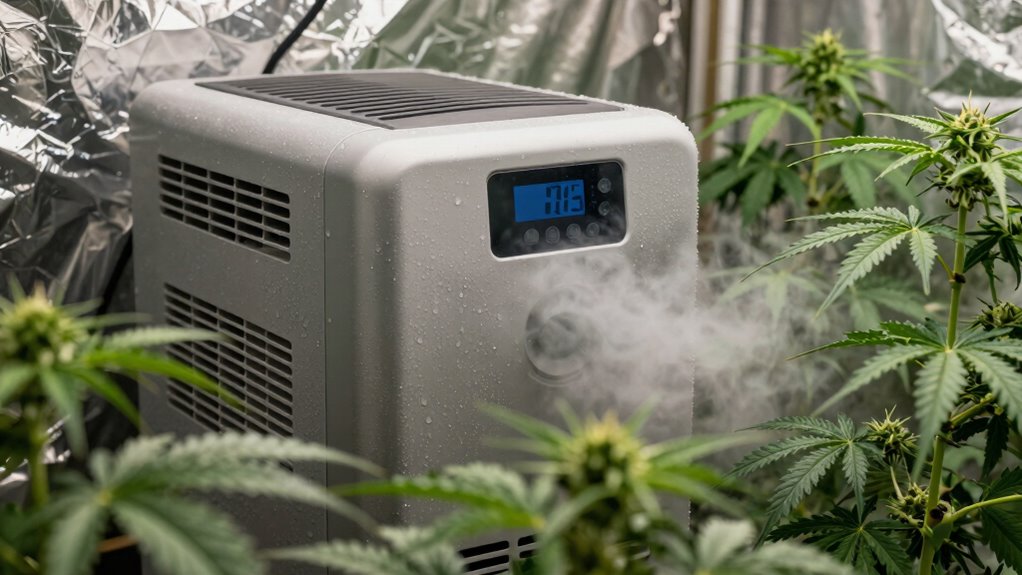
To effectively dehumidify your grow space, you need to implement strategies that actively remove excess moisture and maintain ideal humidity levels. Start by using dehumidifiers suited for your room size, ensuring consistent operation. Proper ventilation helps exchange humid indoor air with drier outdoor air, reducing moisture buildup. Monitoring humidity with a reliable hygrometer allows you to make adjustments promptly. Additionally, managing soil nutrients and understanding genetic markers can influence plant transpiration rates, indirectly affecting humidity levels. Healthy plants with balanced nutrients transpire less, making dehumidification easier. Keep airflow circulating, and avoid overwatering, which increases moisture. Regularly inspect your space for mold or excess moisture buildup to prevent mold development. These strategies work together to create a dry, healthy environment for your plants to thrive.
How to Choose the Right Dehumidifier for Your Grow Room

Choosing the right dehumidifier starts with considering your grow room’s size to guarantee it can handle the space effectively. You’ll also want features that give you precise humidity control and save energy, so your operation stays efficient. Keep these points in mind to find a unit that meets your needs and keeps your environment ideal.
Room Size Considerations
Selecting the right dehumidifier for your grow room starts with understanding its size. Measure the total cubic footage to determine the capacity needed—larger rooms require more powerful units. Keep in mind that proper air circulation helps evenly distribute dry air and prevents damp spots. A dehumidifier that’s too small won’t keep humidity in check, risking mold growth, while one that’s too large can dry out plants unnecessarily. Light exposure also impacts humidity levels; rooms with lots of natural light tend to be warmer and more humid, so choose a unit that can handle these fluctuations. Consider your space’s dimensions and airflow patterns. Picking the right size ensures efficient humidity control, protecting your plants and maintaining an ideal environment.
Humidity Control Features
When it comes to maintaining ideal humidity levels in your grow room, paying attention to a dehumidifier’s control features is essential. Look for models equipped with accurate humidity sensors that provide real-time readings, ensuring precise control. These sensors automatically adjust the dehumidifier’s operation to keep humidity within your desired range. Additionally, check the dehumidifier settings—preferably digital controls—that allow you to set target humidity levels easily. Some units offer automatic on/off functions based on ambient humidity, reducing the need for constant monitoring. Features like remote control or integration with smart systems can also enhance convenience. Choosing a dehumidifier with advanced control features helps you maintain consistent humidity, preventing mold and creating an ideal environment for healthy plant growth.
Energy Efficiency Tips
To maximize energy efficiency in your grow room, it’s important to compare dehumidifiers based on their power consumption and operational features. Look for units with advanced humidity sensors, which can accurately monitor moisture levels and adjust operation accordingly. This prevents unnecessary run times, leading to significant energy savings. Choose models with programmable settings and auto-shutdown features to optimize operation without wasting power. Consider dehumidifiers with energy-efficient compressor technology, as they consume less electricity while maintaining ideal humidity. Additionally, select units with adjustable fan speeds to match the room’s needs, reducing energy use further. By focusing on these features, you’ll ensure your dehumidifier works effectively while keeping energy costs low, helping you maintain a healthy grow environment without overspending.
Common Mistakes That Cause High Humidity and How to Fix Them
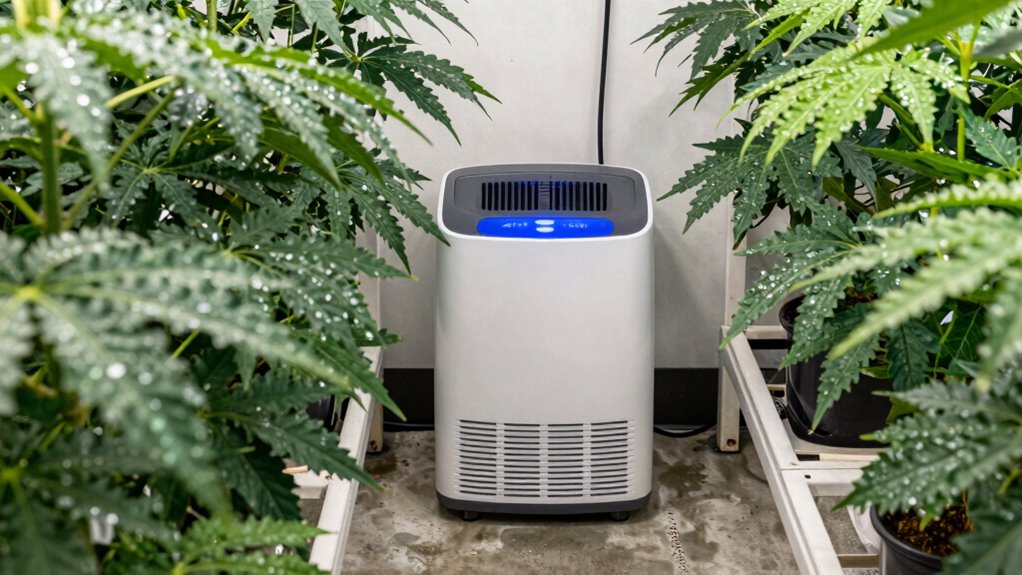
One common mistake that leads to high humidity in grow rooms is inadequate ventilation. Poor airflow traps moisture, causing humidity levels to rise beyond ideal ranges. Without proper air circulation, humidity accumulates, creating a conducive environment for mold and pests. Additionally, neglecting nutrient balance can indirectly increase humidity; overfeeding plants can boost transpiration, releasing more moisture into the air. To fix this, ensure your ventilation system is functioning effectively, promoting consistent air exchange. Regularly check and adjust nutrient levels to prevent excessive transpiration. Proper air circulation helps remove excess moisture and maintains a stable environment. By addressing these issues, you’ll reduce humidity buildup, lowering the risk of mold and creating a healthier grow space.
Combining Ventilation and Dehumidification for Optimal Humidity Control
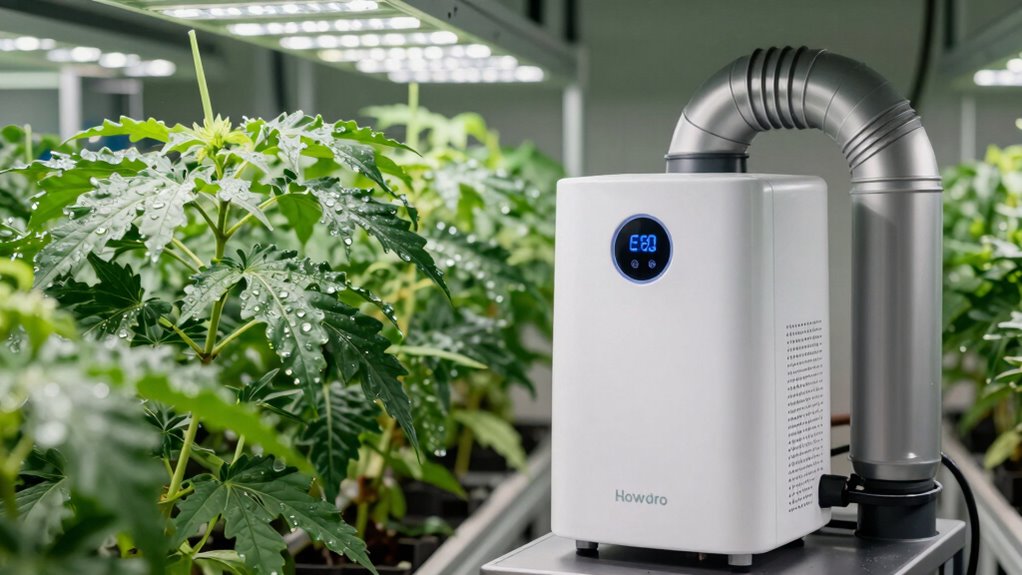
Combining proper ventilation with dehumidification creates a powerful strategy for maintaining ideal humidity levels in your grow room. Effective air exchange removes excess moisture and stale air, preventing humidity spikes that promote mold growth. Ventilation also helps control odors by replacing odor-laden air with fresh air, keeping your grow environment fresh and healthy. When paired with a dehumidifier, you can fine-tune humidity levels more precisely, ensuring they stay within safe ranges. This dual approach prevents over-reliance on a single method, reducing the risk of humidity fluctuations. Regularly cycling air exchange alongside dehumidification maintains consistent conditions, promotes healthy plant growth, and minimizes mold risk without causing additional stress to your plants.
Troubleshooting Humidity Issues and Preventing Mold
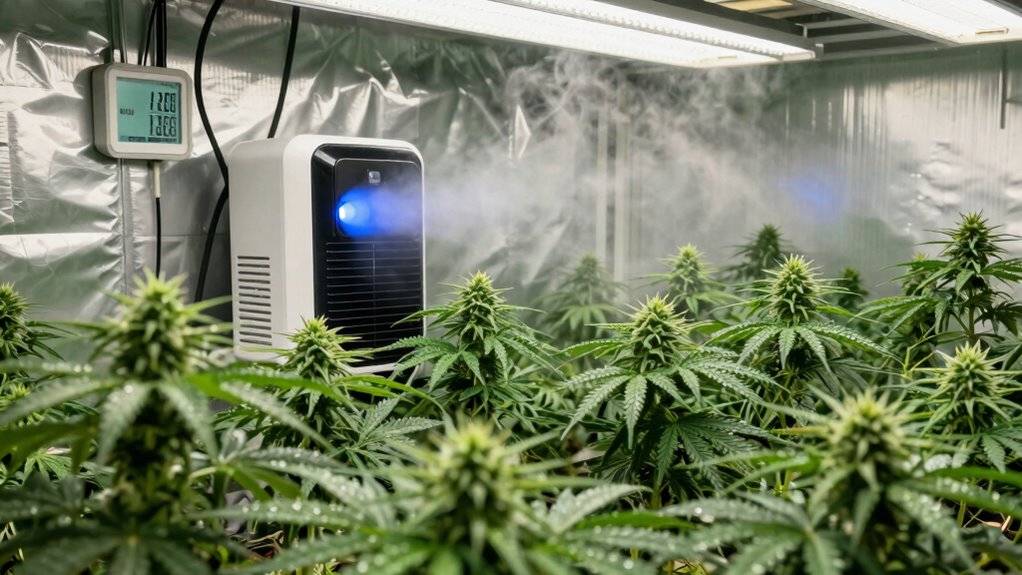
When humidity levels become too high in your grow room, mold and mildew can quickly develop, threatening your plants’ health. To troubleshoot humidity issues, monitor environmental factors and recognize signs like leaf spots or a musty smell. Genetic traits can make some strains more susceptible to mold, so choose resistant varieties when possible. Nutrient deficiencies, especially in calcium or potassium, can weaken plant defenses, increasing mold risk. Use this table to visualize common issues:
| Issue | Solution |
|---|---|
| Excess humidity | Increase ventilation, dehumidify |
| Poor air circulation | Add fans, space plants properly |
| Genetic susceptibility | Select mold-resistant strains |
| Nutrient deficiencies | Adjust feeding, ensure balanced nutrients |
| Unnoticed leaks | Seal leaks, check for water intrusion |
Creating a Humidity Management Plan to Keep Mold at Bay
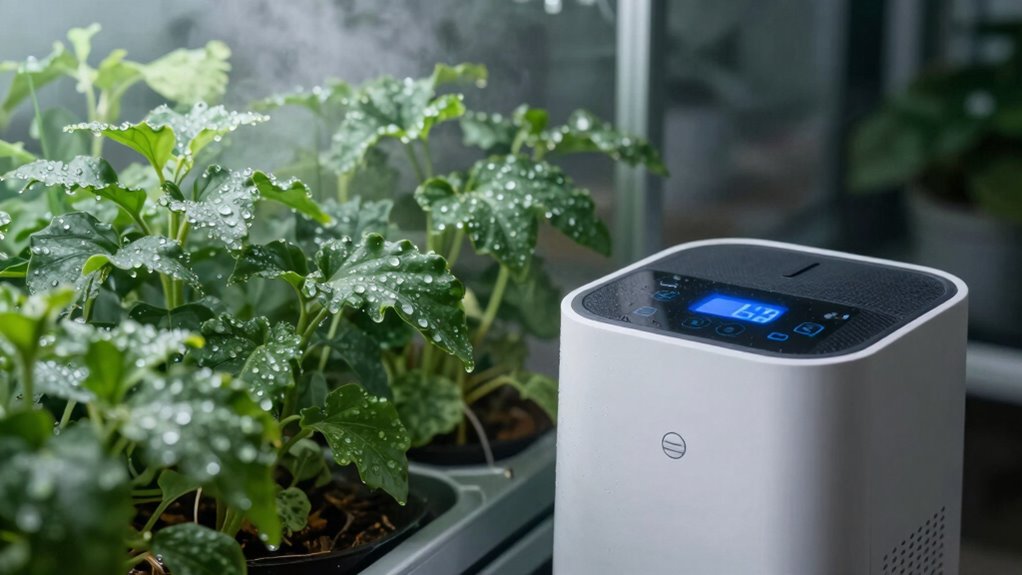
Creating a humidity management plan is essential for preventing mold and ensuring healthy plant growth in your grow room. Start by monitoring humidity levels regularly using reliable hygrometers, and adjust your ventilation and dehumidification systems accordingly. Consistent airflow helps reduce excess moisture, which can lead to mold and plant nutrient deficiencies. Keep your grow room lighting optimized, as improper lighting can affect transpiration rates, influencing humidity. Establish target humidity levels for each growth stage and stick to them, especially during flowering when mold risk is highest. Regularly inspect your plants and environment for signs of excess moisture or mold. By proactively managing humidity, you create a stable environment that promotes healthy plants and minimizes mold development.
What You Can Do Today to Maintain Safe Humidity Levels
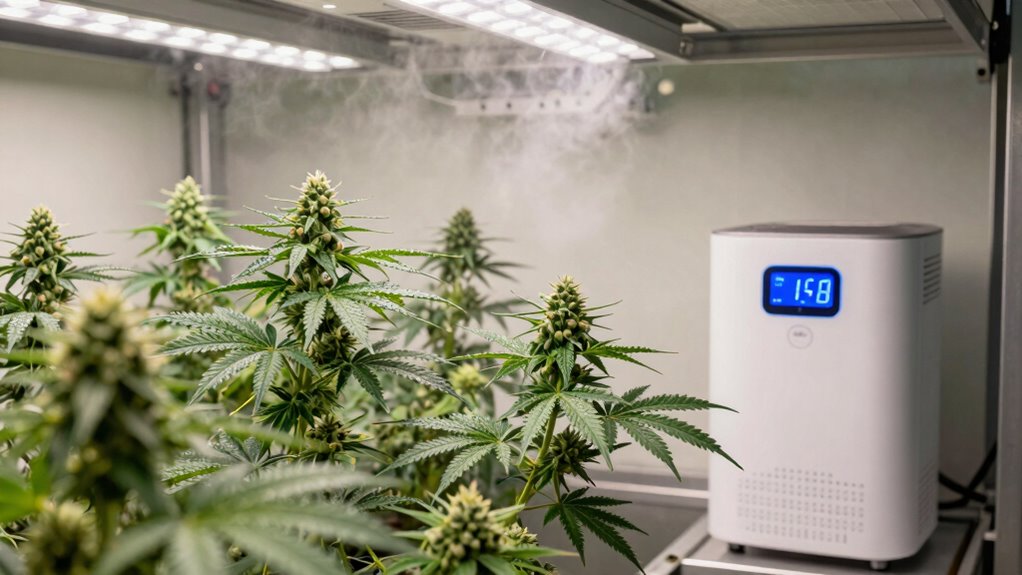
Today, you can start by regularly checking your grow room’s humidity levels to catch problems early. Make sure your dehumidifiers are working efficiently and properly sized for your space. Additionally, improving ventilation helps control moisture and keeps the environment safe for your plants.
Monitor Humidity Levels Regularly
Regularly monitoring your grow room’s humidity levels is essential to prevent issues like mold, mildew, or stressed plants. Using reliable humidity sensors helps you keep an accurate reading of your environment. Make sure to check these sensors frequently and apply calibration techniques to guarantee their accuracy over time. Proper calibration involves following the manufacturer’s instructions, often using a known humidity standard, so your sensors provide precise data. This ongoing vigilance allows you to detect fluctuations early and take corrective action before mold becomes a problem. Consistent monitoring and calibration give you a clear picture of your grow room’s conditions, helping you maintain safe humidity levels and protect your plants’ health.
Use Dehumidifiers Effectively
To maintain safe humidity levels in your grow room, effectively using dehumidifiers is essential. First, ensure proper dehumidifier placement—avoid corners and cluttered areas, and position units where air circulation is strong. Good air circulation helps distribute dry air evenly, preventing damp spots where mold can develop. Use fans strategically to keep air moving around the dehumidifier and plants. Regularly check the dehumidifier’s water collection and clean filters to keep it running efficiently. Adjust the humidity settings based on your grow stage and environmental conditions. By combining correct placement with good air circulation, you’ll optimize dehumidifier performance, maintain safe humidity levels, and reduce the risk of mold and other moisture-related problems in your grow room.
Ensure Proper Ventilation
Ensuring proper ventilation is essential for maintaining safe humidity levels in your grow room, and you can start making immediate adjustments to improve airflow. Good air circulation prevents moisture buildup and reduces mold risk. Focus on airflow management by installing exhaust fans and intake vents that promote continuous movement of air. Open windows or use oscillating fans to enhance vertical and horizontal airflow, preventing stagnant spots. Regularly check that vents are unobstructed and positioned to promote even distribution of fresh air. Proper ventilation helps control humidity naturally, reducing reliance on dehumidifiers. By actively managing airflow, you create an environment less conducive to mold growth, supporting healthy plant development and ensuring your grow room stays within safe humidity thresholds.
Frequently Asked Questions
Can Natural Methods Effectively Control Humidity Without a Dehumidifier?
Natural mitigation can help you balance humidity levels without a dehumidifier, but it might not be enough alone. You can improve humidity balancing by increasing airflow, using silica gel packs, or venting excess moisture outdoors. These methods help regulate moisture, but if humidity remains high, relying solely on natural techniques may risk mold growth. For ideal control, combining natural mitigation with mechanical dehumidification is often the safest approach.
How Does Temperature Influence Mold Development in Humidity Control?
Think of your grow room as a cozy house—temperature regulation acts like the thermostat that keeps everything balanced. When it’s too warm, mold spores thrive, like weeds spreading rapidly. Proper temperature regulation prevents mold development by keeping conditions inhospitable for mold growth. To guarantee mold prevention, you must maintain consistent, ideal temperatures, avoiding extremes that invite mold. This way, you safeguard your plants and maintain a healthy environment.
Are There Specific Cannabis Strains More Resistant to Mold?
Certain cannabis strains have genetic resistance to mold, making strain selection vital for mold prevention. You should look for strains known for their resilience, such as hardy indica varieties or those with thicker buds and denser structures. By choosing these resistant strains, you actively reduce mold risk in your grow room. Focus on genetic resistance and strain selection to create a healthier environment, especially in high humidity conditions.
What Are the Long-Term Effects of High Humidity on Plant Health?
High humidity causes long-term plant stress, weakening your plants and making them more vulnerable to diseases. It also leads to nutrient deficiencies because excess moisture hampers nutrient uptake and causes root issues. Over time, your plants may show slowed growth, reduced yields, or even die if humidity remains unchecked. Maintain proper humidity levels to protect your plants’ health, promote vigorous growth, and avoid these long-term negative effects.
How Often Should Dehumidifiers Be Serviced for Optimal Performance?
You should schedule dehumidifier maintenance every 3 to 6 months for ideal servicing. Regular dehumidifier maintenance ensures it runs efficiently, preventing mold and humidity issues that can harm your plants. Keep filters clean, check for wear and tear, and inspect the coils. Proper care extends your equipment’s lifespan and maintains a stable environment, ultimately supporting healthy growth and preventing costly repairs.
Conclusion
So, congratulations—you now know the secret to avoiding mold disaster in your grow room. Just keep those humidity levels in check, or risk turning your lush paradise into a moldy horror show. Don’t be that grower who’s surprised when their buds turn fuzzy—literally. With a little effort and the right tools, you’ll keep your plants happy, healthy, and mold-free. After all, nobody wants to smoke a side of mildew with their harvest!