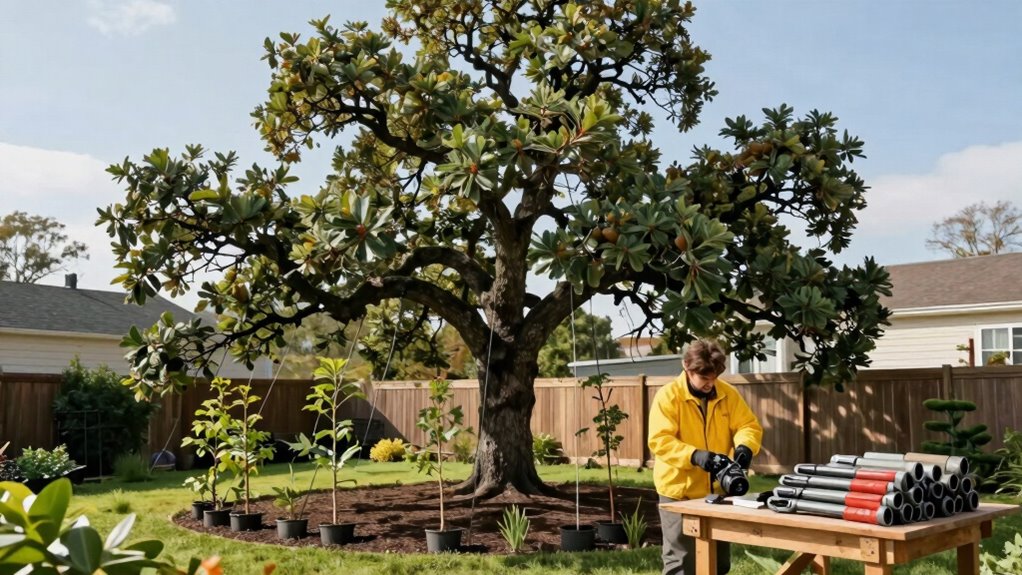

To prepare for wind season, inspect your trees for signs of instability, such as exposed roots or cracks, and consult an arborist to assess their health. Proper pruning removes dead or damaged branches and improves airflow, reducing wind resistance. Mulch around the base to stabilize roots, but avoid piling mulch against the trunk. Regular inspections and professional advice help spot vulnerabilities early. Keep your trees strong and safe—if you want to learn more, you’ll find helpful tips below.
Key Takeaways
- Conduct professional root inspections to identify and address stability issues early.
- Prune dead or weak branches to reduce wind-related breakage risks.
- Mulch around trees to stabilize soil and maintain moisture, avoiding trunk contact.
- Remove leaning or compromised trees that pose hazards during storms.
- Schedule regular professional assessments to detect vulnerabilities and ensure proper maintenance.
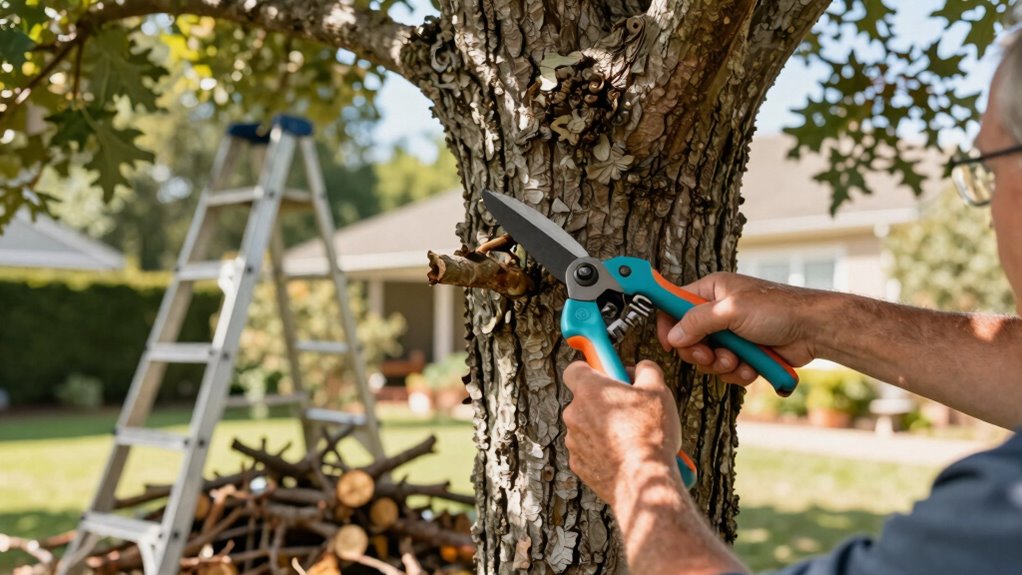
As wind season approaches, it’s vital to proactively safeguard your property by preparing for potential tree damage. Strong winds can cause significant harm if your trees aren’t properly inspected and maintained. Start by conducting a thorough root inspection to identify any signs of instability or decay. Look for exposed roots, cracks, or areas where the soil has shifted around the base of the tree. If you notice any issues, it’s best to consult a professional arborist who can assess the root health more accurately and recommend necessary actions. Healthy roots are essential for a tree’s stability, especially during storms, so addressing root concerns early can prevent catastrophic failures later on.
Next, focus on pruning techniques to reinforce your trees’ resilience. Proper pruning isn’t just about aesthetics; it’s a key part of reducing wind resistance and preventing limb breakage. Remove any dead, diseased, or damaged branches, as these are more likely to fall during high winds. When pruning, make clean cuts just outside the branch collar to promote healthy healing and avoid leaving stubs that can invite pests or decay. Thin out dense foliage to improve airflow through the canopy, which reduces wind pressure and minimizes the risk of branches snapping off. Avoid over-pruning, however, as removing too much can weaken the tree and make it more vulnerable to wind damage.
In addition to pruning, consider the overall health and structure of your trees. Identify any leaning or weakly anchored trees that may need additional support or even removal if they pose a risk. Mulching around the base of the tree can help maintain soil moisture and stabilize roots, but avoid piling mulch against the trunk, which can promote rot. If your property has multiple mature trees, spacing and strategic pruning become even more critical to prevent overlapping canopies from catching wind and increasing the chance of damage. Regularly checking for signs of pests or disease is also crucial, as these issues weaken trees and make them more susceptible to wind damage. Ensuring the overall tree health and structure is robust is essential for withstanding stormy weather. Proper maintenance, including root inspection and pruning, helps guarantee your trees are healthy, stable, and ready to withstand the upcoming wind season. Preparing now minimizes risks and keeps your property safer, giving you peace of mind when stormy weather hits. Additionally, understanding how tree stability impacts your landscape can guide your proactive measures more effectively. Regularly consulting with tree care professionals can help identify potential vulnerabilities before they become hazards. Maintaining proper tree care practices can significantly improve your trees’ resilience against storm damage. Moreover, educating yourself about storm preparedness can further enhance your overall readiness for severe weather events.

Fiskars 28” Garden Bypass Loppers, Tree Trimmer with 1.5" Cut Capacity
- Ideal for Branch Trimming: Cuts branches up to 1.5 inches thick
- Sharp Bypass Steel Blade: Ensures smooth, precise cuts
- Rust-Resistant Coating: Prevents rust and reduces gumming
As an affiliate, we earn on qualifying purchases.
As an affiliate, we earn on qualifying purchases.
Frequently Asked Questions
How Often Should I Inspect My Trees for Damage?
You should inspect your trees for damage at least once a month to maintain good tree health and guarantee storm preparedness. After storms or strong winds, check for broken branches, leaning trees, or cracks. Regular inspections help you catch problems early, reducing the risk of damage during wind season. By staying vigilant, you’re better prepared for storms, protecting your property and ensuring your trees remain healthy and resilient.
What Tools Are Best for Pruning Trees Safely?
Think of pruning tools as your tree’s trusted scalpel. A sharp pruning saw or bypass pruners are best for precise cuts, ensuring tree health and proper pruning techniques. Use loppers for thicker branches and hand shears for smaller limbs. These tools help you sculpt your tree safely, promoting growth and resilience. Keep blades sharp, clean, and suited for the job—your trees will thank you with strong, healthy branches.
When Is the Ideal Time for Tree Trimming?
You should trim trees during late winter or early spring when they’re dormant, which helps improve tree health and boosts storm resilience. Avoid trimming during the growing season or just before heavy winds, as it can weaken branches. Proper timing guarantees your trees stay strong and healthy, reducing the risk of storm damage. Regular maintenance keeps your landscape safe and resilient, especially before wind season peaks.
How Do I Identify Weak or Diseased Branches?
Think of your tree as a trusted friend; you need to notice when its strength falters. To identify weak or diseased branches, look for signs like cracks, dead or peeling bark, or unusual growths. Check branch stability by gently testing movement—if a branch wobbles or feels loose, it may be compromised. Spot disease signs such as discoloration, fungi, or sap leaks, and act promptly to keep your tree healthy.
Can I Prevent All Tree Damage Before Storms?
You can’t prevent all tree damage during storms, but you can considerably reduce risks through proactive storm preparedness. Focus on maintaining tree health by regular pruning, removing dead branches, and addressing diseased areas. Strengthening your trees’ resilience minimizes damage. While storms can be unpredictable, good tree care and timely interventions help protect your landscape, ensuring your trees are better prepared to withstand high winds and heavy rain.
Conclusion
By taking these proactive steps, you’re not just protecting your trees—you’re safeguarding your entire home from nature’s wildest tantrums. Imagine a single well-pruned tree standing tall and unscathed while others crumble like paper in the storm’s fury. Don’t wait for the skies to turn dark—act now to prevent your property from becoming a disaster zone. With a little effort, you’ll be the calm in the storm, confident that your trees are ready to weather anything.