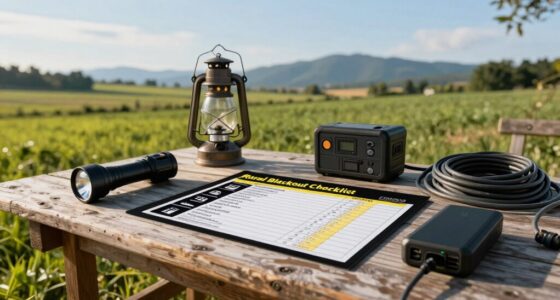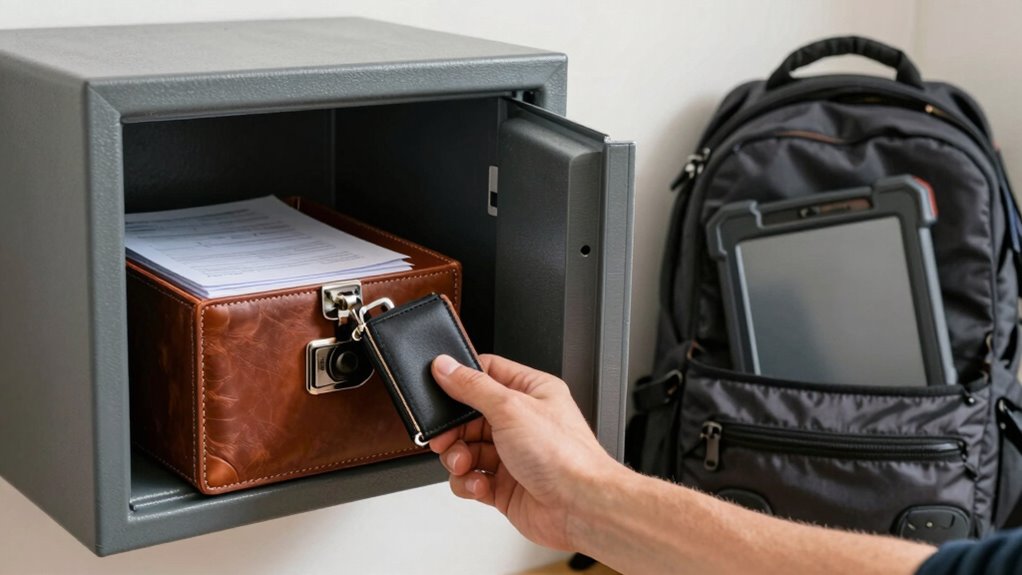

To protect your keys, documents, and devices during a fast evacuation, keep a designated, waterproof container near an exit with essential items ready to go. Store spare keys in secure, trusted locations outside your home or use a lockbox or digital keypad for quick access. Keep digital backups of important documents on secure cloud services or encrypted drives. Organize everything in advance and practice your plan to guarantee swift retrieval when time is critical. More tips are just ahead.
Key Takeaways
- Store keys, documents, and devices in waterproof, portable containers near exit points for quick access.
- Keep digital backups of important files on encrypted USB drives or secure cloud services.
- Use lockboxes, digital keypads, or trusted neighbors for secure, rapid key retrieval.
- Organize essential items in a designated go-bag for immediate evacuation.
- Regularly practice evacuation drills to ensure swift, confident retrieval of valuables.
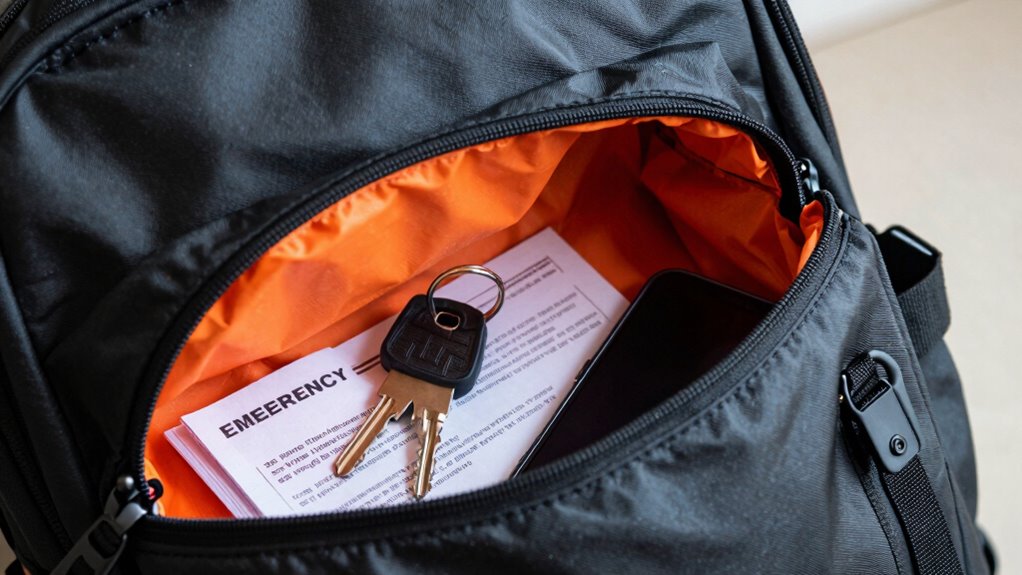
During a rapid evacuation, knowing what to grab quickly can make all the difference. You need to prioritize items that will help you maintain your home security, access important documents, and stay connected. You also want to ensure your essential equipment is organized and easily accessible, so you don’t waste time searching when every second counts. The key is to prepare in advance, so during the chaos, you can act swiftly without second-guessing. Having a designated go-bag with essential items guarantees you don’t waste precious time searching for valuables or important papers when every second counts.
Preparing a go-bag in advance helps you evacuate quickly, protect valuables, and stay connected during emergencies.
Start by gathering your most crucial documents—passports, IDs, insurance papers, medical records, and legal documents—and store them in a waterproof, portable container. Keep this container near your exit point or in a readily accessible location, so you can grab it instantly. Digital backups of these documents, stored securely on a cloud service or an encrypted USB drive, provide an extra layer of protection if physical copies get lost or damaged. It’s also wise to keep copies of important documents in a secondary location, like a trusted friend’s house or a safety deposit box, in case your primary collection is inaccessible. Ensuring your documents are securely stored and easily retrievable is a core aspect of home security during emergencies. Regularly updating your emergency plans and practicing quick access to these essentials can significantly reduce panic during actual evacuations.
When it comes to keys, it’s best to keep a spare set in a secure, known location outside your home—like a lockbox hidden in an inconspicuous spot or with a trusted neighbor. During an emergency, you’ll want to grab your keys swiftly and avoid wasting time searching for them. Consider installing a key organizer or a digital keypad lock that allows quick access with a code, especially if you’re worried about losing physical keys. This small step enhances your home security, ensuring your property remains protected even during emergencies. Additionally, choosing small, efficient wood stoves can help keep your home warm and safe during power outages or in the aftermath of an emergency. Properly organizing and maintaining your keys can also prevent unnecessary delays during urgent evacuations, especially if you create a dedicated spot for them in your home or evacuation kit.

Emergency Sleeping Bag 1 Pack | for Survival Gear and Supplies Life Bivy Sack Waterproof Mylar Emergency Blankets for Survival Kit Car Camping Gear Hiking Tac Bivvy Go Bag Supplies Sleep Sacks Shelter
- Pack Size: Includes 1 emergency sleeping bag
- Suitable For: Adults and children
- Waterproof Design: Waterproof for all weather conditions
As an affiliate, we earn on qualifying purchases.
As an affiliate, we earn on qualifying purchases.
Frequently Asked Questions
How Can I Quickly Identify Which Keys to Grab First?
You should quickly identify which keys to grab first by focusing on key identification and emergency prioritization. Look for keys labeled with essential areas like your home, office, or vehicle, especially those marked as urgent or high security. Keep a designated, easily accessible key bundle or container that’s clearly organized. This way, during a fast evacuation, you can swiftly grab the most important keys without wasting time searching, ensuring a smooth, prioritized exit.
What Are the Best Portable Storage Options for Important Documents?
You should choose portable storage options that prioritize security, like encrypted USB drives or external hard drives with digital encryption, ensuring your documents stay safe even if lost. Cloud storage services with strong encryption and quick access enable you to retrieve important files from any device during emergencies. Combining physical encrypted drives with secure cloud storage gives you flexible, reliable protection for your essential documents in fast evacuations.
How Do I Ensure Device Batteries Last During an Emergency?
To guarantee your device batteries last during an emergency, focus on battery preservation and power management. Turn off non-essential apps and features like Bluetooth and Wi-Fi, and lower screen brightness. Enable power-saving modes and disable notifications to conserve energy. Carry portable chargers or extra batteries if possible. Staying mindful of your device’s power usage helps you maintain communication and access crucial information when you need it most.
Are There Digital Backups for Physical Keys and Documents?
Yes, you can create digital backups of physical keys and documents. Safely store these backups using digital encryption to protect against unauthorized access. Choose multiple backup locations, such as cloud storage and external drives, to guarantee redundancy. This way, in emergencies, you can quickly access essential information without risking loss or damage. Always verify that your backups are current and accessible, providing peace of mind during fast evacuations.
What Are Recommended Security Measures for Evacuated Devices?
You should encrypt your evacuated devices with digital encryption to protect sensitive data from unauthorized access. Store these devices in physical safes or fireproof lockboxes to prevent theft or damage during the evacuation. Make certain safes are securely locked and, if possible, anchored. Regularly update encryption passwords, and keep backup copies of critical information in separate, secure locations. These measures ensure your devices and data stay protected during urgent evacuations.
Conclusion
In moments of swift change, gently prioritize what truly matters—your keys, documents, and devices. Think of them as your trusted companions, quietly guiding you through uncertainties. By keeping them close and organized, you ease your journey and preserve peace of mind. Remember, small acts of preparation can turn chaos into calm, allowing you to focus on what’s ahead. Stay calm, stay prepared, and let your valued essentials lead the way to safety.