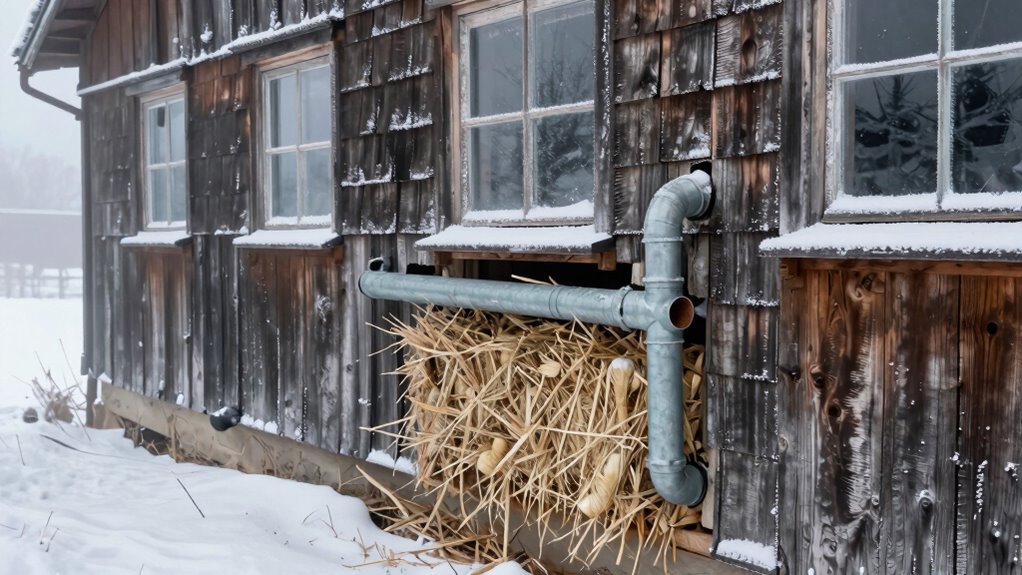

To safeguard your barn’s plumbing from freezing, start your freeze plans before temperatures drop. Insulate pipes, walls, and vulnerable areas, and consider installing heating tape or heat cables. Keep water flowing with a slow drip or use frost-free hydrants and heated troughs to prevent freezing. Regularly check pipes for early signs of trouble and have emergency supplies on hand. Taking these steps early guarantees your livestock stay hydrated and your infrastructure stays intact—more tips await if you continue.
Key Takeaways
- Initiate insulation and protective measures early to prevent pipe freezing during unexpected cold snaps.
- Review and upgrade plumbing setups, including rerouting vulnerable pipes and installing heating devices.
- Implement water circulation strategies, such as drip faucets, to keep water moving and reduce freezing risk.
- Stock emergency supplies like repair kits and portable heaters to address issues promptly.
- Monitor weather forecasts and inspect plumbing regularly as temperatures drop to ensure early detection of problems.
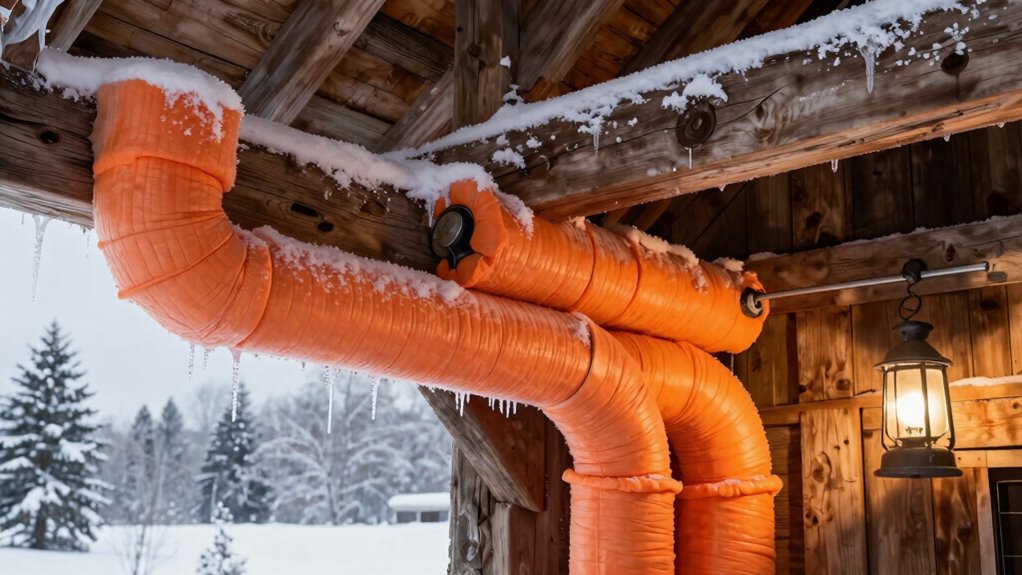
Are you prepared to protect your barn’s plumbing during freezing temperatures? If not, it’s time to get ahead of the cold snap. Freezing weather can quickly turn minor plumbing issues into major emergencies, disrupting your livestock hydration and risking costly repairs. Starting your freeze protection plans early ensures you’re not caught off guard when the temperatures drop. One of the most effective ways to safeguard your barn plumbing is by evaluating and improving barn insulation. Proper insulation keeps the ambient temperature higher around your water lines, reducing the risk of freezing. Focus on insulating not just the pipes but also the walls, floors, and any areas where cold air might seep in. Adding insulation foam or blankets around vulnerable pipes can make a huge difference, especially in less insulated sections of your barn. Remember, the goal is to maintain a consistent, warm environment that prevents the water from freezing inside the lines, guaranteeing your livestock stay properly hydrated.
Beyond insulation, you should also review your existing plumbing setup. Look for any exposed pipes or those running through unheated spaces and consider rerouting or protecting them. You might want to install heating tape or heat cables on vulnerable sections, especially in areas where insulation isn’t enough. These devices turn on automatically when temperatures drop, providing a steady source of heat directly where needed. It’s also wise to keep a close eye on your water supply. If your barn has a well or external water source, consider installing a frost-free hydrant or a heated water trough. These innovations help maintain livestock hydration without the constant worry of frozen pipes. Furthermore, it’s imperative to keep water moving. A slow drip from faucets or waterers can prevent freezing by maintaining circulation within the pipes. Just make sure any dripping water doesn’t create a hazard or waste water unnecessarily. Additionally, utilizing proper insulation techniques can significantly enhance your freeze protection strategy.
Planning ahead means keeping emergency supplies on hand, such as extra hoses, pipe repair kits, and portable heaters. It’s also a good idea to check your plumbing regularly as the weather cools—that way, you can catch any early signs of trouble before they escalate. By investing time in barn insulation, protecting exposed pipes, and ensuring proper water flow, you set the stage for a safe and productive winter. Starting your freeze plan early not only protects your infrastructure but also guarantees your livestock stay hydrated and healthy, regardless of how cold it gets. The key is proactive preparation—so don’t wait until the freeze hits; act now to keep your barn plumbing secure through the winter months.

CST2 General Cold-Shot Pipe Freeze Kit, Tube Wire Plumbing Freezes Pipes from 1/8 to 2 Inch, CO2 Water Pipe Plumbing Line Freezing Repair Kit for Copper Steel Aluminum Cast Iron
- Universal Pipe Compatibility: Freezes pipes from 1/8" to 2"
- Efficient and Cost-Effective: Faster and uses less CO2 than traditional kits
- Easy to Use: Simple setup for quick repairs in tight spaces
As an affiliate, we earn on qualifying purchases.
As an affiliate, we earn on qualifying purchases.
Frequently Asked Questions
How Early Should I Start Preparing for Winter Freeze Protection?
You should start preparing for winter freeze protection early in fall, ideally before winter weather hits. Begin with plumbing maintenance, insulating exposed pipes, and checking your heating system. By acting early, you reduce the risk of frozen or burst pipes during cold snaps. Staying proactive allows you to identify issues beforehand, ensuring your barn’s plumbing stays functional and protected throughout the winter months.
What Are Cost-Effective Ways to Insulate Barn Plumbing?
To insulate barn plumbing cost-effectively, you should use insulation materials like foam pipe insulation or fiberglass wraps, which are affordable and easy to install. Pair these with pipe heating cables or tapes for extra protection during severe cold snaps. This combination helps prevent pipe freezing by maintaining warmth and insulation, saving you money on repairs and energy costs in the long run.
Can I Use Temporary Fixes for Frozen Pipes?
When facing frozen pipes, you might think temporary fixes like pipe insulation or heating cables are enough—think again. These solutions act as band-aids, not cures. While pipe insulation and heating cables can prevent minor issues, they aren’t permanent. For lasting protection, consider more thorough measures. Relying solely on these temporary fixes is like building on quicksand—you’re only delaying the inevitable. Proper planning ensures your barn stays warm and functional through winter.
How Do I Prevent Pipe Bursts During Sudden Temperature Drops?
To prevent pipe bursts during sudden temperature drops, you should insulate your pipes with pipe insulation to keep the cold out. Also, use heat sources like space heaters or heat tape to maintain warmth in exposed areas. Keep interior doors open to allow warm air to circulate, and let your faucets drip slightly to prevent pressure build-up. These steps help maintain consistent temperatures and protect your pipes effectively.
What Signs Indicate a Pipe Is About to Freeze?
You’ll notice signs like reduced water flow, frost on pipes, or strange noises indicating a pipe might be about to freeze. Check for exposed pipes and guarantee they’re properly insulated with pipe insulation. Maintain good ventilation management to prevent excess humidity, which can contribute to freezing. If you spot these signs early, you can take action like adding heat or insulation to prevent a burst before temperatures drop further.
Conclusion
By planning ahead for plumbing freezes, you can save yourself a lot of trouble when temperatures plummet. Imagine checking your barn’s pipes before a cold snap, then insulating exposed lines and shutting off water to vulnerable areas. For example, a farmer once delayed winter prep, only to wake up to burst pipes and a flooded barn. Starting your freeze plan now keeps your livestock safe and your barn dry, no matter how harsh the winter gets.