
To make pasture introductions safer, watch for behavioral cues like tail position, ear orientation, and signs of stress such as pacing or vocalizing. Use well-maintained fencing and neutral spaces to reduce territorial disputes and prevent injuries. Gradually shift new members into the main herd while observing interactions closely. Providing enough space and visual barriers helps create a calm environment. If you want to learn more about fostering smooth herd integration, keep exploring effective strategies and tips.
Key Takeaways
- Use neutral zones to introduce new animals gradually and reduce territorial aggression.
- Observe behavioral cues like ear position and tail movement to detect stress or acceptance early.
- Maintain well-maintained, adjustable fencing to control interactions and prevent injuries.
- Provide ample space and visual barriers to minimize conflicts and establish social hierarchies safely.
- Practice patience, continuous monitoring, and timely interventions to foster a harmonious herd environment.
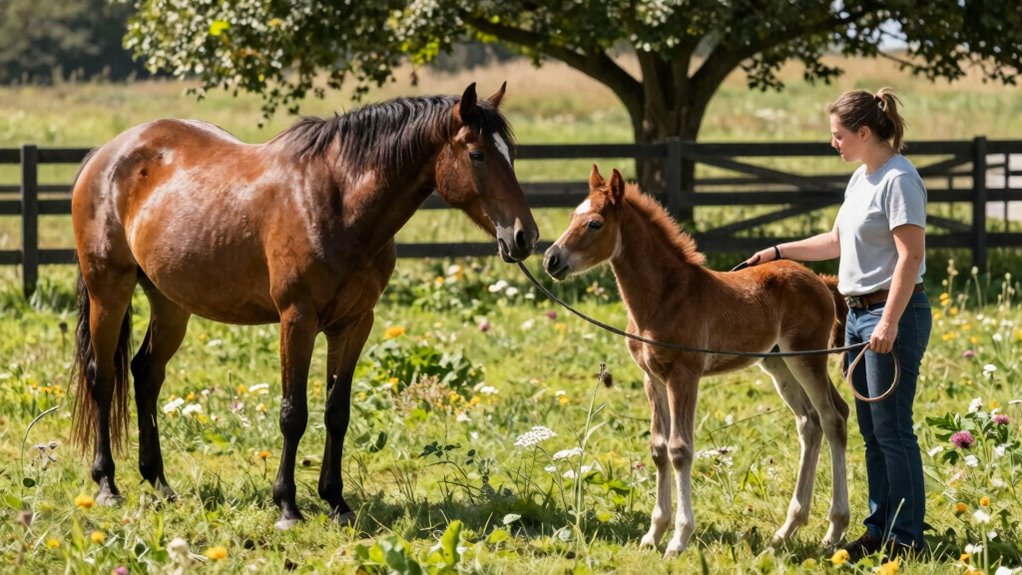
Have you ever introduced new animals to your pasture only to worry about conflicts or health issues? It’s a common concern among livestock owners. When you bring in new herd members, observing their behavioral cues becomes essential. These cues—such as tail position, ear orientation, and social interactions—give you insight into how well they’re adjusting and whether tensions are brewing. Recognizing signs of stress or aggression early allows you to intervene before conflicts escalate, ensuring a smoother integration process. Equally important are your fencing strategies. Proper fencing not only keeps animals contained but also helps manage their interactions safely. Using sturdy, well-maintained fencing minimizes accidental injuries and prevents dominant animals from bullying newcomers. Consider temporary fencing options, like electric fencing, to create a controlled environment where animals can get accustomed to each other gradually. This approach provides a physical barrier that reduces direct conflicts, giving everyone time to adjust.
When you first introduce new animals, it’s best to do so in a neutral space, preferably away from their usual territory. This reduces territorial disputes and helps new herd members feel less threatened. Once they’ve spent some time in the neutral area, slowly transition them into the main pasture, keeping a close eye on their behavioral cues. If you notice signs of stress—such as pacing, excessive vocalization, or aggressive posturing—you may need to intervene by separating the animals temporarily or adjusting fencing to create more space. It’s crucial to give everyone enough room to establish their social hierarchy without feeling cramped or cornered. Behavioral cues can serve as valuable indicators of animals’ comfort levels during this process. Additionally, providing appropriate space within the pasture encourages natural social behaviors and reduces the likelihood of conflicts. Creating visual barriers within your pasture can also help ease tensions by blocking direct line-of-sight conflicts, which can be especially beneficial during the initial introduction phase. Ensuring a safe environment is essential for preventing injuries and promoting positive interactions among herd members. Paying attention to social hierarchies can help you better understand the dynamics within your herd and manage introductions more effectively.
Throughout this process, patience is key. Watch for behavioral cues that indicate comfort or distress, and adjust your fencing strategies accordingly. By paying close attention to how your animals communicate and interact, you can foster a safer, more harmonious environment. Proper planning, observation, and strategic fencing make all the difference in ensuring your new herd members settle in peacefully, reducing stress and preventing conflicts.

Decofy Electric Fence Netting 42.5" x 164' Electric Netting Fence PE Portable Electric Netting with 14 Posts Double Spiked for Sheep, Goats, Lambs, Deers in Yard, Farms and Ranches Animals Protection
- Suitable for Large Animals: Ideal for sheep, goats, pigs, lambs
- Generous Coverage Area: 1681 sq ft of protected space
- Dual Animal Protection: Prevents predators and escapes
As an affiliate, we earn on qualifying purchases.
As an affiliate, we earn on qualifying purchases.
Frequently Asked Questions
How Long Should I Monitor New Herd Members After Introduction?
You should monitor new herd members for at least two to four weeks after introduction, following proper quarantine procedures beforehand. During this period, observe their behavior closely to guarantee they’re adapting well and not causing disruptions. Watch for signs of stress or aggression that could threaten the social hierarchy. Maintaining consistent observation helps you catch potential issues early, facilitating a smooth shift and a harmonious, healthy herd.
What Signs Indicate Aggression During Pasture Introductions?
Did you know that around 30% of herd conflicts stem from dominance behaviors? During pasture introductions, signs of aggression include head tossing, pawing, biting, or charging. Watch for territorial disputes like blocking access to feed or water, as these indicate the new member is asserting dominance. Recognizing these signs early helps you intervene, reducing injury risk and ensuring a smoother integration for everyone involved.
Can Introductions Be Done Overnight Safely?
Introductions can be done overnight safely if you carefully monitor the herd’s behavior. Watch for signs of territory marking and hierarchy establishment, like posturing or nibbling, which indicate the herd is adjusting. Keep the new member confined initially, then gradually release them. If aggression escalates or tension increases, it’s best to extend the introduction period, ensuring everyone feels secure and establishing the herd’s social order peacefully.
How Do I Introduce Multiple New Herd Members at Once?
When introducing multiple new herd members at once, you create a gentle dance of grazing compatibility and social hierarchy. Start by slowly integrating them into the shared space, observing interactions closely. Offer separate feeding areas initially to prevent competition, then gradually allow shared grazing. Keep a watchful eye on dominant behaviors, and be patient—this approach helps everyone find their place without stress, ensuring a peaceful, harmonious herd.
What Are Common Mistakes to Avoid During Introductions?
You should avoid rushing the introduction, as it can cause chaos, especially around pasture hierarchy and feeding competition. Don’t ignore subtle signs of aggression or stress; these indicate discomfort. Introducing too many new herd members at once can overwhelm the existing social order. Always monitor their interactions closely, make certain there is enough space and resources, and gradually integrate newcomers. This approach helps minimize conflicts and establishes a peaceful, balanced herd.
Conclusion
By following these steps, you’ll create a smooth shift for new herd members, turning potential chaos into harmony. Think of the introduction process as tending a delicate garden—patience and care will help new relationships blossom safely. Remember, a well-planned introduction is the sturdy foundation upon which a peaceful, thriving herd is built. With these strategies, you’re not just adding new members; you’re nurturing a resilient, happy pasture where everyone can flourish together.