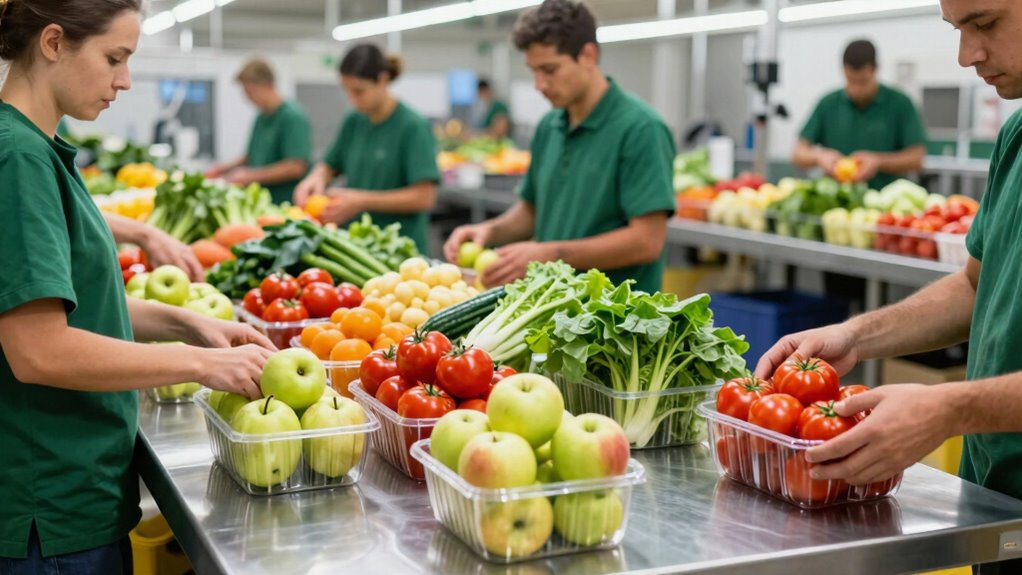

Using sorting tables with standardized harvest containers speeds up your packing process by allowing you to quickly identify, categorize, and route containers without delays. These uniform containers reduce errors and make manual sorting faster and more accurate. Automated systems handle bulk sorting efficiently, keeping your packing stations supplied and minimizing bottlenecks. The streamlined workflow decreases fatigue and increases overall productivity. Keep exploring how adopting these tools can further optimize your operation and drive high-volume throughput.
Key Takeaways
- Automated sorting tables quickly identify and route standardized harvest containers, reducing manual handling time.
- Uniform containers streamline packing by enabling faster, more accurate placement of items into boxes.
- Consistent container sizes minimize errors and improve packing efficiency at the final packing station.
- Automated sorting reduces bottlenecks, ensuring a steady flow of containers to packing stations.
- Standardized containers simplify workflow, increasing overall throughput and worker productivity during high-volume harvests.
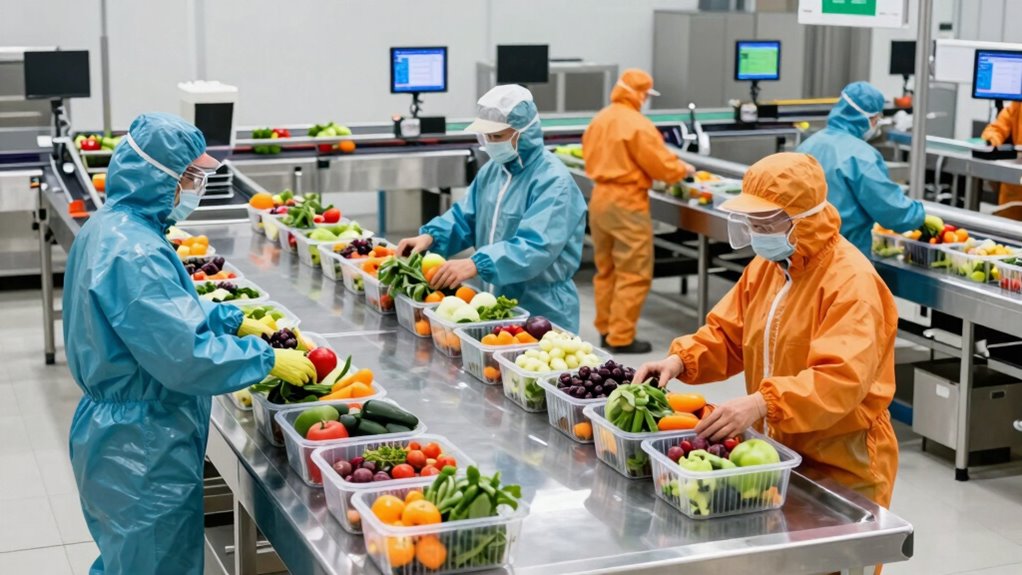
Have you ever wondered how warehouses manage to pack orders so quickly? It’s often because they use a combination of automated sorting and manual packing processes that work seamlessly together. When harvest containers are standardized, it simplifies the entire logistics flow. You see, automated sorting systems can rapidly identify, categorize, and route these containers based on preset parameters. This technology drastically reduces the time spent on sorting by eliminating the need for manual intervention in the initial stages. Instead of workers sorting through each container, machines handle the bulk of the work, ensuring that each item moves swiftly along the conveyor belts toward packing stations.
Once the containers reach the packing area, manual packing takes center stage. Here, workers focus on the final step—carefully placing items into boxes for shipment. Because the harvest containers are standardized, workers know exactly what to expect. This predictability reduces errors and speeds up the packing process. Instead of rummaging through irregularly shaped or inconsistent containers, they work with uniform units, which makes stacking and packing more efficient. They can also organize their workspace better, knowing the size and quantity of items they need to handle. Additionally, standardized containers facilitate efficient inventory management, making it easier to track and replenish supplies as needed. The use of automation further enhances the speed and accuracy of the process, especially during busy harvest periods.
The real advantage of standardized harvest containers is how it streamlines the entire operation. Automated sorting systems can be calibrated to recognize these containers instantly, minimizing delays and allowing for a continuous flow of materials. As a result, packing stations are never left waiting for supplies, keeping the throughput high. This setup not only speeds up the process but also reduces fatigue among workers, who don’t have to deal with unpredictable packaging scenarios. Instead, they can focus on accuracy and quality control, ensuring each order is correctly packed and ready for dispatch. Moreover, the consistency in container size also improves worker productivity, leading to a more efficient workflow overall.
Furthermore, because the sorting is automated early in the process, there’s less need for manual sorting later on. This means fewer bottlenecks, less human error, and a smoother workflow overall. You get a system that maximizes efficiency: containers move quickly through sorting, and manual packing becomes a swift, precise task. When harvest containers are standardized, it’s easier to implement a streamlined process that leverages technology and human skill effectively. The use of automated sorting systems and standardized containers creates a more agile and responsive operation, especially during peak harvest times, ensuring high-volume throughput with minimal delays. The result is a faster, more reliable packing operation that can handle high volumes without sacrificing accuracy or quality. All these elements come together to make warehouse operations more efficient and adaptable.
automated sorting tables for harvest containers
As an affiliate, we earn on qualifying purchases.
As an affiliate, we earn on qualifying purchases.
Frequently Asked Questions
How Do Sorting Tables Handle Different Fruit Sizes?
Sorting tables handle fruit size variability by using adjustable guides and conveyors that separate fruits based on size. You can easily modify these settings to match different fruit dimensions, which improves sorting accuracy. This customization ensures that each fruit is correctly categorized, reducing damage and waste. By maintaining precise control over the sorting process, you guarantee faster packing and higher quality standards, even when dealing with diverse fruit sizes.
What Maintenance Is Required for Sorting Tables?
Think of your sorting table as a well-tuned instrument. To keep it humming smoothly, you need to perform regular cleaning procedures to prevent debris buildup. Calibration routines are essential too; they guarantee sorting accuracy for different fruit sizes. Check sensors and moving parts frequently, and lubricate where necessary. By maintaining it properly, your sorting table will stay efficient, reducing downtime and keeping your harvest flowing seamlessly.
Are Sorting Tables Adaptable to Various Container Shapes?
Yes, sorting tables are adaptable to various container shapes, thanks to container customization options. You can easily modify the table to accommodate different sizes and forms, ensuring efficient sorting. Additionally, their ergonomic design helps reduce fatigue and increase comfort during use, regardless of container type. This flexibility makes sorting tables versatile and suitable for diverse harvesting needs, streamlining your packing process while maintaining ergonomic efficiency.
How Does Automation Improve Packing Speed?
Think of automation as a swift river guiding your packing process. Robotic integration accelerates tasks, reducing manual effort, while data analytics streamlines decisions, ensuring efficiency. Together, they eliminate bottlenecks, increase consistency, and boost packing speed. You’ll find your workflow becomes more fluid, with fewer errors and faster throughput. Automation transforms your packing line into a well-oiled machine, enabling you to meet demands swiftly and reliably.
What Safety Features Are Included in Sorting Tables?
You’ll find that sorting tables include safety shields to protect you from moving parts and prevent accidents. Emergency stops are also installed, allowing you to quickly halt operations if needed, guaranteeing your safety. These features work together to create a secure environment, so you can focus on sorting efficiently without worrying about potential hazards. Always guarantee safety shields are in place and know how to activate emergency stops for maximum protection.
Conclusion
As you embrace the efficiency of sorting tables, remember they’re more than just tools—they’re the heartbeat of your packing process. By streamlining your work, you turn chaos into clarity, much like a conductor guiding an orchestra to harmony. When containers are standardized, your speed and accuracy soar, transforming a tedious task into a well-oiled machine. Ultimately, investing in these tables is investing in your success—because in the symphony of harvest, every note counts.