A harvest intake routine is vital because it guarantees your produce stays fresh and safe beyond just cooling the air. Proper handling, sorting, cleaning, and packing prevent damage, contamination, and spoilage. This process helps achieve uniform cooling, reduces waste, and maintains ideal storage conditions. Without a proper routine, even the coldest air can’t prevent quality loss or pathogen growth. Keep going, and you’ll discover how a well-designed intake plan can maximize your produce’s shelf life and quality.

Get garden gear delivered free with Prime
- Fast, free delivery on millions of items
- Prime Video, Amazon Music and more included
- Member-only deals all year
Key Takeaways
- Proper intake routines ensure produce is quickly and evenly cooled, preventing spoilage and maintaining freshness.
- They facilitate sanitation and handling practices that reduce pathogen risks and physical damage.
- Consistent procedures support optimal temperature regulation and prevent uneven cooling.
- Intake routines enable effective sorting and cleaning, reducing waste and enhancing storage quality.
- They help tailor cooling techniques to specific produce needs, extending shelf life and reducing losses.
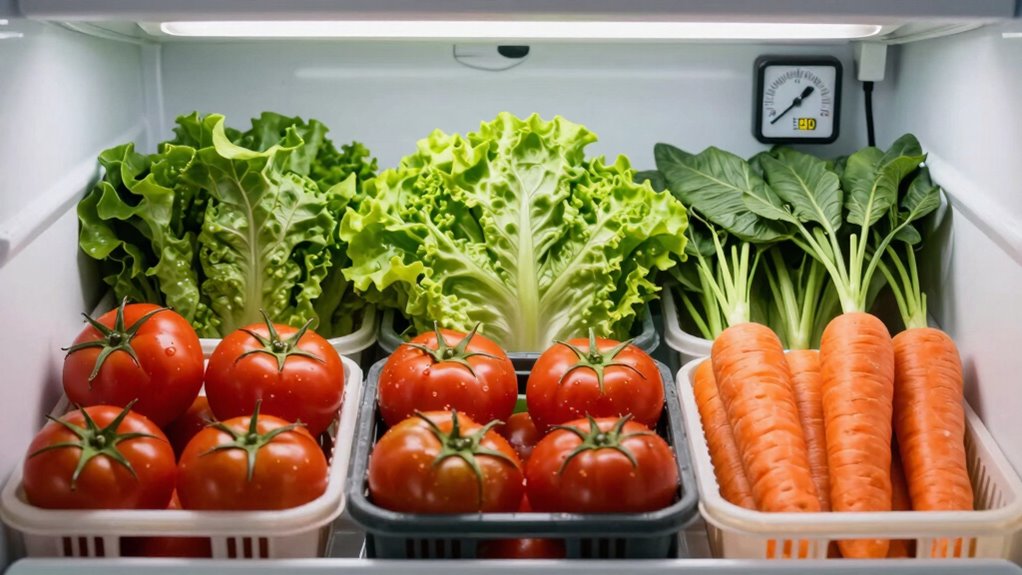
A well-organized produce cooler harvest routine is vital for maintaining the freshness and quality of your crops. But it’s not just about having cold air flowing through the cooler; it’s about how you manage the entire intake process. Proper harvest intake routines guarantee that your produce maintains maximum storage efficiency and temperature regulation from the moment it enters the cooler. If you overlook this step, even the coldest environment won’t prevent spoilage or quality loss.
Effective harvest intake routines ensure produce stays fresh and maintains optimal storage conditions from the moment it enters the cooler.
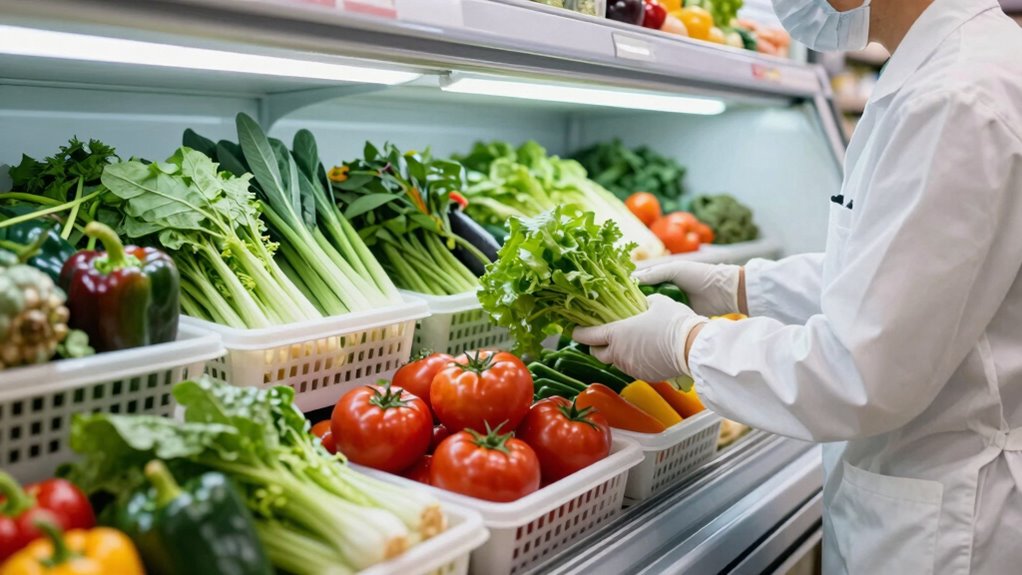
When you develop a harvest intake routine, you set the foundation for consistent storage conditions. This means carefully handling the produce right after harvest—sorting, cleaning, and packing it properly—before it ever reaches the cooler. By doing so, you prevent unnecessary damage, bruising, or contamination that can accelerate spoilage. This attention to detail improves storage efficiency because you’re minimizing waste and maximizing the amount of market-ready product you can store. It’s about making sure each piece of produce is in the best condition before it’s cooled, which helps your operation run smoothly and reduces losses. Additionally, implementing proper sanitation practices during intake minimizes the risk of introducing pathogens that could compromise the entire storage environment.
Temperature regulation is another pivotal factor that hinges on your intake routine. Simply having cold air in the cooler isn’t enough; you need to guarantee the produce is cooled rapidly and evenly. Proper intake procedures allow you to reduce the temperature of your crops quickly, preventing the development of spoilage bacteria and preserving freshness. This involves pre-cooling methods, like hydro-cooling or forced-air cooling, and making sure the produce is spread out in a way that promotes even cooling. If you just dump produce into the cooler without considering temperature regulation, some items may stay warmer longer, which increases the risk of decay. Additionally, understanding biodiversity can help you select the most suitable cooling techniques for different types of produce, ensuring optimal preservation. Incorporating post-harvest handling practices further support rapid and uniform cooling, as well as temperature management, ultimately extending the shelf life of your crops. Proper cooling techniques tailored for specific produce types can significantly improve overall storage outcomes.
produce pre-cooling hydro-cooling system
As an affiliate, we earn on qualifying purchases.
As an affiliate, we earn on qualifying purchases.
Frequently Asked Questions
How Often Should Harvest Intake Routines Be Reviewed and Updated?
You should review and update your harvest intake routines at least once a season or whenever you change harvest timing or storage conditions. Regular reviews help guarantee your procedures accommodate crop variety, climate changes, and storage updates. By staying proactive, you maintain ideal produce quality, reduce spoilage, and adapt to evolving conditions, making your cooler’s harvest intake process efficient and aligned with best practices.
What Training Is Needed for Staff on Harvest Intake Procedures?
You need to provide staff with thorough training on harvest intake procedures, emphasizing storage protocols to prevent spoilage. Picture your team correctly sorting, handling, and recording produce, guaranteeing freshness from the moment it arrives. This hands-on staff training covers proper temperature controls, sanitation, and documentation. By doing so, you reduce waste, maintain quality, and guarantee everyone understands their role in preserving produce integrity during intake.
How Do Harvest Routines Differ for Different Types of Produce?
You adjust harvest routines based on ripening stages and storage conditions. For example, fruits like tomatoes need to be harvested at specific ripening points to guarantee quality, while delicate greens require cooler, more humid conditions immediately after harvest. You handle each produce type carefully, optimizing storage conditions to prevent spoilage and maintain freshness. This tailored approach helps maximize shelf life and ensures your produce stays fresh and appealing.
What Are Common Mistakes to Avoid During Harvest Intake?
You should avoid rushing the harvest intake process, as improper temperature control can lead to spoilage. Make sure sanitation practices are strictly followed to prevent contamination. Don’t overlook inspecting produce for damage or pests, which can compromise quality and safety. Also, avoid mixing different types of produce without proper sorting. These mistakes can cause spoilage, reduce shelf life, and impact overall produce quality in your cooler.
How Does Harvest Intake Impact Overall Produce Quality and Shelf Life?
Think of harvest intake as planting seeds for quality; it shapes your produce’s future. Proper post-harvest handling and precise temperature management during intake preserve freshness and extend shelf life. When you control these factors, you prevent spoilage and maintain texture and flavor. Skipping routine checks can turn a promising harvest into waste. Your careful approach guarantees produce stays vibrant, fresh, and appealing from farm to table.
Conclusion
By establishing a proper harvest intake routine, you’re planting the seeds for a cooler that works smarter, not just colder. Think of it as tuning a fine instrument—you guarantee every note, or in this case, every fruit and vegetable, hits the right pitch. Skipping this step is like trying to catch lightning in a bottle; it’s unpredictable and inefficient. With careful procedures, you’ll keep produce fresher longer, turning your cooler into a well-oiled machine that truly supports your harvest.
Halloween Picks
halloween
As an affiliate, we earn on qualifying purchases.