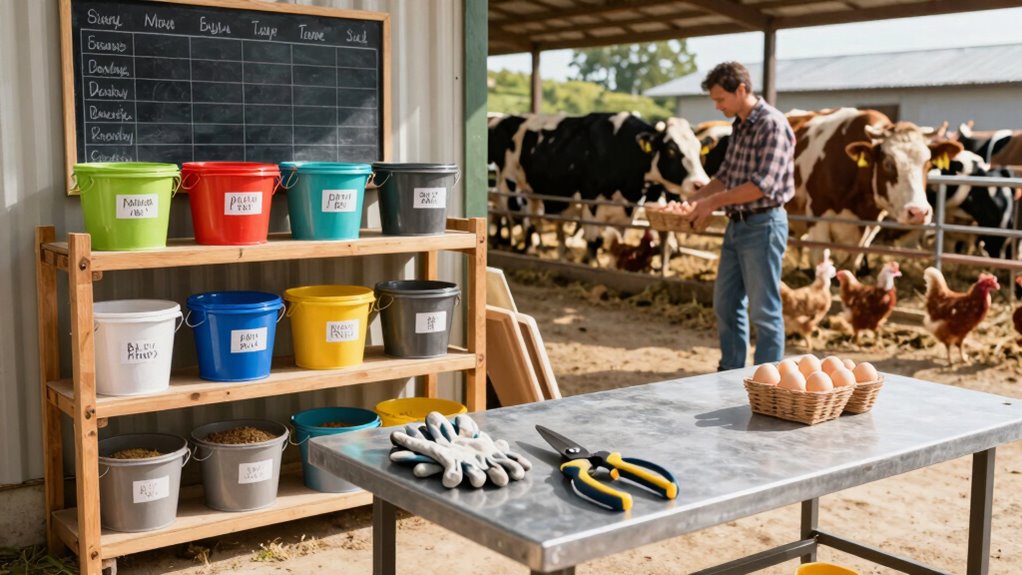

To build a better chore system for busy farm weeks, start by prioritizing and scheduling tasks based on urgency and frequency. Organize chores into clear categories and assign specific days or times to each. Regularly maintain and inspect equipment to prevent breakdowns, and implement routines that optimize workflow. Planning ahead and cutting chaos will make busy periods more manageable. Keep these strategies in mind, and you’ll discover more ways to stay efficient during peak times.
Key Takeaways
- Categorize chores by priority and schedule them for specific days to ensure critical tasks are completed on time.
- Perform preventive maintenance on equipment before busy periods to avoid breakdowns and ensure reliability.
- Implement structured routines and checklists to reduce chaos and maintain consistency during peak times.
- Use efficient scheduling techniques to allocate tasks effectively and maximize productivity during busy farm weeks.
- Conduct regular equipment inspections to identify and address issues early, preventing costly repairs and downtime.

When farm weeks get busy, a well-organized chore system becomes essential to keep everything running smoothly. You know that managing a farm involves juggling countless tasks, from tending animals to maintaining equipment. To stay on top of everything, especially during peak times, you need a plan that streamlines your daily routines. Start by categorizing chores based on priority and frequency. This way, you can quickly identify what must be done immediately and what can wait. Create a schedule that assigns specific tasks to certain days or times, reducing the chaos and ensuring nothing gets overlooked.
Farm equipment plays a crucial role in maintaining efficiency during hectic weeks. Make sure your tools and machinery are in good working order before the busy period begins. Regular maintenance, like checking oil levels, sharpening blades, or inspecting belts, prevents breakdowns that could slow you down. Keep a list of equipment needs or repairs so you can address issues proactively. When you know your equipment is reliable, you can allocate more time to actual farm tasks rather than troubleshooting machinery problems. This preparation allows you to focus on critical chores without unnecessary interruptions. Additionally, understanding the importance of preventive maintenance can help prolong the lifespan of your equipment and reduce unexpected downtime. Implementing efficient scheduling techniques can further optimize your workflow and save time during busy weeks. Incorporating timely inspections into your routine can also catch potential issues early, preventing costly repairs later. Emphasizing routine checks can help you stay ahead of problems and keep everything running smoothly.
As an affiliate, we earn on qualifying purchases.
Frequently Asked Questions
How Do I Motivate Reluctant Family Members to Participate?
To motivate reluctant family members, try using family incentives like rewards or privileges for completed chores. Make chores fair by implementing a chore rotation system, so everyone shares responsibilities equally. Show appreciation and praise when they contribute, which boosts their motivation. Also, involve them in planning the chore system, giving them ownership. This collaborative approach encourages participation and helps reluctant members feel valued and more willing to pitch in.
What Tools Can Simplify Chore Tracking?
Imagine you’re using a trusty old horse-drawn wagon, but now, digital apps are your modern equivalent. To simplify chore tracking, try digital apps like Cozi or OurHome, which act as interactive chore charts. They let everyone see their tasks, mark them complete, and stay accountable. These tools keep chores organized, reduce confusion, and save you time—making busy farm weeks a lot more manageable.
How to Handle Unexpected Farm Emergencies During Busy Weeks?
When unexpected farm emergencies happen during busy weeks, prioritize farm safety and stay calm. Keep an emergency preparedness kit nearby, including first aid supplies and contact info for vets or emergency services. Quickly assess the situation, delegate tasks to trusted helpers, and focus on urgent needs. Regularly review safety protocols with your team, ensuring everyone knows how to respond swiftly and effectively to protect both people and animals.
What Are Some Quick-Fix Solutions for Common Chores?
Ever notice how a quick fix can turn your day around? For common chores, use farm task delegation to split tasks efficiently, and keep a chore schedule flexible to adapt on the fly. Mowing the lawn or feeding animals? Do it during short breaks, or swap chores with family members. This way, you stay on top of tasks, even during hectic farm weeks, without feeling overwhelmed.
How Can Technology Improve Farm Chore Management?
Technology can considerably improve farm chore management through smart scheduling and automated reminders. You can set up digital calendars that optimize task timing based on weather and workload, ensuring chores are done efficiently. Automated reminders notify you when specific tasks are due, reducing forgetfulness and keeping everyone on track. This streamlines your farm’s daily operations, saves time, and helps maintain productivity even during busy weeks.
Conclusion
So, next time your farm feels chaotic, remember that a simple chore system might just be the key—though, of course, it’s always easier to pretend chores will magically do themselves. Irony is, with a little planning, you’ll find yourself with more free time, yet somehow still wishing for a quiet moment. But hey, at least you’ll have a smarter way to keep the farm running—even if it doesn’t make chores vanish!