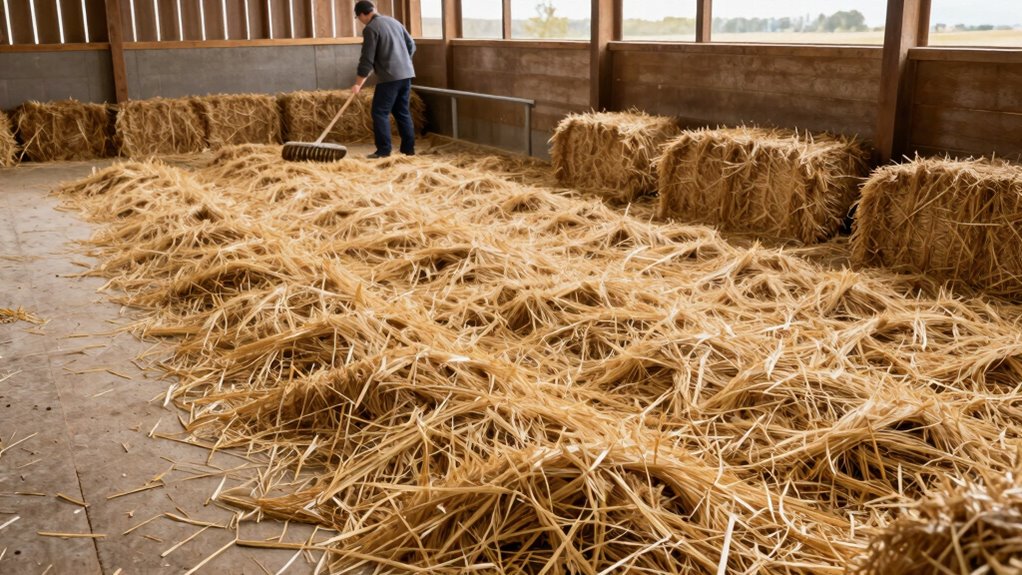

To keep your barn cleaner and drier, regularly add fresh bedding materials like straw, wood shavings, or sawdust to absorb moisture and control odors. Turn or stir the bedding often to aerate and prevent moisture buildup, and remove soiled bedding completely at each cleaning. Using automation or manure scrapers can make the process easier, while monitoring moisture levels helps maintain a healthy environment. Keep your barn hygienic—more tips on how to optimize bedding habits follow.

Get garden gear delivered free with Prime
- Fast, free delivery on millions of items
- Prime Video, Amazon Music and more included
- Member-only deals all year
Key Takeaways
- Regularly add fresh, absorbent bedding materials like straw or wood shavings to maintain dryness.
- Turn or stir bedding frequently to aerate and reduce moisture buildup.
- Remove soiled bedding completely during manure cleaning to prevent bacterial growth.
- Monitor and control bedding moisture levels to avoid wet spots and mold formation.
- Use automated bedding systems or scrapers to ensure consistent and efficient bedding management.

Maintaining clean and dry barns is essential for the health of your livestock and the efficiency of your operations. One of the key factors in achieving this is effective manure management. Regular removal of manure prevents the buildup of waste, which can lead to ammonia build-up, respiratory issues, and infections. You should establish a consistent schedule for cleaning out manure, whether that’s daily or a few times a week, depending on the size of your herd and the barn’s design. Using proper tools like pitchforks, shovels, or manure loaders can speed up the process and make it less labor-intensive. Also, consider installing manure scrapers or automated systems if your operation is large; these can help keep the barn floor cleaner and drier with less manual effort.
Equally important is bedding material selection. The right bedding not only provides comfort for your animals but also plays a critical role in moisture absorption and odor control. When choosing bedding material, look for options that are highly absorbent, such as straw, wood shavings, or sawdust. These materials help wick moisture away from the animals and the bedding surface, reducing the chances of wet spots that harbor bacteria and mold. Avoid using materials that retain moisture or break down quickly, as they can contribute to a damp environment and increase manure buildup. You should also consider the availability and cost of bedding materials, aiming for a balance between affordability and effectiveness.
Once you’ve selected your bedding, you need to maintain it properly. Regularly adding fresh bedding on top of soiled material prevents the buildup of wet, dirty layers, keeping the environment dry and comfortable. Turning or stirring the bedding periodically helps aerate it, reducing moisture retention and odor. When cleaning out manure, try to remove soiled bedding completely to prevent it from mixing with fresh material. This not only improves hygiene but also makes manure management more straightforward since the waste is less contaminated with bedding. Additionally, monitoring and controlling bedding moisture levels can significantly improve the overall cleanliness and health of the barn environment. Incorporating proper sanitation practices into your routine further enhances barn hygiene and prevents disease transmission. Regular inspection and prompt attention to moisture issues are crucial for maintaining optimal barn conditions.
barn bedding materials straw wood shavings
As an affiliate, we earn on qualifying purchases.
As an affiliate, we earn on qualifying purchases.
Frequently Asked Questions
How Often Should Bedding Be Replaced in Commercial Barns?
You should replace bedding in commercial barns regularly, typically every 1 to 2 weeks, depending on the barn’s size and animal load. Proper bedding disposal is essential to prevent odors and maintain cleanliness. Consider bedding composting as an eco-friendly disposal method, turning waste into valuable compost. Frequent bedding replacement and responsible disposal help keep your barn drier, healthier, and more comfortable for your animals.
What Bedding Materials Are Most Environmentally Sustainable?
You should choose eco-friendly alternatives like straw, hay, or wood shavings, which are natural bedding options that break down easily and have minimal environmental impact. These materials are renewable, biodegradable, and often locally sourced, reducing transportation emissions. By opting for natural bedding options, you support sustainability and promote healthier barn environments, ensuring your farm remains eco-friendly while providing comfortable, safe bedding for your animals.
How Do Bedding Habits Vary for Different Livestock Types?
You should adjust bedding habits based on livestock type to guarantee livestock comfort and maintain a clean environment. For example, cattle need bedding that offers insulation, so you’ll change bedding frequently to keep it dry and comfortable. Chickens require well-maintained bedding to prevent diseases, so frequent bedding refreshes are essential. Regularly monitoring and adjusting bedding frequency helps keep all livestock comfortable, healthy, and reduces barn odors.
Can Bedding Management Reduce Airborne Pathogen Spread?
In the blink of an eye, bedding management can cut airborne transmission of pathogens. You should focus on bedding sterilization, regularly replacing soiled material, and maintaining dry bedding to prevent mold and bacteria buildup. Good airflow and dust control are essential, too. These habits create a barrier against airborne pathogens, reducing disease spread and keeping your livestock healthier. Proper bedding management is your best defense in preventing airborne transmission in your barn.
What Are Cost-Effective Bedding Strategies for Small Farms?
To save costs on small farms, focus on effective bedding rotation to minimize material use and extend bedding lifespan. Incorporate cost-saving techniques like using recycled or locally available bedding materials and maintaining ideal moisture levels to reduce waste. Regularly turn and clean bedding to prevent buildup, which helps avoid frequent replacements. These strategies keep your barn cleaner and drier without overspending, ensuring healthier animals and lower operational costs.
Conclusion
By adopting these bedding habits, you create a cleaner, drier barn—yet, in doing so, you also craft a healthier environment for your animals. It’s easy to focus on the immediate comfort, but the real reward lies in the long-term wellbeing you foster. Just as fresh bedding prevents illness, your consistent care builds trust and resilience. Remember, the smallest actions—like changing bedding—can have the biggest impact, proving that cleanliness and care go hand in hand.
Fall Picks
fall essentials
As an affiliate, we earn on qualifying purchases.