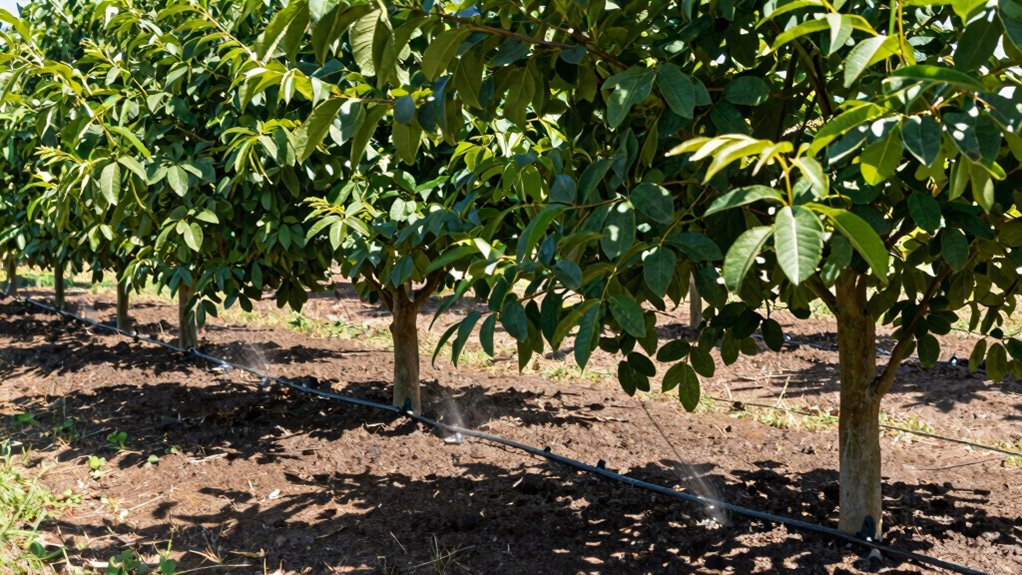

Grouping trees by their water needs makes your drip irrigation system more efficient and effective. When trees with similar moisture requirements are clustered, you can deliver the right amount of water to each section, reducing waste and promoting healthier growth. It also helps prevent overwatering or underwatering, which can harm roots. Plus, this approach supports better soil health and saves costs. Keep exploring, and you’ll discover even more ways to optimize your orchard’s watering system.

Get garden gear delivered free with Prime
- Fast, free delivery on millions of items
- Prime Video, Amazon Music and more included
- Member-only deals all year
Key Takeaways
- Grouping trees by water needs ensures targeted, efficient drip irrigation, reducing waste and promoting healthy growth.
- It prevents overwatering or underwatering by customizing water delivery for different tree requirements.
- Clustering trees with similar needs simplifies zone management and irrigation scheduling.
- Proper grouping maintains soil moisture balance, supporting soil health and microbial activity.
- It enhances water conservation, lowers costs, and improves orchard productivity through precise irrigation control.
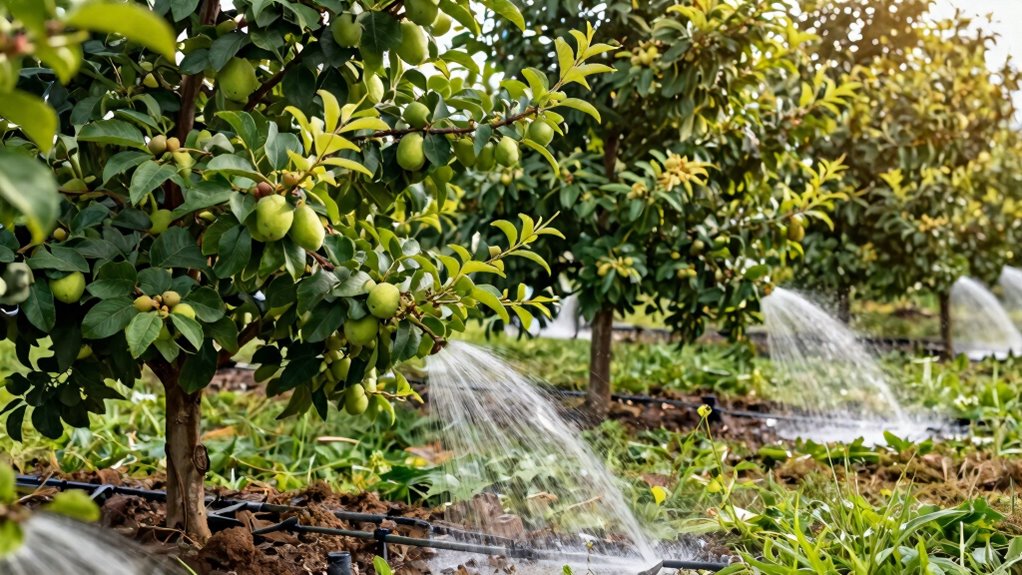
When managing an orchard, grouping trees by their water needs can considerably improve the efficiency of drip irrigation systems. This strategy guarantees that each section of your orchard receives the appropriate amount of water, minimizing waste and promoting healthier growth. When trees with similar water demands are irrigated together, you reduce overwatering and underwatering risks, leading to better water conservation. Saving water isn’t just good for the environment; it also lowers your irrigation costs and extends the longevity of your water resources.
By organizing your orchard based on water needs, you’re also supporting soil health. Overwatering certain areas can lead to waterlogged soil, which hampers root development and encourages disease. Conversely, underwatering can cause soil to become too dry, restricting nutrient uptake. When trees are grouped with similar water requirements, you create a more balanced soil environment, preventing these extremes. Consistent moisture levels foster a healthy soil microbiome, which is essential for nutrient cycling and overall tree vitality. This approach maintains the soil’s structure, prevents erosion, and encourages beneficial microbial activity, all of which contribute to a more productive orchard. Additionally, understanding the water needs of different tree varieties helps tailor your irrigation system more precisely to enhance overall orchard health.
Grouping trees by water needs promotes soil balance, healthy microbiomes, and more productive, resilient orchards.
Implementing this grouping system requires observing your trees carefully. Younger trees typically need more frequent watering, while mature trees may require less. Some varieties are drought-tolerant, and others thrive with consistent moisture. By taking note of these differences, you can design your drip lines to deliver water precisely where it’s needed. Installing separate zones or valves for different groups allows you to customize flow and timing, ensuring that each set of trees gets adequate hydration. This targeted approach reduces water runoff and deep percolation, which can carry nutrients away from roots and contribute to groundwater contamination. Proper irrigation zone management is essential for maximizing efficiency and maintaining healthy soil conditions. Recognizing the importance of soil moisture levels can further optimize your watering schedule and prevent stress on your trees. Being attentive to soil health can also help identify early signs of imbalance or disease, allowing for timely intervention.
As an affiliate, we earn on qualifying purchases.
Frequently Asked Questions
How Do I Determine Each Tree’s Water Needs?
To determine each tree’s water needs, check soil moisture regularly around the root zone, especially at different depths. Observe the soil’s dampness and note the root depth, as deeper roots require more water during dry periods. You can also perform a simple finger test or use moisture meters. Adjust your irrigation based on these observations, ensuring each tree receives adequate water without over-saturating the soil.
What Types of Trees Benefit Most From Grouped Drip Lines?
You’ll find that fruit trees, such as apples and cherries, benefit most from grouped drip lines because their soil moisture needs are similar, and their root expansion zones overlap. Grouping these trees ensures consistent watering, promoting healthy root growth. By tailoring watering to their specific needs, you prevent over- or under-watering, supporting ideal soil moisture levels and encouraging root expansion, which leads to a more productive orchard.
How Often Should I Check My Drip Irrigation System?
You should check your drip irrigation system weekly to make certain it’s working efficiently. Regular inspections help you maintain an appropriate watering schedule and prevent clogs or leaks. During each check, observe soil moisture levels around your trees—if the soil feels dry or overly wet, adjust the system accordingly. Consistent monitoring ensures your trees receive the right amount of water, promoting healthy growth and avoiding over- or under-watering issues.
Can Grouping Trees Affect Their Growth Rate?
Think of your orchard as a symphony—grouping trees by need creates harmony in growth. Yes, grouping can boost growth rates, especially with companion planting, which encourages beneficial interactions. Plus, it enhances pest control, making your orchard more resilient. When trees with similar water and nutrient needs are together, they thrive together, creating a vibrant, healthy environment. So, strategic grouping helps your orchard flourish naturally and efficiently.
What Are Common Mistakes When Installing Drip Lines?
A common mistake when installing drip lines is inconsistent drip line spacing, which can lead to uneven watering. You might also overlook proper root zone coverage, causing dry spots that hinder growth. Make sure drip lines are placed close enough to the roots, ideally matching the tree’s needs, and maintain even spacing throughout the orchard. Proper placement guarantees efficient water delivery, promoting healthy, vigorous trees.
Conclusion
By grouping trees according to their needs, you optimize your orchard’s watering efficiency, much like tailoring a suit fits better. Instead of treating every tree the same, you give each what it requires, leading to healthier growth. It’s a simple shift that makes a big difference—just as a well-planned drip line conserves water better than a one-size-fits-all approach. When you consider their needs, your orchard thrives, proving that precision beats uniformity every time.
Halloween Picks
halloween
As an affiliate, we earn on qualifying purchases.