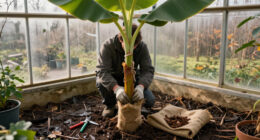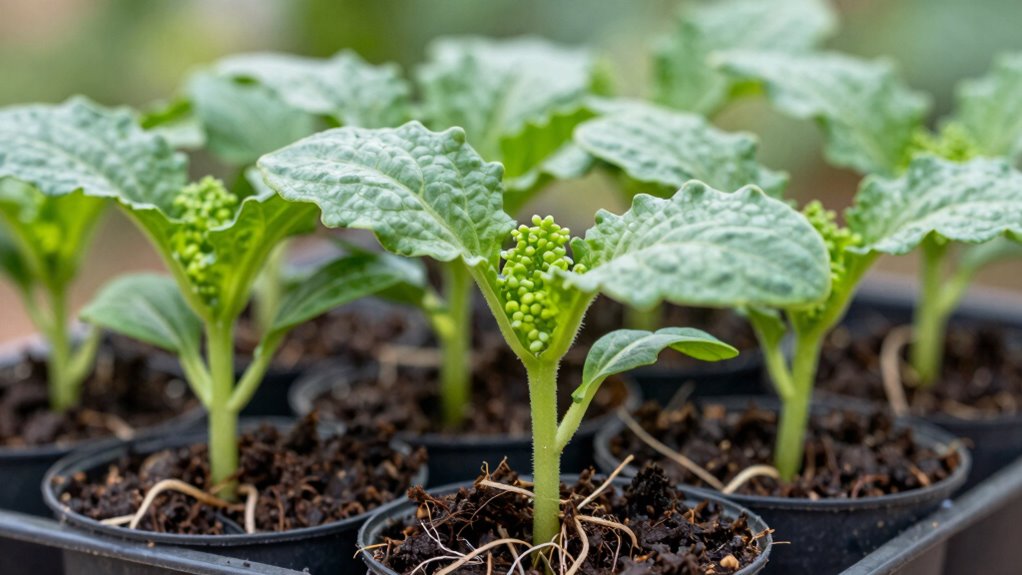

To keep your seedlings stocky, make sure they get plenty of bright, indirect light or use grow lights placed close to the leaves, raising them as your plants grow. Avoid overwatering, and use well-draining soil to prevent weak roots. Give your seedlings enough space to grow without overcrowding, and maintain good air circulation to prevent disease and stretching. Following these tips will help your seedlings develop strong stems—if you explore more, you’ll discover even better ways to foster healthy growth.

Get garden gear delivered free with Prime
- Fast, free delivery on millions of items
- Prime Video, Amazon Music and more included
- Member-only deals all year
Key Takeaways
- Provide 12-16 hours of bright, indirect light or grow lights positioned 2-3 inches above seedlings.
- Ensure consistent watering with well-draining soil, avoiding overwatering to prevent weak roots.
- Space seedlings adequately to reduce competition and promote strong, sturdy stems.
- Improve air circulation to prevent humidity build-up and encourage robust growth.
- Thin out weaker seedlings to allow remaining plants to develop strong, stocky stems.
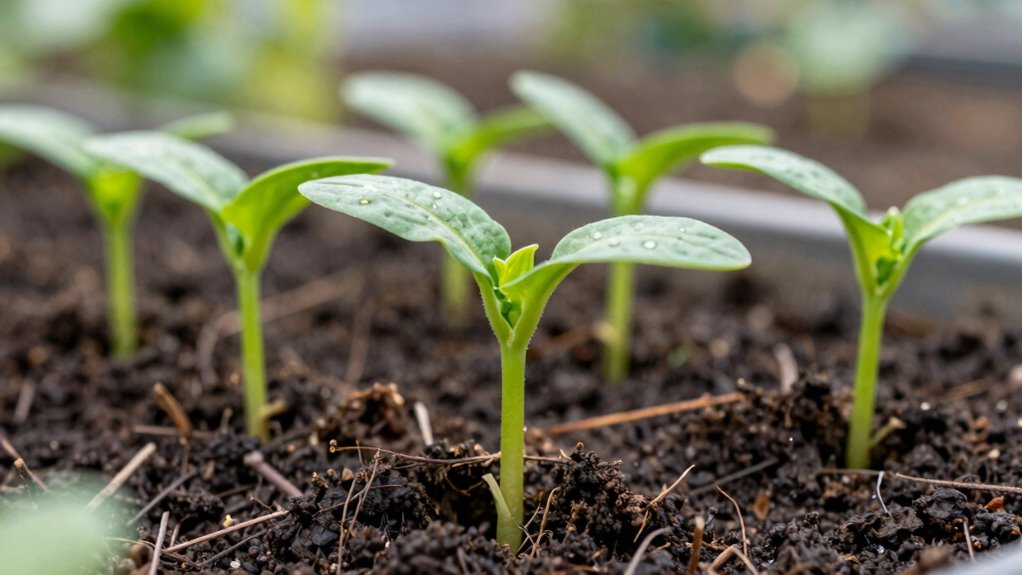
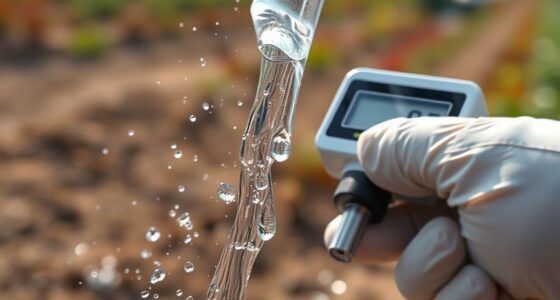
Growing strong, stocky seedlings is vital for healthy plants, and achieving this requires careful attention from the start. One of the most important aspects is guaranteeing robust root development. When roots grow deep and widespread, they anchor the plant firmly and access more nutrients and water, which helps prevent the seedlings from becoming tall and spindly. To promote healthy root growth, avoid overwatering, which can lead to weak, shallow roots or root rot. Instead, keep the soil consistently moist but not soggy, and consider using a well-draining seed-starting mix. Gently watering from the bottom encourages roots to reach downward, creating a sturdy foundation that supports a stockier plant. Additionally, using proper watering techniques can help prevent over- or underwatering, promoting stronger root systems.
Deep, widespread roots create strong, healthy seedlings; avoid overwatering and use well-draining soil for best growth.
Light management plays a vital role in controlling seedling growth. Too little light causes seedlings to stretch toward the light source, resulting in tall, weak stems. To keep your seedlings compact and sturdy, provide ample light—ideally 12 to 16 hours of bright, indirect sunlight or the equivalent with grow lights. Position grow lights close enough to the seedlings, about 2-3 inches above the leaves, to prevent stretching. As they grow, raise the lights gradually to maintain this distance. Proper light exposure signals to the plants that they should focus on developing strong stems and healthy leaves instead of elongating in search of light. Ensuring proper light intensity is essential for preventing legginess and promoting compact growth.
In addition to root development and light management, avoid over-fertilizing, which can encourage rapid, weak growth. Use a diluted, balanced fertilizer sparingly once your seedlings have their first true leaves. This approach supports steady, healthy development without promoting weak, leggy growth. Also, guarantee good air circulation around your seedlings. Stale air and high humidity can encourage diseases and stretch the plants as they try to grow away from unfavorable conditions. Ensuring proper ventilation can help maintain optimal humidity levels and prevent disease, fostering stronger growth. Proper airflow also helps regulate temperature and humidity, creating an environment conducive to healthy, stocky seedlings. Finally, don’t forget to thin your seedlings once they sprout. Overcrowding leads to competition for light, water, and nutrients, causing the weaker plants to stretch and become leggy. By carefully thinning out the weaker seedlings, you give the remaining plants more space to develop strong stems and healthy roots. Consistent attention to these details—root development, light management, proper watering, fertilizing, and thinning—will help you grow seedlings that are stocky, resilient, and ready for transplanting into your garden.
As an affiliate, we earn on qualifying purchases.
Frequently Asked Questions
What Are the Best Types of Soil for Healthy Seedlings?
You should use well-draining, nutrient-rich soil for healthy seedlings. Focus on proper seedbed preparation by loosening the soil and removing debris. Incorporate soil amendments like compost or organic matter to boost nutrients and improve texture. This creates a balanced environment that promotes strong, stocky growth. Avoid heavy, clayey soils that retain too much water, which can weaken seedlings and hinder healthy development.
How Often Should I Water My Seedlings?
Think of watering your seedlings like a gentle rain—consistent but not overdone. You should water them when the top soil feels dry, usually every 1-2 days, depending on humidity. Proper watering promotes healthy root development and prevents nutrient deficiencies. Overwatering can drown roots, while under-watering stunts growth. Keep a close eye, and remember, steady moisture is key to growing strong, stocky seedlings.
When Is the Ideal Time to Transplant Seedlings Outdoors?
You should transplant seedlings outdoors once they reach seedling maturity, usually when they have at least two sets of true leaves and are sturdy enough. Wait until the weather is consistently warm and the risk of frost has passed. Proper transplant timing guarantees your seedlings adapt well to their new environment, reducing stress and encouraging healthy growth. Check local frost dates and hardiness zones to determine the best window for transplanting.
Can I Use Fertilizers to Promote Sturdier Growth?
Yes, you can use fertilizers to promote sturdier growth. Choose balanced fertilizer types with equal parts nitrogen, phosphorus, and potassium, or use a fertilizer higher in phosphorus to encourage strong root development. Apply fertilizer during the right nutrient timing, typically when seedlings have established a few sets of true leaves and are actively growing. Avoid over-fertilizing, as it can lead to weak, lanky seedlings.
How Do Light Conditions Affect Seedling Strength?
Think of seedlings as tiny sailors steering a stormy sea; proper light conditions guide their strength. The light spectrum and photoperiod management are vital—full-spectrum light encourages sturdy growth, while too much or too little light causes legginess. Keep the light consistent, mimicking natural sunlight, and guarantee seedlings receive adequate daily light exposure. This helps them develop strong stems, reducing the risk of weak, spindly plants.
Conclusion
By following these simple tips, you’ll transform your seedlings into sturdy, stocky marvels that could stand up to a hurricane! Remember to provide ample light, avoid overwatering, and give them room to breathe. Keep a close eye on their growth, and don’t be tempted to rush things. With patience and care, your seedlings will grow into vigorous plants that are as resilient as a superhero. Soon, you’ll have a garden bursting with healthy, strong plants ready to thrive!
Columbus Day / Indigenous Peoples' Day Picks
long weekend sales
As an affiliate, we earn on qualifying purchases.