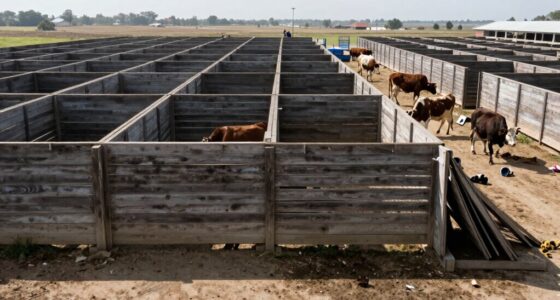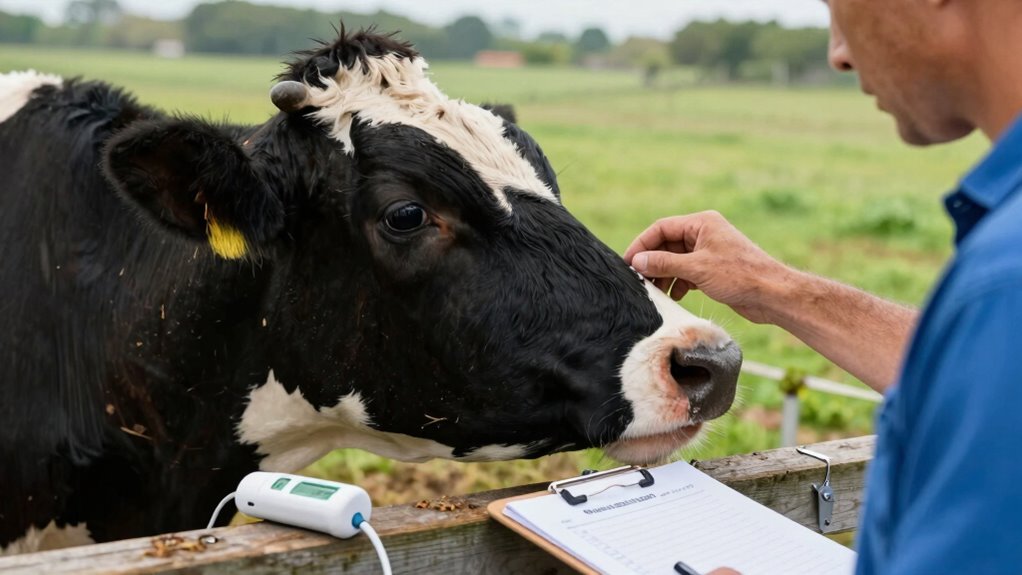

To catch livestock problems early, establish a consistent daily health check routine. Begin by inspecting animals for obvious issues like injuries or lameness, and monitor essential signs such as temperature, respiration, and heart rate. Observe behavior closely for subtle changes in activity, appetite, or social interactions, which can signal illness. Developing this routine helps you spot problems before they worsen. Keep a record of your findings, and you’ll quickly become attuned to your animals’ health trends, with more tips ahead.

Get garden gear delivered free with Prime
- Fast, free delivery on millions of items
- Prime Video, Amazon Music and more included
- Member-only deals all year
Key Takeaways
- Conduct structured daily checks focusing on physical signs and behavioral cues for early problem detection.
- Monitor vital signs such as temperature, respiration, and heart rate consistently during each check.
- Observe subtle behavior changes like appetite loss or social withdrawal to identify health issues promptly.
- Incorporate veterinary assessments regularly to identify and address problems before they escalate.
- Record and compare observations over time to establish baseline health parameters and detect anomalies early.
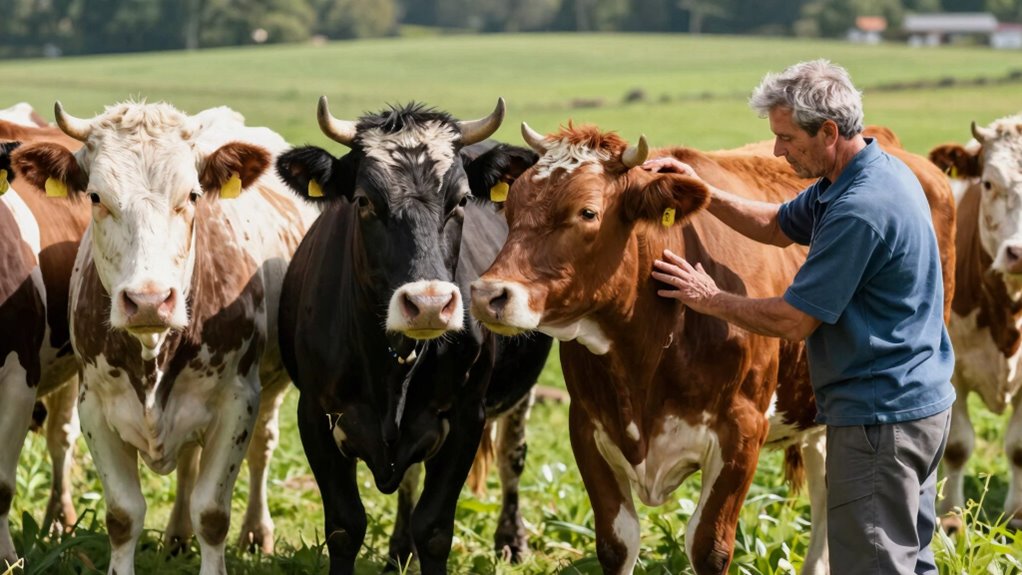
Starting your day with a simple health check routine can make a significant difference in maintaining your overall well-being. When you take a few minutes each morning to assess your livestock, you’re setting the stage for early problem detection and swift intervention. Veterinary assessments play a crucial role in this process, helping you identify signs of illness or discomfort before they escalate. These assessments are not just about checking for obvious issues like lameness or visible injuries; they also involve monitoring essential signs such as temperature, respiration, and heart rate. Regular veterinary evaluations allow you to establish baseline health parameters, making it easier to spot deviations that could indicate underlying problems. Incorporating monitoring techniques into your routine can further enhance early detection and prevention. Behavior monitoring is equally important in your daily routine. Livestock often exhibit subtle changes in behavior when they’re unwell, so paying close attention to their activity levels, appetite, and social interactions can give you early clues about their health. For instance, a cow that’s normally active and grazing may become lethargic or isolate itself, signaling potential illness. Similarly, changes in eating habits or vocalizations can point to issues that need immediate attention. When you consistently observe and record these behavioral cues, you become more attuned to your animals’ normal routines, which helps you recognize abnormalities quickly. Incorporating veterinary assessments into your daily health checks doesn’t mean waiting for a veterinarian to visit; rather, it involves applying their knowledge and guidelines during your routine. For example, knowing how to properly examine the udder for signs of mastitis or checking for swelling in joints can save your livestock from unnecessary suffering. Behavior monitoring, on the other hand, is about developing an eye for the small details—watching how animals respond to their environment, their interactions with each other, and their general demeanor. Over time, these observations will become second nature, allowing you to catch issues early before they develop into serious health problems. Developing a routine evaluation method can help structure your daily checks and ensure consistency in your observations, especially by understanding the importance of early detection in livestock health management.
As an affiliate, we earn on qualifying purchases.
Frequently Asked Questions
What Tools Are Essential for a Daily Livestock Health Check?
You need essential tools like a thermometer to monitor temperature, a stethoscope for heart and lung sounds, and a feed quality assessment to guarantee proper nutrition. Keep vaccination protocols updated to prevent disease. A flashlight helps in inspecting eyes and other areas, while a notebook records health observations. These tools help you spot issues early, maintain livestock health, and assure your animals stay productive and safe.
How Long Should Each Check Typically Take per Animal?
A routine inspection should take about 5 to 10 minutes per animal, allowing you to perform thorough health monitoring without rushing. During this time, you check essential signs, observe behavior, and look for signs of illness or injury. Staying consistent guarantees you catch problems early. Focus on key indicators like appetite, mobility, and coat condition. Proper timing helps you maintain a reliable routine and keeps your livestock healthy.
What Signs Indicate a Livestock Emergency Requiring Immediate Action?
If you notice livestock exhibiting labored breathing, severe bleeding, unresponsive behavior, or sudden collapse, act immediately. Changes in herd behavior, like isolation or aggression, can also signal emergencies. Pay close attention to signs of poor livestock nutrition, such as weakness or dull coats, which might indicate underlying issues. Respond swiftly to these signs, as quick action can prevent serious health problems and save your animals’ lives.
How Can I Train Staff to Recognize Early Health Issues?
Did you know 70% of livestock health issues can be caught early through proper behavior monitoring? To train staff, teach them to observe subtle changes in activity or appetite. Incorporate regular nutritional assessments to identify deficiencies that affect health. Use hands-on demonstrations and checklists to reinforce recognition of early signs. Encourage open communication, so staff feel confident reporting concerns promptly, ultimately preventing minor issues from becoming serious problems.
Are There Specific Times of Day Best for Health Checks?
You should perform health checks during the cooler parts of the day, like early morning or late afternoon, to reduce stress on your livestock. This timing also allows you to observe seasonal health considerations, such as temperature fluctuations, and monitor environmental impacts like manure buildup or water quality. Regular, consistent checks at these times help you catch issues early, ensuring your animals stay healthy and productive.
Conclusion
By making your daily health check a routine, you become the vigilant lighthouse keeper guiding your livestock safely through stormy waters. Early detection acts like a bright beacon, illuminating problems before they grow into raging waves. With your attentive eye, you catch trouble early, steering clear of disaster and helping your animals stay healthy and strong. Remember, consistent checks are your lighthouse, shining steady and true, guiding your herd safely home.
Fall yard work Picks
leaf blowers
As an affiliate, we earn on qualifying purchases.