Pointing livestock fans directly at animals can actually reduce cooling effectiveness and cause stress. Instead, aim for gentle airflow by mounting fans higher on walls or ceilings, angled downward or outward. Avoid direct contact with animals’ faces or eye level, as strong drafts can make them uncomfortable or anxious. Proper placement promotes better air circulation and removes hot, stale air, helping animals stay cool naturally. To discover more tips for ideal fan setup, keep exploring how airflow and animal behavior go hand-in-hand.

Get garden gear delivered free with Prime
- Fast, free delivery on millions of items
- Prime Video, Amazon Music and more included
- Member-only deals all year
Key Takeaways
- Directly aiming fans at animals can cause stress and discomfort, reducing cooling effectiveness.
- Position fans higher and angled downward to create gentle airflow without direct contact.
- Avoid pointing fans directly at animals’ faces or eye level to prevent drafts and agitation.
- Proper placement encourages natural airflow, improving air exchange and reducing hot spots.
- Observing animal behavior helps determine optimal fan position for effective and stress-free cooling.
Are you looking for effective ways to keep your livestock comfortable during hot weather? One of the simplest and most efficient methods is using fans, but how you set them up makes all the difference. Many people assume that pointing fans directly at animals will cool them faster, but in reality, this approach can backfire. Instead, understanding animal behavior and proper fan placement can markedly improve cooling effectiveness.
Animals tend to have natural behaviors that influence how they respond to airflow. For example, livestock instinctively seek shade or move away from direct drafts if they feel uncomfortable. When you point fans directly at them, you might cause stress rather than relief, especially if the airflow is too strong or creates a sudden breeze. Instead, observe how your animals behave in different conditions. Are they huddling in shaded spots or trying to escape drafts? This insight will guide you toward better fan placement.
Observe animal behavior to position fans effectively and avoid causing stress or discomfort.
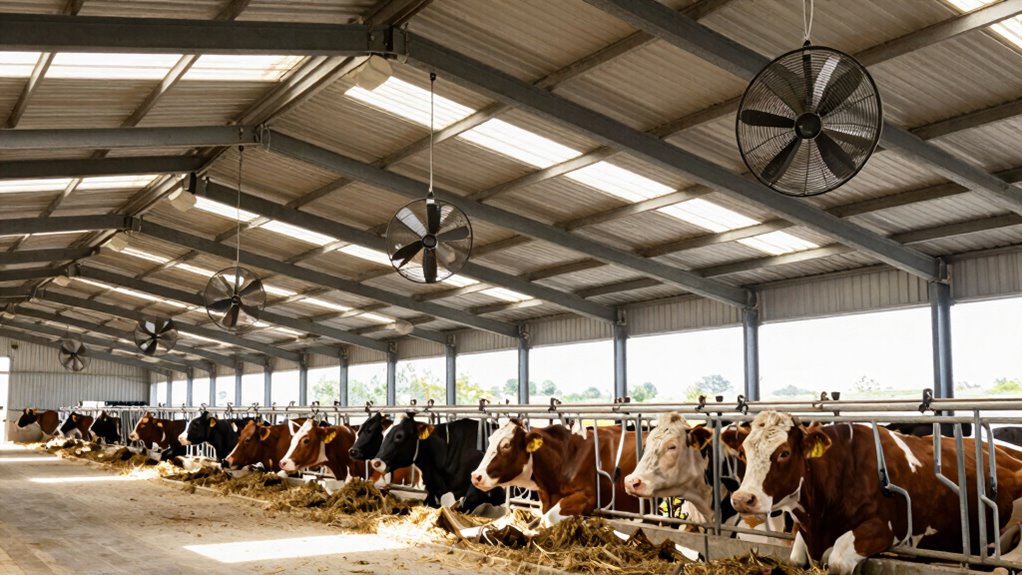
Placement is vital. Instead of positioning fans directly in front of or at the level of your animals, aim for a strategic setup that promotes air circulation without overwhelming them. Mount fans higher on walls or ceiling points, angled slightly downward or outward, to create a gentle breeze that moves air across the space. This encourages natural airflow patterns and prevents the formation of hot spots. When you avoid pointing fans directly at the animals, you reduce the risk of creating cold drafts that can cause discomfort or health issues. Instead, you foster a steady, gentle circulation that helps dissipate heat naturally.
Another aspect to contemplate is how fans interact with your livestock’s environment. If your barn or shelter has poor ventilation, fans can help improve air exchange, but only if placed correctly. Position fans near openings or vents to encourage fresh air movement through the space. This setup prevents stale, hot air from lingering and creates a more comfortable environment overall. Keep in mind that the goal isn’t to blast your animals with air but to promote consistent, gentle airflow that mimics natural breezes. Proper fan placement can significantly enhance the effectiveness of cooling strategies.
As an affiliate, we earn on qualifying purchases.
Frequently Asked Questions
Do Different Livestock Species Prefer Different Fan Settings?
Yes, different livestock species prefer different fan settings. Species preferences and behavior influence how they respond to fan orientation. For example, cattle often prefer fans pointed away to avoid direct drafts, while poultry benefit from direct airflow to keep cool. Adjust the fan orientation based on the species and their comfort needs. Properly setting the fans enhances ventilation, reduces stress, and improves overall health for each type of livestock.
How Often Should I Clean Livestock Fans for Optimal Cooling?
You should clean your livestock fans regularly for ideal cooling, ideally every one to three months, depending on dust and dirt buildup. Proper fan maintenance involves checking and cleaning blades, filters, and vents to prevent dust accumulation that hampers airflow. Consistent cleaning frequency keeps fans working efficiently, ensuring your animals stay cool and comfortable. Don’t neglect fan maintenance—stagnant dust can reduce cooling performance and strain the equipment.
Can Fans Be Used Indoors and Outdoors Interchangeably?
Fans can be used both indoors and outdoors, but their effectiveness depends on proper fan placement for indoor ventilation and outdoor airflow. Think of fans as versatile tools, adaptable like chameleons blending into their environment. You should choose outdoor fans for open spaces and indoor fans designed with weather-resistant features. Proper placement guarantees ideal cooling, whether you’re managing indoor air quality or enhancing outdoor ventilation.
What Is the Typical Lifespan of a Livestock Cooling Fan?
You can expect a livestock cooling fan to last around 10 to 15 years with proper fan installation and maintenance. To maximize lifespan, guarantee the fan is installed correctly, avoiding unnecessary strain and reducing noise. Regular cleaning and lubricating parts help reduce noise, prolonging its effectiveness. Properly maintained fans not only last longer but also provide better cooling, keeping your livestock comfortable and healthy over the years.
Are There Energy-Efficient Options for Livestock Cooling Fans?
Think of energy-efficient livestock fans as the smart choice in a sea of options. You can opt for solar ventilation systems, which harness the sun’s power, reducing your energy bills and environmental footprint. These fans offer significant energy savings while keeping your livestock cool effectively. By choosing energy-efficient models, you guarantee better airflow and lower operational costs, making your farm more sustainable and cost-effective in the long run.
Conclusion
When you stop pointing livestock fans directly at your animals, you let the breeze become a gentle, guiding hand rather than a harsh gust. Think of the fans as quiet guardians, softly wrapping your livestock in a calming embrace instead of forcing their comfort. By adjusting their direction, you create a peaceful dance of air—cool, gentle, and natural—allowing your animals to thrive under the subtle symbolism of a breeze that nurtures rather than pushes away.
Halloween Picks
halloween
As an affiliate, we earn on qualifying purchases.