To effectively manage dairy cow health, focus on providing balanced nutrition with quality forage, energy, minerals, and vitamins to boost immunity. Maintain a clean, comfortable environment with proper ventilation, shade, and space to reduce stress and disease risk. Regular health checks, vaccinations, and early intervention are crucial for prevention. Combining these strategies helps guarantee your herd stays healthy, productive, and resilient—keep exploring to discover more ways to optimize their well-being.
Key Takeaways
- Providing balanced, high-quality nutrition supports immune function and reduces disease susceptibility in dairy cows.
- Proper environmental management, including ventilation and clean bedding, minimizes stress and infection risks.
- Regular health checks and vaccination programs enable early disease detection and prevention.
- Genetic selection for disease resistance enhances herd resilience and long-term health.
- Continuous monitoring and integrated management strategies optimize overall herd health and productivity.

Have you ever wondered how to keep your dairy cows healthy and productive? It all begins with understanding that their health depends on a combination of proper nutrition, genetic selection, and managing environmental stress. When you focus on these key areas, you’ll see better milk yields, improved fertility, and stronger immunity across your herd.
Genetic selection plays a crucial role in shaping the resilience and overall health of your dairy cows. By choosing animals with desirable traits—such as disease resistance, high milk production, and adaptability—you set a solid foundation for a healthier herd. Incorporating genetic testing into your breeding program helps identify the best candidates, ensuring that you pass on beneficial traits. This proactive approach reduces the likelihood of health issues and enhances productivity over time. Remember, animals with superior genetics are generally better equipped to handle environmental stressors, making your management efforts more effective.
Genetic selection enhances herd health by promoting disease resistance and productivity.
Environmental stress is another major factor that can compromise your cows’ health. Fluctuating temperatures, poor ventilation, and inadequate shelter can lead to stress-related illnesses and decreased productivity. To mitigate these risks, provide a comfortable, clean environment with ample shade and proper airflow. Keep bedding dry and clean to prevent infections, and ensure that the herd has enough space to reduce social stress. When environmental conditions are optimized, your cows are less likely to experience immune suppression, which means fewer disease outbreaks and better overall health.
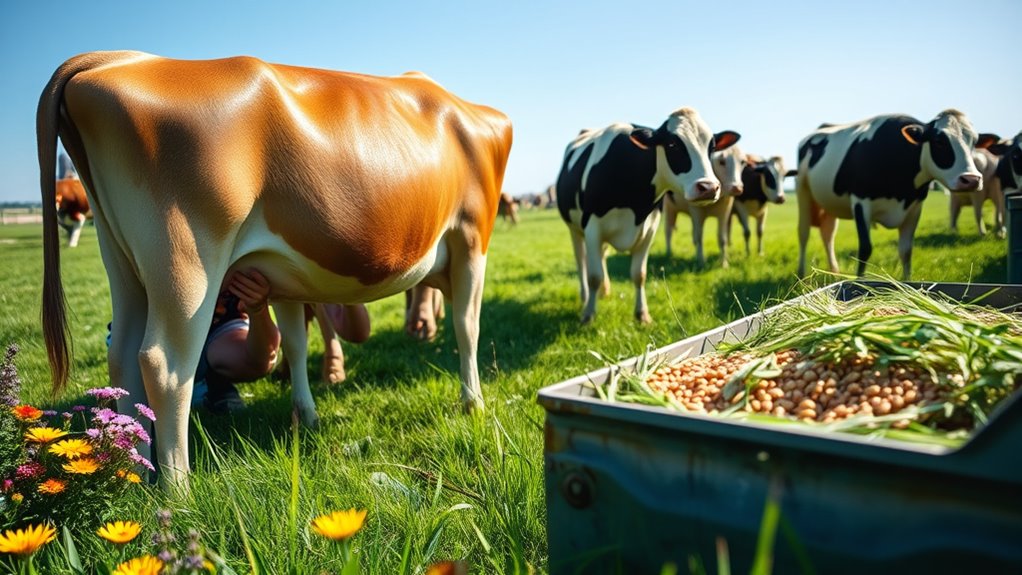
Nutrition is the backbone of disease prevention and maintaining productivity. A well-balanced diet tailored to your cows’ age, lactation stage, and production level supplies the essential nutrients they need to stay healthy. Focus on providing high-quality forage, adequate energy sources, and necessary minerals and vitamins. Proper nutrition supports immune function, making it easier for cows to fight off infections and recover quickly if they do fall ill. Additionally, monitor water intake closely—hydration is vital for digestion and overall health. When cows are well-nourished, they’re more resilient to environmental stress and genetic challenges, making your management efforts more effective. Ensuring adequate hydration is often overlooked but is critical for maintaining optimal health and performance.
Regular health checks and vaccination programs complement your nutrition and environmental management efforts. Catching health issues early prevents them from escalating and ensures your cows remain comfortable and productive. Combining these strategies allows you to create a comprehensive health management plan that emphasizes prevention rather than cure. By focusing on genetic selection, reducing environmental stress, and providing optimal nutrition, you’ll establish a strong foundation for your dairy herd’s health and success.
Frequently Asked Questions
How Does Climate Change Affect Dairy Cow Health?
Climate change impacts your dairy cows by increasing weather variability and stressing their health. You need to focus on climate adaptation strategies, like providing shade, proper ventilation, and adjustable feeding schedules, to help your cows cope with rising temperatures and unpredictable weather. These measures reduce heat stress, improve comfort, and prevent disease. Staying proactive guarantees your herd remains healthy and productive despite changing climate conditions.
What Are Innovative Technologies for Early Disease Detection?
You can utilize innovative sensor technology combined with data analytics to detect diseases early. These sensors monitor essential signs, activity levels, and rumination patterns in real-time, alerting you to potential health issues before they become severe. Data analytics helps interpret this information quickly, enabling prompt intervention. By adopting these tools, you improve herd health management, reduce treatment costs, and enhance overall productivity.
How Can Genetics Improve Disease Resistance in Dairy Cows?
Genetic selection plays a vital role in improving disease resistance in dairy cows. By choosing animals with specific genetic traits linked to immunity, you can breed healthier herds less prone to illnesses. This approach enhances disease resistance over generations, reducing reliance on medications and improving overall productivity. Implementing genomic testing helps identify these desirable traits early, ensuring you make informed breeding decisions that promote strong, resilient dairy cows.
What Are the Economic Impacts of Disease Outbreaks?
When disease outbreaks occur, you face significant economic losses and productivity decline. These setbacks can strain your resources, reduce milk yield, and increase medical costs, making it harder to maintain profitability. The ripple effect hampers growth and can lead to longer recovery times. To minimize these impacts, proactive health management and early detection are essential, helping you safeguard your herd’s health and your farm’s financial stability.
How Does Stress Influence Dairy Cow Immune Function?
Stress impacts your dairy cow’s immune response by suppressing its ability to fight off infections. When cows experience stress, such as overcrowding or abrupt environmental changes, their immune function weakens, making them more susceptible to diseases. You can mitigate these effects by maintaining calm environments, providing proper housing, and minimizing disruptions. This helps ensure your cows stay healthier, reducing illness risks and improving overall productivity.
Conclusion
By prioritizing proper nutrition and vigilant disease prevention, you’re tending to a delicate garden that flourishes with care. When you nurture your cows’ health, you’re planting seeds of productivity and well-being that grow stronger each day. Remember, your attention is the sunlight and water they need to thrive. With consistent effort, you’ll cultivate a herd that’s resilient and thriving, turning your farm into a vibrant, living masterpiece of health and harmony.