

Releasing beneficial insects at the wrong time can make them ineffective and waste your effort. It’s essential to sync releases with pest activity, pest development stages, and suitable weather conditions like temperature and humidity. If you release too early or too late, the insects won’t target pests effectively or may not survive. By understanding pest cycles and environmental cues, you can guarantee your beneficial insects work as intended. Keep going to discover how to plan perfectly timed releases.
Key Takeaways
- Releasing beneficial insects too early or late when pests are absent or inactive diminishes their effectiveness.
- Poor timing that doesn’t align with pest development stages reduces natural enemies’ ability to control pests.
- Ignoring environmental conditions like temperature and humidity can impair beneficial insect survival and activity.
- Failing to monitor pest activity leads to mistimed releases, making beneficial insects ineffective against established populations.
- Releasing beneficial insects outside peak pest vulnerability periods prevents optimal pest suppression and ecosystem balance.
Why Timing Matters for Beneficial Insect Success
Timing is crucial when releasing beneficial insects because their effectiveness depends on aligning with pest activity and environmental conditions. When your garden boasts diverse plants, it creates a balanced ecosystem that supports beneficial insects and enhances soil health. A variety of plants attracts a wider range of natural predators, ensuring pests are kept in check naturally. Additionally, healthy soil promotes strong plant growth, which can resist pests better and sustain beneficial populations longer. Releasing beneficial insects too early or too late can lead to wasted efforts, as pests may not be present or environmental factors might be unsuitable. By understanding the importance of timing—considering plant diversity and soil health—you optimize the success of beneficial insects, making your pest control efforts more effective and sustainable. Understanding ecological balance helps you make better decisions about release timing for maximum impact. Proper timing is essential to maximize the benefits of beneficial insects and prevent unnecessary releases. Moreover, considering indoor and outdoor environmental factors ensures that beneficial insects are released under optimal conditions for survival and effectiveness. Recognizing environmental cues can further improve the synchronization between beneficial insects and pest activity, boosting control success. Additionally, awareness of climatic conditions can help you select the best time for releases to enhance survival rates.
How Pest Life Cycles Influence When to Release Beneficial Insects
Understanding pest development stages helps you decide the best time to release beneficial insects. You need to contemplate when pests emerge and are most vulnerable. By synchronizing releases with pest life cycles, you improve your chances of controlling infestations effectively. Additionally, considering pest life cycle stages can help you identify the optimal timing for releases to maximize their impact. Recognizing how seasonal variations affect pest activity can further refine your timing strategy, ensuring beneficial insects are released when pests are most susceptible. Moreover, considering how pinball machine weights vary among different models can assist in planning transportation and installation, especially for large or heavy units. Implementing security measures for transactions can also protect your pest control investments from potential fraud or theft during distribution. Understanding environmental factors such as temperature and humidity can further optimize the success of beneficial insect releases.
Pest Development Stages
Knowing the different development stages of pests is crucial for successful beneficial insect releases because it determines when these natural enemies will be most effective. Initially, pests hatch from eggs, known as pest eggs, which are most vulnerable early on. Releasing beneficial insects at this stage can prevent pest populations from establishing. As pests develop, they become larvae, and predator larvae can target these immature stages more efficiently. Timing your release before pests reach the larval stage ensures that beneficial insects, such as predatory larvae, can suppress the population before they cause significant damage. Understanding whether pests are in the egg or larval stage helps you optimize the release timing, increasing the likelihood of controlling the pests naturally and reducing the need for chemical interventions. Additionally, recognizing the pest development stages allows for more precise application, maximizing the impact of the beneficial insects.
Timing of Pest Emergence
The emergence of pests from their eggs or pupae directly influences the most suitable moment to release beneficial insects. When pests appear, they often do so in sync with plant diversity and soil health, which affect their development rates. A diverse plant environment can accelerate or delay pest emergence, so timing your releases requires close observation. Healthy soil promotes natural pest regulation, making pest emergence less predictable if soil health fluctuates. By understanding pest life cycles, you can identify the ideal window when pests are vulnerable but before they cause significant damage. Releasing beneficial insects too early or too late diminishes their effectiveness, as they won’t encounter pests at the right stage. Accurate timing maximizes pest control and supports a balanced ecosystem.
Synchronizing Insect Release
Synchronizing insect release with pest life cycles guarantees that beneficial insects are most effective in controlling pests. To do this successfully, you need accurate pest identification to understand when pests are most vulnerable. Knowing the specific stages of pest development, like egg or larval stages, allows you to time releases when beneficial insects can effectively target them. Pay close attention to insect behavior—some pests are more active or susceptible at certain times of day or stages of their life cycle. Releasing beneficial insects too early or too late reduces their impact. By aligning your release schedule with pest emergence and behavior, you maximize the chances that beneficial insects will find and control pests before they cause significant damage.
When Is the Best Time to Release Beneficial Insects?
Have you ever wondered when is the most advantageous time to release beneficial insects for pest control? The key is to consider plant compatibility and the right release frequency. Release beneficial insects when pest populations are beginning to rise, not after they’ve already caused damage. This timing ensures the insects can establish quickly and effectively control pests before they become a problem. Additionally, releasing insects during periods when your plants are most vulnerable maximizes their impact. Avoid releasing them too early, when pests are absent, or too late, when damage is already done. Regular, well-timed releases help maintain a steady presence of beneficial insects, preventing pest outbreaks and promoting healthier plants. Timing your releases correctly makes your pest management efforts more efficient and successful. Being aware of seasonal variations can also influence the effectiveness of beneficial insect releases, as understanding pest life cycles helps synchronize releases with peak pest activity. Recognizing environmental conditions that favor beneficial insects can further enhance their establishment and pest control efficiency. Moreover, understanding the biology of beneficial insects can help tailor release strategies to improve their survival and effectiveness.
How Weather and Climate Affect Release Timing

Weather and climate play vital roles in determining the best time to release beneficial insects. You’ll need to take into account how temperature affects their activity and survival, as well as humidity levels that can impact their success. Understanding seasonal climate patterns helps guarantee your releases happen under ideal conditions for insect establishment. Additionally, considering field‑of‑view and environmental factors can improve the accuracy of timing for successful releases. Incorporating climate considerations into planning can significantly enhance the likelihood of beneficial insects thriving after release, especially when applying media literacy skills to interpret weather forecasts effectively. Recognizing weather patterns can also help anticipate periods of optimal insect activity and reduce the risk of unsuccessful releases.
Temperature’s Impact on Activity
Temperature plays a crucial role in determining when beneficial insects are most active and effective after release. Insects thrive within specific temperature ranges that influence their flight, feeding, and reproductive behaviors. When temperatures are too low, activity slows, reducing pollinator diversity and limiting their ability to locate pests or pollinate crops. Additionally, understanding insect temperature tolerance helps in selecting the right species for your climate and timing releases accordingly. Proper timing based on temperature can also prevent insects from being exposed to extreme weather conditions, which can jeopardize their survival. Moreover, monitoring local weather patterns allows for more precise release schedules that align with insect activity peaks. Conversely, excessively high temperatures can stress insects, decreasing survival rates. Ensuring the release aligns with ideal temperatures helps insects establish in suitable insect habitats and maximize their impact. Monitoring local weather conditions allows you to time releases for peak activity, ensuring that beneficial insects can perform their roles effectively. Proper timing based on temperature ensures you harness the full potential of your beneficial insect population, making your pest management efforts more successful. Understanding insect temperature tolerance is essential for optimizing release timing and improving overall effectiveness.
Humidity and Insect Survival
Humidity levels substantially influence the survival and effectiveness of beneficial insects after release. If moisture levels are too low, insects can quickly desiccate and die, reducing their ability to control pests. Conversely, excessive humidity can promote mold or fungal growth, harming both insects and plants. Maintaining proper humidity control ensures that beneficial insects stay active and healthy during their vital early hours. It’s vital to release insects when humidity conditions are ideal for their survival, typically during periods of moderate moisture levels. Monitoring climate conditions can help determine the optimal timing for releases. By paying close attention to humidity, you give your beneficial insects the best chance to establish and perform their pest control functions effectively. Neglecting humidity considerations can render your release efforts futile, making timing essential for success. Additionally, understanding weather patterns can assist in predicting suitable windows for insect release, further increasing their chances of survival and efficacy.
Seasonal Climate Patterns
Seasonal climate patterns play a essential role in determining the ideal timing for releasing beneficial insects. Weather influences pollination timing and floral bloom, making synchronization critical. If you release insects too early, cold temperatures may harm them; too late, and the flowers might have already bloomed. To optimize success, consider these factors:
- Monitor temperature trends to match insect activity with floral bloom.
- Track local pollination timing to guarantee insects are present when flowers open.
- Adjust releases based on seasonal rainfall, which affects plant growth and insect survival.
Signs Your Garden Is Ready for Beneficial Insects

Your garden is ready for beneficial insects when you notice an increase in pest activity, such as aphids or caterpillars, on your plants. Look for signs of pest outbreaks that threaten your organic gardening efforts. A diverse pollinator presence indicates a healthy ecosystem, making it easier for beneficial insects to thrive and control pests naturally. To assess readiness, consider the table below:
| Pest Activity | Plant Health Signs | Pollinator Diversity |
|---|---|---|
| Visible aphids | Leaves showing damage | Multiple bee species present |
| Caterpillars feeding | Reduced flowering | Presence of butterflies |
| Sticky residue | Wilting or yellowing leaves | Varied pollinator visits |
If these signs are present, your garden is primed for beneficial insect release, boosting your organic gardening success.
How to Plan Your Beneficial Insect Release Schedule Step-by-Step

Planning your beneficial insect release schedule begins with timing it to coincide with pest activity, ensuring the insects have the best chance to control pests effectively. Start by accurately pest identification—know what pests you’re targeting and their life cycles. Next, observe insect behavior to determine when pests are most vulnerable, often during egg or larval stages. Finally, create a schedule based on these insights:
Timing beneficial insect releases with pest activity maximizes control during vulnerable pest stages.
- Identify peak pest activity periods through monitoring.
- Release beneficial insects just before or during these peaks.
- Adjust timing based on insect behavior, ensuring they arrive when pests are most receptive.
This method maximizes the effectiveness of your beneficial insects and prevents unnecessary releases when pests aren’t active. Proper planning guarantees your efforts are targeted, timely, and successful.
Troubleshooting: Why Beneficial Insects Might Not Be Working
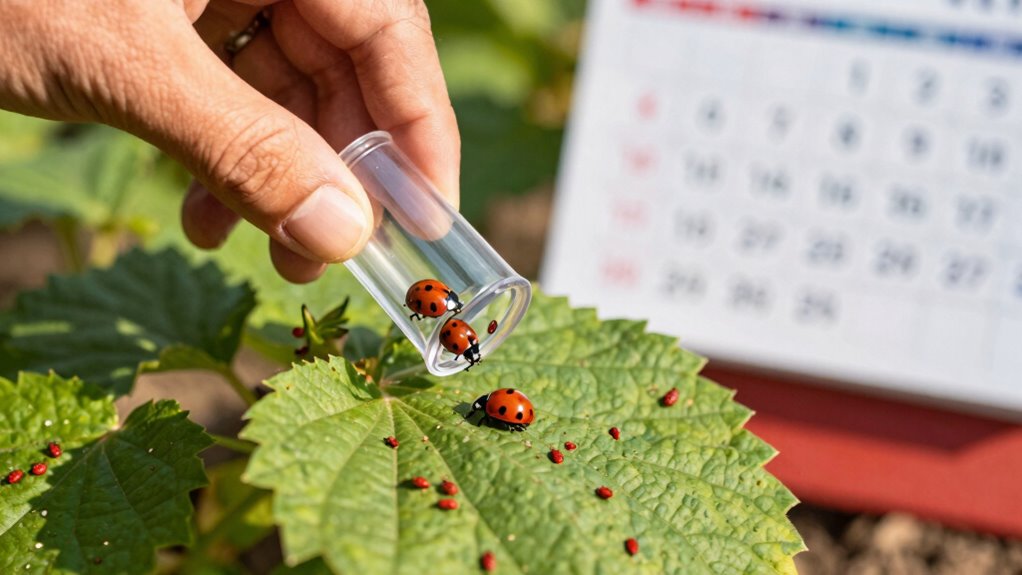
Even with a well-planned release schedule, beneficial insects sometimes don’t produce the expected results. One reason could be underlying plant disease or poor soil health, which weaken plants and make pests harder to control. If plants are stressed or unhealthy, beneficial insects may not thrive or target pests effectively. Additionally, soil health impacts pest populations and the insects’ ability to establish. Poor soil conditions can create an environment where pests flourish, outweighing the benefits of beneficial insects. It’s essential to evaluate your soil quality and address any plant diseases before releasing beneficial insects. Strengthening soil health creates a balanced ecosystem that supports both plants and beneficial insects, increasing their effectiveness and ensuring your pest control efforts don’t fall short.
Tips for Maintaining Long-Term Pest Control Effectiveness
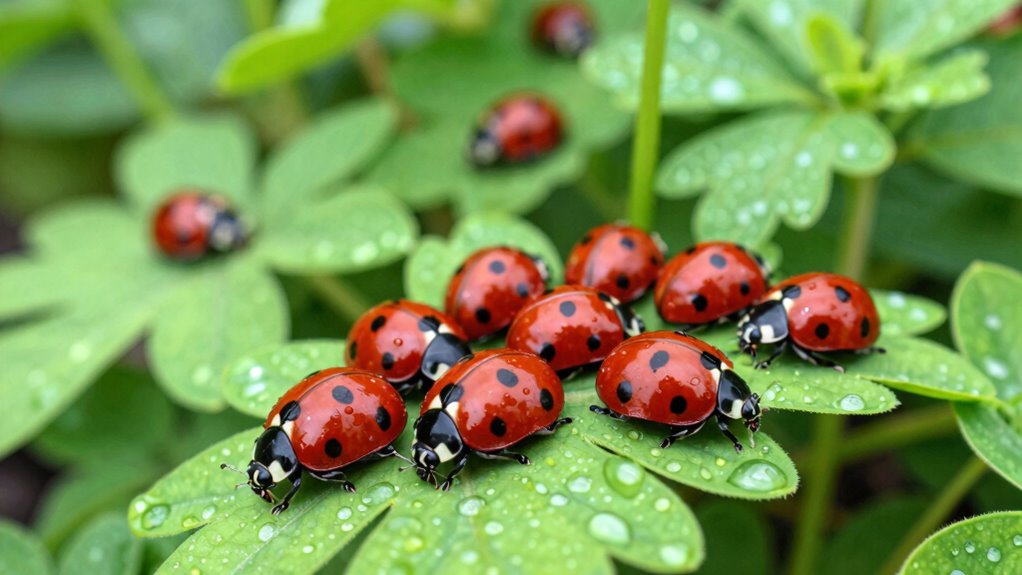
Maintaining long-term pest control effectiveness requires ongoing management and adaptation. First, regularly perform pest identification to understand which insects are present and their specific behaviors. Knowing your pests helps you choose the right beneficial insects and adjust your approach. Second, monitor insect habitats to ensure they remain suitable; clutter, weeds, or standing water can create refuge for pests. Managing these habitats prevents reinfestation. Third, stay flexible with your strategies—if pest populations persist, consider reapplying beneficial insects or combining methods like habitat modification. Consistent observation and quick action keep beneficial insects effective over time, reducing chemical use and preventing pests from establishing. By staying proactive, you guarantee your pest control efforts remain sustainable and long-lasting.
Frequently Asked Questions
Can Beneficial Insects Be Effective Without Precise Timing?
Beneficial insects can be effective without perfect timing, but timing importance varies. If you release them too early or too late, their impact diminishes. To maximize benefits, you should consider ideal release timing and maintain consistent release frequency. Regular releases ensure pest control continues effectively, preventing outbreaks. By staying attentive to pest activity and adjusting timing and frequency accordingly, you enhance your chances of successful biological control without relying on perfect timing.
How Long Do Beneficial Insects Typically Survive After Release?
Your beneficial insects usually stick around for a few days to a couple of weeks after release, depending on the species and conditions. The release duration and survival rate can vary, but with proper care and timing, they stay active long enough to make a difference. Keep in mind, their effectiveness hinges on consistent releases and ideal environment, ensuring your pest control efforts stay on course.
Do Different Pests Require Different Beneficial Insect Species?
Yes, different pests require different beneficial insect species because of species compatibility and pest-specific benefits. You should identify the pest you’re targeting and select insects that are naturally compatible and effective against it. This tailored approach guarantees better control, maximizing the benefits of your release. Using the right beneficial insects for the specific pest not only improves effectiveness but also minimizes potential harm to non-target species.
What Are Common Mistakes in Releasing Beneficial Insects?
You might make a timing error by releasing beneficial insects too early or too late, rendering them ineffective. For example, releasing ladybugs before pest populations peak means they won’t find enough food. Many overlook proper release frequency, which is vital for sustained pest control. To succeed, monitor pest levels closely and space releases appropriately, ensuring your beneficial insects thrive and do their job effectively.
Can Beneficial Insects Be Used in Indoor or Greenhouse Environments?
Yes, beneficial insects work well in indoor and greenhouse environments for biological control and pest management. You should release them strategically, considering factors like pest presence and environmental conditions. Properly timed releases help guarantee they establish and effectively reduce pests. Keep monitoring, and adjust releases as needed. This approach maximizes their effectiveness and keeps your indoor or greenhouse space healthy without relying on chemical pesticides.
Conclusion
Remember, timing is everything when releasing beneficial insects—miss it, and they might just become another garden ghost story. Pay attention to pest life cycles, weather, and signs your garden’s ready. When you get it right, it’s like your garden’s secret weapon, quietly working while you enjoy the blooms. Sometimes, a little patience and observation turn a simple release into a surprisingly perfect match—making your garden healthier and happier without any extra fuss.