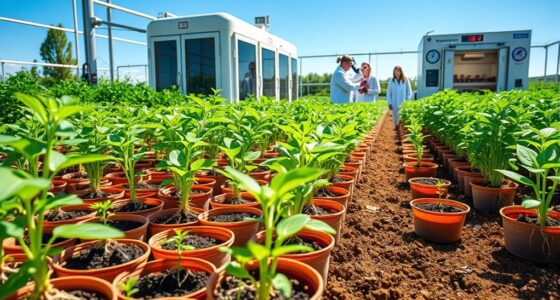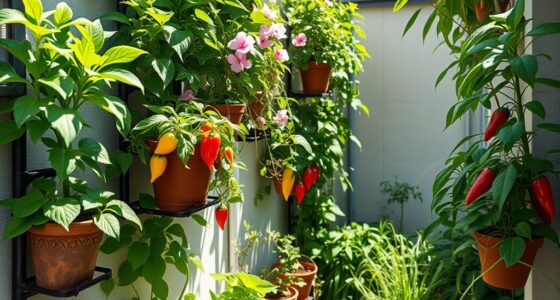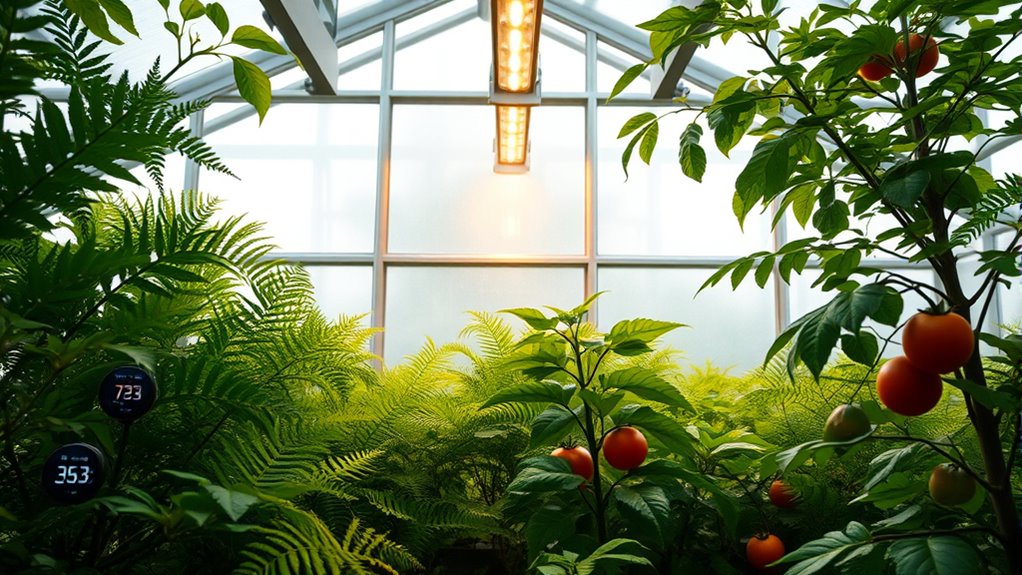
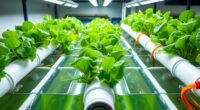
To effectively manage your greenhouse, monitor and control temperature, humidity, and lighting regularly. Use ventilation, heaters, or fans to keep temperatures within the ideal range for your plants. Maintain proper humidity levels to prevent mold and stress, adjusting with misters or dehumidifiers. Guarantee your plants receive adequate light by using natural sunlight or supplemental lamps, and schedule this with timers. Staying on top of these factors helps your plants thrive—discover more tips to maximize your greenhouse environment.
Key Takeaways
- Monitor and adjust temperature, humidity, and lighting to create optimal conditions for plant growth.
- Use environmental sensors and automation systems for precise climate control.
- Maintain proper ventilation and airflow to regulate temperature and moisture levels.
- Implement lighting schedules with timers and light meters for consistent illumination.
- Regularly inspect and fine-tune environmental parameters to prevent pests, diseases, and stress.

Managing a greenhouse effectively requires careful planning and ongoing attention to detail. You need to create an environment where your plants can thrive, which means controlling factors like temperature, humidity, lighting, pest control, and water management. When it comes to pest control, staying vigilant is key. Regularly inspect plants for signs of pests or diseases, and implement integrated pest management strategies to prevent infestations. Using beneficial insects or organic treatments can keep pests at bay without harming your plants or the environment. Keeping pests under control not only protects your crops but also minimizes the need for chemical interventions that could disrupt your carefully maintained conditions.
Regular pest inspection and organic strategies safeguard your greenhouse environment naturally.
Water management is another essential aspect. Overwatering can lead to root rot and fungal issues, while underwatering causes stress and stunted growth. You should establish a consistent watering schedule based on your plants’ specific needs, season, and soil moisture levels. Proper drainage is essential, so ensure your containers or beds have adequate outlets to prevent waterlogging. Using drip irrigation or soil moisture sensors can help you deliver water precisely where and when it’s needed, reducing waste and promoting healthy root development. Good water management also involves monitoring humidity levels, which influence transpiration and plant health. High humidity can encourage mold and disease, while low humidity might cause stress and reduce growth. Balancing these levels with proper ventilation and misting systems helps maintain an ideal microclimate.
Temperature regulation is indispensable. You need to keep the greenhouse within a suitable range for your plants, adjusting heating or cooling systems as needed. Proper ventilation not only regulates temperature but also improves air circulation, which reduces humidity and prevents fungal issues. Lighting impacts photosynthesis and growth rates. Ensure your plants receive enough light, whether natural or supplemental, to support healthy development. Using timers and light meters can help you provide consistent lighting schedules, especially during shorter winter days.
Incorporating smart home automation technology can further optimize these environmental controls, allowing you to monitor and adjust conditions remotely for better efficiency. All these elements—pest control, water management, temperature, humidity, and lighting—are interconnected. Neglecting one can adversely affect the others, so constant monitoring is necessary. Regularly check environmental parameters, adjust systems accordingly, and maintain a clean, organized space. This proactive approach helps prevent problems before they escalate, ensuring your greenhouse remains a productive, healthy environment for your plants. Effective management requires dedication, but by staying attentive to these key factors, you create the ideal conditions for a thriving greenhouse.
Frequently Asked Questions
How Can I Automate Greenhouse Climate Control Systems?
You can automate your greenhouse climate control systems by installing smart sensors that monitor temperature, humidity, and light levels. Connect these sensors to automated watering and ventilation control systems, which adjust based on real-time data. Use a centralized control system or app to manage and fine-tune settings, ensuring ideal conditions at all times. This setup reduces manual effort and maintains a consistent, healthy environment for your plants.
What Are the Best Tools for Measuring Greenhouse Humidity?
Think of your greenhouse as a symphony where humidity plays the melody—you need precise tools to keep it in tune. Hygrometers and digital sensors are your best instruments for measuring humidity accurately. They help you monitor soil moisture and pest activity, ensuring ideal conditions. By choosing reliable tools, you’ll catch humidity shifts early and keep your plants healthy, turning your greenhouse into a thriving oasis rather than a battleground.
How Does External Weather Influence Greenhouse Temperature?
External weather substantially influences your greenhouse temperature, so you should focus on climate adaptation strategies. Changes in outdoor temperature, sunlight, wind, and humidity directly affect your greenhouse’s internal climate. Use weather forecasting to anticipate these shifts and adjust your heating, cooling, and ventilation systems accordingly. This proactive approach helps maintain ideal conditions, ensuring healthy plant growth and efficient energy use. Staying informed allows you to respond promptly to external weather variations.
What Are Eco-Friendly Lighting Options for Greenhouses?
Imagine harnessing the sun’s power even on cloudy days with eco-friendly lighting options. You can use solar lighting to reduce energy consumption and lower your carbon footprint. LED fixtures are another sustainable choice—they’re energy-efficient and long-lasting, providing ample light for your plants without harming the environment. By choosing solar lighting and LED fixtures, you create a greener, more sustainable greenhouse that nurtures your plants and the planet alike.
How Often Should I Calibrate My Greenhouse Sensors?
You should calibrate your greenhouse sensors at least once every three to six months to maintain sensor accuracy. Regular calibration guarantees reliable readings for temperature, humidity, and light levels, helping you make informed decisions. Keep an eye on sensor performance; if you notice inconsistent data, calibrate more frequently. Proper calibration schedules help prevent errors that could affect plant growth and overall greenhouse management.
Conclusion
So, after all this talk about controlling temperature, humidity, and lighting, you’d think running a greenhouse is straightforward. But here’s the irony: the more precisely you manage these factors, the more you realize how unpredictable nature truly is. It’s almost funny—your perfect environment can be upended by a sudden storm or a rogue cloud. Just remember, in greenhouse management, a little chaos keeps things interesting, and keeps you on your toes!