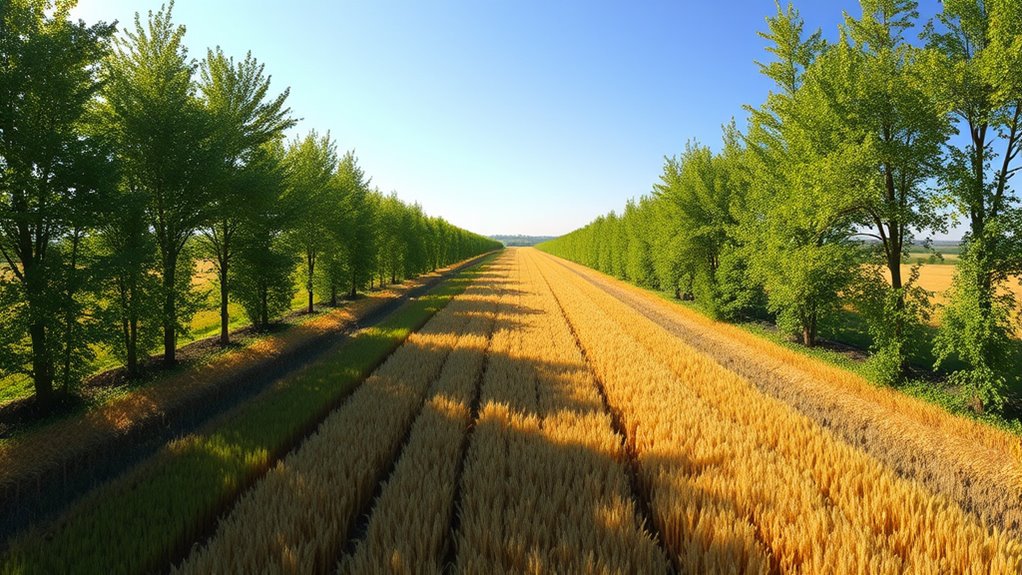

To safeguard your fields effectively, install a dense, multi-species windbreak using hardy evergreen trees and shrubs suited to your local climate. Space plants close enough to form a continuous barrier, but avoid overcrowding to guarantee healthy growth. Regular pruning and maintenance keep the shelterbelt resilient and functional. Proper design principles use strategic spacing and plant choices that maximize wind resistance and soil protection, helping your crops thrive. Keep going to discover more about optimizing your shelterbelt’s performance.
Key Takeaways
- Select hardy, evergreen species like cedar or pine that suit local climate and soil conditions.
- Space plants densely to form a continuous, multilayered barrier that effectively blocks wind.
- Incorporate a mix of trees and shrubs for resilience and year-round protection.
- Regularly prune and maintain plants to prevent gaps and promote healthy, dense growth.
- Design the shelterbelt considering wind direction, spacing, and mature size for optimal effectiveness.
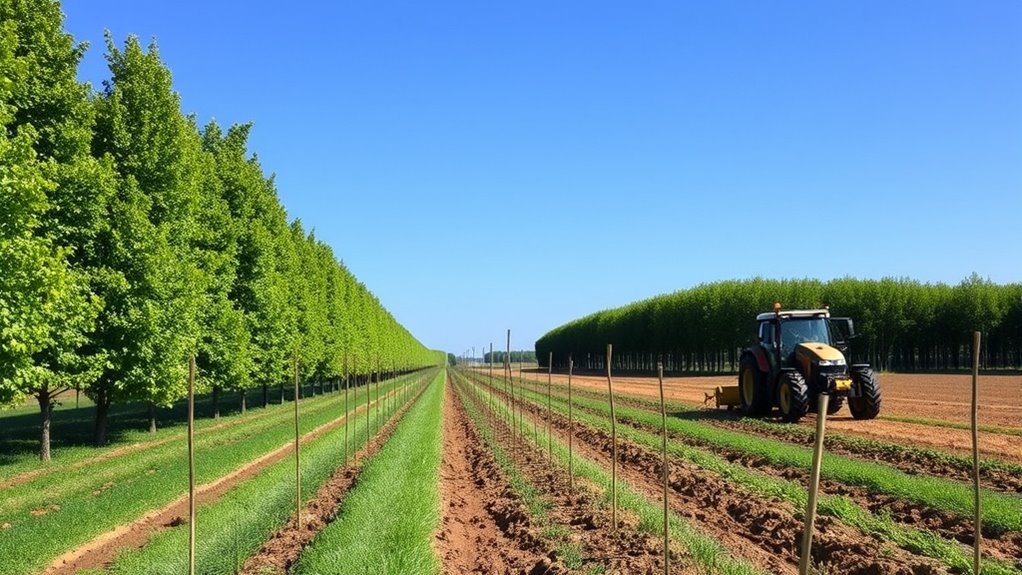
Installing windbreaks and shelterbelts is vital for protecting your fields from wind damage, soil erosion, and crop loss. When designing these barriers, your goal is to maximize wind resistance while guaranteeing the plants you choose can thrive in your specific environment. Selecting the right plants is key; they must be hardy enough to withstand local wind speeds and soil conditions. Your choices should focus on species that develop strong, dense root systems and sturdy stems, which help absorb and deflect wind energy effectively.
Start by evaluating your site’s typical wind patterns and intensity. Once you understand the wind load your shelterbelt needs to resist, you can choose plants that offer ideal wind resistance. For example, fast-growing, hardy evergreen trees like cedar or pine are excellent for creating a solid barrier because they maintain foliage year-round and offer continuous protection. Shrubs such as juniper or holly can also serve as effective windbreaks, especially in areas where space is limited. When selecting plants, consider their mature size and growth habit to guarantee they form a continuous, dense barrier without gaps, which can let wind slip through.
Plant selection should also factor in soil type, moisture availability, and local climate. Drought-tolerant species may be more suitable in arid regions, while moisture-loving plants work better in wetter areas. The right combination of species can create a multi-layered shelterbelt that offers better wind resistance and reduces turbulence. Diversity in your plant choices not only enhances the barrier’s effectiveness but also improves its resilience to pests and diseases. Keep in mind that some species grow faster than others; planting a mix allows you to establish a sturdy shelterbelt quickly while allowing slower-growing plants to fill in over time.
Proper spacing is vital for maximizing wind resistance. Plant your shelterbelt tightly enough to form a continuous screen but avoid overcrowding, which can hinder growth and airflow. Regular maintenance, like pruning and removing dead or diseased plants, guarantees your shelterbelt remains effective. As your plants mature, their increased density and height will provide better protection against wind, reducing soil erosion and safeguarding your crops.
Ultimately, choosing the right plants for your shelterbelt isn’t just about aesthetics—it’s about creating a resilient, functional barrier. With careful plant selection focused on wind resistance, you’ll develop a natural shield that minimizes wind-related damage, preserves soil health, and boosts your crop yields. Proper planning and plant choices make all the difference in establishing a shelterbelt that stands strong against the elements for years to come. Additionally, understanding the design principles of windbreaks ensures that your shelterbelt functions efficiently and adapts to changing environmental conditions.

INTII Heavy Duty Stall Mat Grippers - Pair of 2 Mat Movers Tool for Horse Stalls, Gym, Barn, and Trailer, Makes Moving Rubber Mats Easier, Saves Your Back and Hands
Secure Grip with Anti-Slip Teeth: Engineered with serrated gripping edges and reinforced jaws, our mat grippers lock onto...
As an affiliate, we earn on qualifying purchases.
Frequently Asked Questions
How Do Windbreaks Affect Local Wildlife Habitats?
Windbreaks can positively influence local wildlife habitats by creating shelter and promoting habitat diversity. They serve as wildlife corridors, allowing animals to move safely between areas, which reduces habitat fragmentation. However, if not properly planned, they might restrict movement or alter existing ecosystems. You should design windbreaks thoughtfully, ensuring they enhance habitat connectivity and maintain biodiversity, benefiting both wildlife and your farming environment.
What Are the Maintenance Costs for Long-Term Windbreaks?
You’ll find that the maintenance costs for long-term windbreaks involve a clear cost analysis and effective maintenance strategies. Regular pruning, pest control, and replacing damaged plants keep them thriving, while monitoring for disease prevents costly repairs. By implementing routine inspections and timely interventions, you reduce expenses over time, ensuring your windbreaks remain functional and sustainable. Staying proactive helps manage costs efficiently and prolongs their protective benefits.
Can Windbreaks Be Used in Urban Agricultural Settings?
Yes, you can use windbreaks in urban agricultural settings. They fit well within urban planning strategies, helping to protect crops from strong winds. Additionally, windbreaks improve air quality by filtering pollutants and dust, creating healthier environments for both plants and people. By incorporating them thoughtfully, you enhance crop protection and contribute to sustainable urban farming, making your urban space more resilient and environmentally friendly.
How Do Different Tree Species Impact Windbreak Effectiveness?
Your windbreak’s strength can be as mighty as a fortress, depending on tree species. Different species influence effectiveness through their growth rates and diversity. Fast-growing trees quickly establish a barrier, while diverse species create a layered, resilient shield that withstands weather extremes. Combining species with varied growth rates enhances windbreak performance, offering better protection over time. So, selecting a mix guarantees your windbreak remains effective and adaptable to changing conditions.
Are There Any Legal Restrictions on Planting Shelterbelts?
You should know that there are legal constraints and planting regulations you need to follow when planting shelterbelts. Local zoning laws or land use restrictions may limit the size, location, or species of trees you can plant. It’s important to verify with your local government or land authority to confirm compliance. Ignoring these regulations could lead to fines or the need to remove the shelterbelts later. Always research beforehand to avoid issues.

Feroca Heavy Duty Stall Mat Gripper, a Pair of Mat Mover Tool - Effortless Remover for Thick Rubber Mats in Horse Stalls, Barn, Gym, Trailer - Easy Lift & Move to Save Your Back
EFFORTLESS LIFTING & MULTI-THICKNESS ADAPTION - Stall mat gripper save more than 50% effort with ergonomic lever-assisted design!...
As an affiliate, we earn on qualifying purchases.
Conclusion
By installing windbreaks and shelterbelts, you can markedly reduce wind erosion and protect your crops. Did you know that properly placed shelterbelts can cut wind speeds by up to 50%? This means less soil loss, healthier plants, and better yields. Take the time to plan and establish these barriers; your field’s productivity and sustainability will benefit greatly. With strategic shelterbelts, you’re safeguarding your land today for a more prosperous tomorrow.

LWFCOEE Horse Stall Mat 4x6 Ft Large Horse Stable Mat Absorbent Non-Slip Washable Floor Mat for Horses Livestock Stables Barns Kennels Garages, Easy to Clean
【All-in-One Stall Protection】This Horse Stall Mat provides a durable and comfortable foundation for your equine friends. It acts...
As an affiliate, we earn on qualifying purchases.

CIEOVO 4x6 Ft Horse Stall Mat, Stable Mat for Horses Back Non-Slip Design Mat Backing Moisture Absorbent Easy to Clean for Horses Livestock Stables Barns Kennels Garages
Quality Material: The horse stall mat pad is made of high-quality felt and the back is made of...
As an affiliate, we earn on qualifying purchases.