Farm maps do more than guide you through fields; they help you plan crop rotations, manage pests, allocate resources, and track changes over time. With detailed visuals, you can prevent soil exhaustion, reduce disease buildup, and promote sustainability. They also streamline operations and improve compliance. By using farm maps, you gain an all-encompassing tool that supports long-term farm health and productivity. Keep exploring to discover how these maps can transform your entire farming approach.

Get garden gear delivered free with Prime
- Fast, free delivery on millions of items
- Prime Video, Amazon Music and more included
- Member-only deals all year
Key Takeaways
- Farm maps enable strategic crop rotation to enhance soil health and prevent disease buildup.
- They facilitate targeted pest management and biodiversity planning for resilient ecosystems.
- Maps improve resource allocation, reducing waste and operational costs through precise activity planning.
- Visual documentation aids in compliance, reporting, and tracking land use changes over time.
- They support sustainable farming practices, promoting long-term farm health and ecosystem balance.
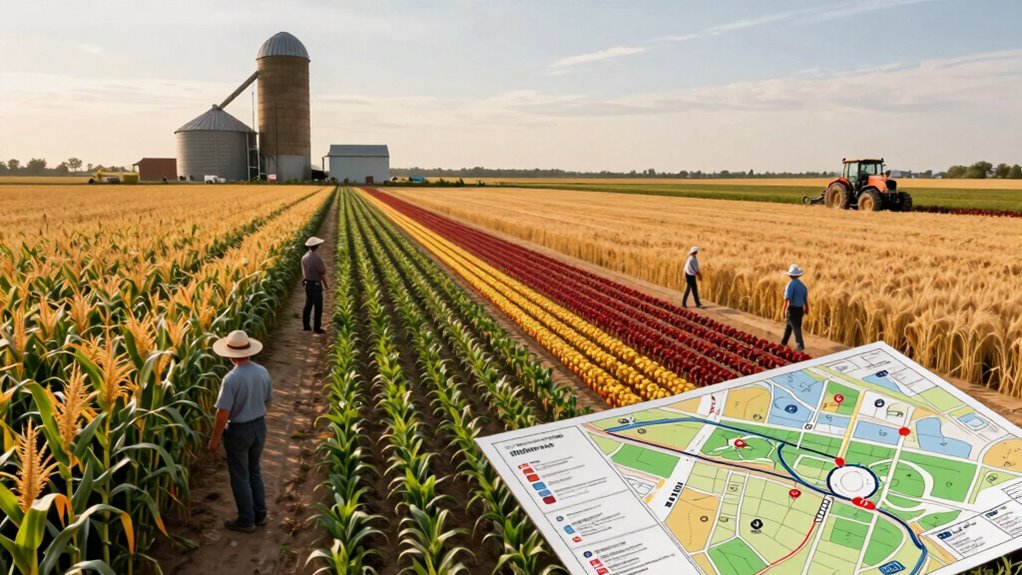
Have you ever struggled to find your way around a large farm? It’s easy to get lost wandering through endless fields and structures, especially when you’re juggling multiple tasks. Farm maps can transform that chaos into clarity, but their benefits reach far beyond simple navigation. When you have a clear, detailed farm map, you gain a powerful tool that helps optimize your operations, improve crop management, and even support sustainable practices.
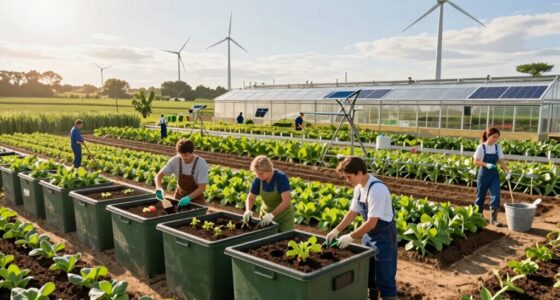
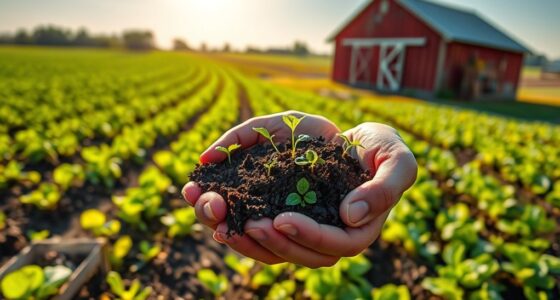
One of the key advantages of farm maps is in planning crop rotation. With a visual layout of your fields, you can see exactly which crops are planted where and plan the next season more efficiently. This prevents soil exhaustion and reduces the risk of disease buildup, making your farm more sustainable. Instead of relying on memory or scattered notes, you have an extensive visual reference that guides crop placement, helping you rotate crops strategically to maintain soil health and maximize yields.
Farm maps enable strategic crop rotation, promoting soil health and boosting yields through clear visual planning.
Farm maps also play a vital role in pest management. By knowing the precise layout of fields, pathways, and natural barriers, you can develop targeted pest control strategies. For instance, if a pest outbreak occurs, you can quickly identify affected areas and respond more effectively, reducing the need for widespread pesticide use. Maps also help you plan for beneficial insect habitats or buffer zones, which can naturally control pests and decrease chemical dependency. Incorporating biodiversity principles into your farm maps can further support natural pest regulation and ecosystem resilience. Additionally, detailed maps can aid in monitoring pest hotspots over time, allowing for more proactive management.
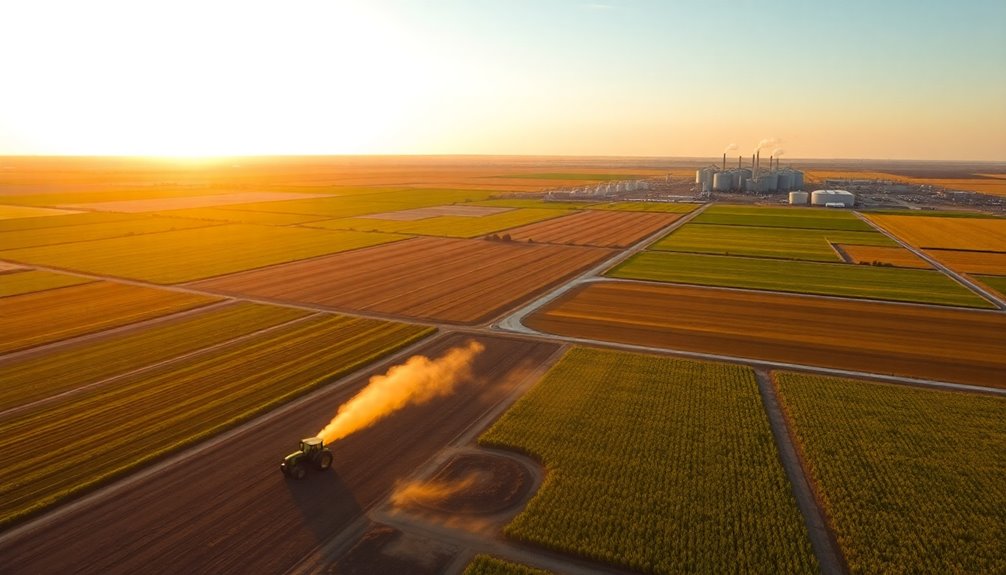
Beyond crop rotation and pest control, having an accurate farm map enhances overall efficiency. You can allocate resources more effectively, from water and fertilizer to labor. When you know exactly where each activity should happen, your workers spend less time wandering around, and your equipment is used more efficiently. This resource allocation not only reduces fuel costs and saves time but also ensures that inputs are used in the most sustainable way, supporting long-term farm health. Additionally, integrating technology such as GPS-guided machinery with your maps can further streamline operations and reduce waste.
Moreover, farm maps support better record-keeping and compliance. When you document your land use, crop choices, and pest management practices visually, it’s easier to track changes over time. If you need to report to regulators or apply for grants, having a detailed map can streamline the process and improve your chances of approval. Developing and maintaining an up-to-date farm map can also serve as a valuable educational resource for new farm staff or consultants, helping them understand your farm’s layout and management practices more quickly.
As an affiliate, we earn on qualifying purchases.
Frequently Asked Questions
How Do Farm Maps Assist With Crop Management?
Farm maps help you manage crops better by showing detailed soil health data and crop rotation patterns. You can identify areas needing soil improvement and plan rotations to prevent disease and maintain fertility. With this info, you make informed decisions, optimize yields, and reduce input costs. Using farm maps, you stay proactive, ensuring healthier crops and sustainable farming practices for long-term success.
Can Farm Maps Help With Pest Control Strategies?
Farm maps can dramatically enhance pest control strategies. You’ll quickly identify pest hotspots through precise pest identification, allowing targeted interventions. With detailed maps, you can optimize chemical application, reducing waste and environmental impact. Imagine transforming pest management into a streamlined, efficient process—saving you time, money, and crop yields. These maps give you the power to stay ahead of pests, ensuring healthier plants and a more profitable farm.
Do Farm Maps Improve Farm Safety?
Yes, farm maps considerably improve farm safety by enabling you to customize maps to highlight hazards and safe zones through farm map customization. They assist in planning safe routes and emergency procedures. Additionally, integrating farm safety training with detailed maps helps you and your team better understand safety protocols. This proactive approach reduces accidents, enhances awareness, and guarantees everyone knows how to navigate the farm securely.
Are Farm Maps Useful for Resource Allocation?
Farm maps are incredibly useful for resource allocation. They help you visualize your farm layout, making it easier to identify where resources like water, fertilizers, and labor are needed most. With detailed maps, you can optimize irrigation planning, reducing waste and increasing efficiency. Think of it as having a roadmap to smarter farming, ensuring every resource is directed precisely where it’s needed, saving money and boosting productivity.
How Do Farm Maps Support Sustainable Farming Practices?
Farm maps support sustainable farming practices by helping you monitor soil health and optimize water conservation. With detailed maps, you can identify areas needing soil improvement and adjust practices accordingly. They guide efficient water use, preventing waste and promoting drought resilience. By understanding variability across your farm, you make informed decisions that enhance productivity while protecting resources, ensuring long-term sustainability for your farming operation.
Conclusion
Imagine you’re exploring a dense forest without a map, lost and unsure where to go. Now, picture having a detailed trail map guiding your every step—suddenly, the journey feels easier and more confident. Farm maps serve the same purpose: they don’t just help you find your way, but also improve your understanding of the land. With clearer guidance, your farming journey becomes smoother, turning confusion into confidence and chaos into clarity.
Fall yard work Picks
leaf blowers
As an affiliate, we earn on qualifying purchases.