
TL;DR

Get garden gear delivered free with Prime
- Fast, free delivery on millions of items
- Prime Video, Amazon Music and more included
- Member-only deals all year
Hostas do not need to be cut back on a fixed fall date. Chicago Botanic Garden senior horticulturist Heather Sherwood advises waiting until foliage has yellowed and fallen after frost, then cutting it about an inch above the ground. Removing collapsed leaves can also reduce overwintering shelter for pests and fungal disease, particularly in beds where slugs have been a problem.
Hostas are best cut back after frost has turned their leaves yellow and caused them to collapse, according to Heather Sherwood, senior horticulturist at the Chicago Botanic Garden. In a Country Living report, Sherwood recommends removing the dead foliage rather than leaving it to mat down over winter, especially where slugs have been an issue.
Frost-damaged hosta leaves can become flattened and slimy, particularly on large plants. Sherwood said hostas may develop a yellow fall color, but after a killing frost—described in the report as around 30 degrees or colder—the foliage falls over and mats together. The collapsed leaves offer little visual interest through winter, and decomposing foliage can smell.
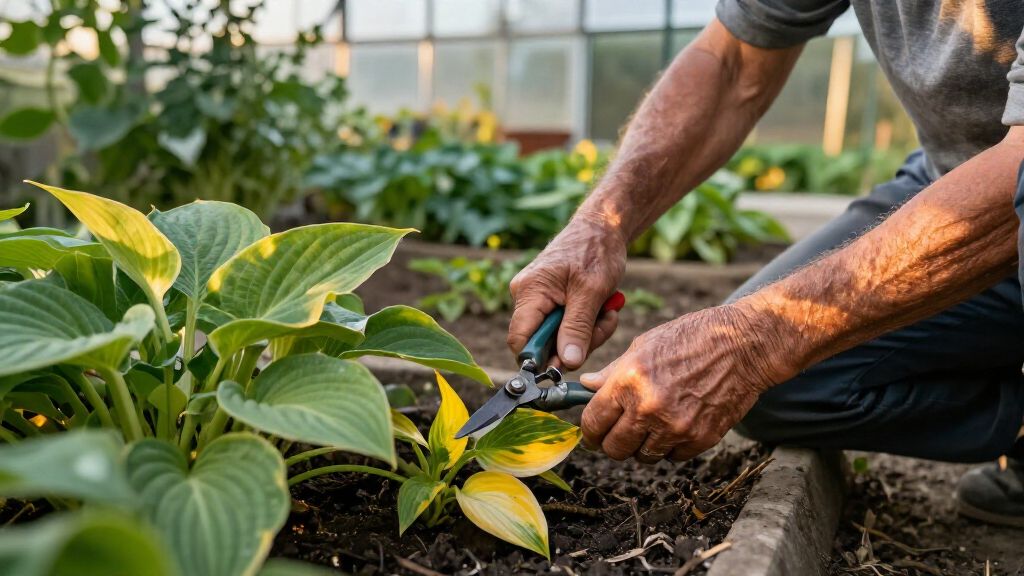
To prune, wait until the leaves have turned yellow and fallen over. Gather the foliage together and cut it roughly one inch above the ground, using a garden knife, Sherwood said. The report describes hostas as hardy plants whose growing points, or eyes, sit deep within the plant, making them difficult to damage with this approach.
Cut leaves can be chopped and composted, according to the report. Clearing away dead foliage and leaf litter also removes some of the cover that can shelter fungal diseases, mice and voles, Sherwood said. Slugs lay eggs in soil beneath hostas; removing leaf litter may expose eggs to drying and help reduce slug numbers the following growing season.
Fall Cleanup Can Limit Pest Shelter
The timing matters because cutting too early would mean removing foliage before it has naturally yellowed and collapsed. Waiting for frost provides a practical signal that the leaves are spent, while clearing them afterward can keep wet, matted material from remaining around the plant through winter.
For gardeners who saw slug damage—including the characteristic holes sometimes described as “shotgun” damage—the cleanup may serve as one preventive step before spring. It is not a guarantee that slugs or disease will be absent next year: the report presents leaf removal as a way to reduce habitat and numbers, not eliminate the pests.
Popular right now

Samsung 48-Inch S90H OLED 4K Smart TV (2026)

Dyson Ball Animal 2 Plus Corded Vacuum

KitchenAid Artisan Series 5-Quart Tilt-Head Stand Mixer, Dried Rose (KSM150PS)
As an affiliate, we earn on qualifying purchases.
Frost Sets the Pruning Signal
Hostas are shade-tolerant perennials grown for foliage that varies in size and color. Their leaves may continue to provide interest through much of the growing season, which is why the report’s advice focuses on waiting for frost-related decline rather than cutting them back while they are still green.
Fall garden work often competes with chores such as raking leaves and dividing perennials. The report says hosta cleanup can be delayed until spring in some gardens, but Sherwood recommends removing foliage once it has become slimy and matted, particularly where pests have been a recurring concern.
“Hostas do have a pretty yellow color in the fall, but once we have a killing frost—around 30 degrees or colder—they fall over and get matted down.”
— Heather Sherwood, senior horticulturist at the Chicago Botanic Garden
Local Conditions Affect Cleanup
The guidance does not establish a single calendar date for pruning; the timing depends on when frost occurs and the hosta foliage yellows and collapses. It also does not quantify how much leaf removal reduces slug populations or fungal disease, or guarantee that cleanup will prevent either problem.
The report gives no detailed advice for every climate, hosta variety or garden condition. Gardeners should use the plant’s condition as the cue described by Sherwood, rather than treating the approximate 30-degree frost reference as a universal schedule.
Watch for Yellowing and Collapse
As temperatures fall, check hostas for yellowing leaves and wait until frost has made the foliage collapse. Then gather and cut the leaves about an inch above the ground, and clear nearby dead leaf litter if slug damage or overwintering pests have been a concern.
Gardeners can chop the removed foliage for compost, as the report recommends. The next useful check comes in spring, when hostas begin growing again and gardeners can see whether slug damage returns.
Key Questions
When should hostas be cut back?
Wait until frost has turned the leaves yellow and they have fallen over. The report cites a killing frost of around 30 degrees or colder as a typical point when foliage may collapse, but the plant’s condition is the practical cue.
How close to the ground should I cut hosta leaves?
Gather the collapsed leaves and cut them about one inch above the ground, using a garden knife, according to Chicago Botanic Garden horticulturist Heather Sherwood.
Can I leave hosta leaves until spring?
The report says gardeners sometimes leave perennial cleanup until spring, but recommends removing hosta foliage once it is slimy and matted. Clearing it may reduce shelter for pests and disease, especially in beds with a history of slug problems.
Can cut hosta leaves be composted?
Yes. The report says the leaves can be chopped up and composted and break down quickly.
Source: rss