
Relying on just one weather alert method puts your rural home at risk of missing critical warnings during power outages, network disruptions, or severe storms. Cell towers in rural areas can be unreliable, especially during emergencies, and internet-dependent alerts might fail when power is out. Using multiple alert channels, like NOAA radios and community sirens, creates a safety net. To discover more ways to stay protected, keep exploring how layered alert systems strengthen your emergency preparedness.

Get garden gear delivered free — and shop member deals
- Fast, free delivery on millions of items
- Access to Prime Big Deal Days deals on October 6–7
- Prime Video, Amazon Music and more included
Key Takeaways
- Relying on a single alert method risks missing critical warnings during power outages or network failures.
- Multiple alert channels ensure continuous weather updates despite disruptions in internet or cell service.
- Dedicated radios operate independently of internet and power, providing reliable alerts during emergencies.
- Combining alert systems enhances overall preparedness and reduces vulnerability to communication failures.
- A layered approach ensures timely notifications, helping rural residents respond quickly to severe weather.
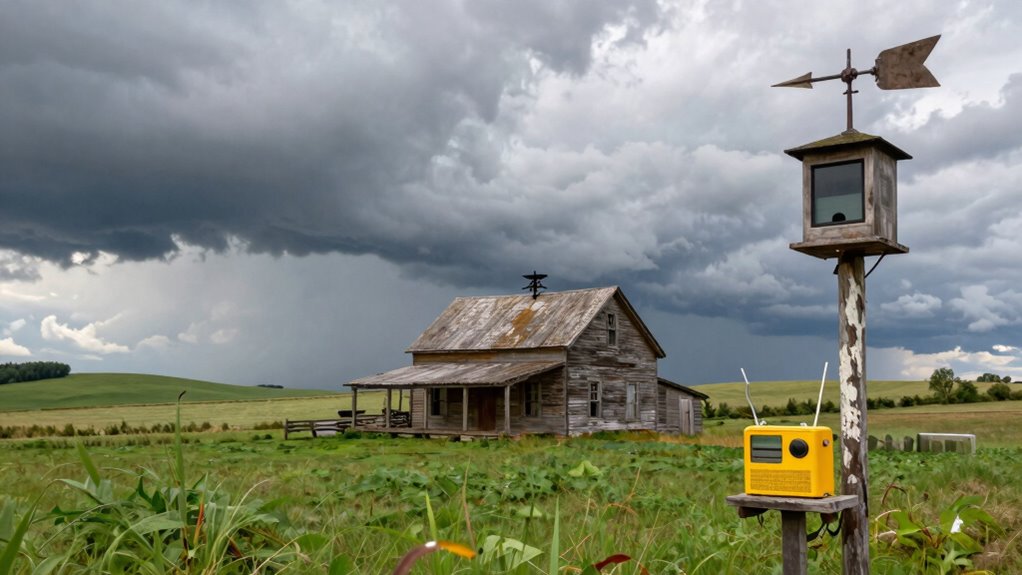
You might think that your smartphone’s weather app is sufficient, but that’s not always the case. Cell towers in rural areas can be unreliable, especially during severe storms or power outages. If your only alert method depends on internet access, it’s susceptible to disruption. A dedicated weather alert system like NOAA weather radios is a smart move. These radios operate on dedicated frequencies and often have battery backups, so they keep functioning even when the power goes out. Combining this with mobile alerts creates a safety net, so no matter what happens, you stay informed.
Emergency preparedness also benefits from proactive planning. You should regularly test your alert systems to confirm they’re working properly. Keep spare batteries for radios and portable chargers for your devices, so you’re never caught off guard. It’s also wise to establish a communication plan with family members or neighbors, ensuring everyone knows how to receive alerts and what steps to take in different scenarios. Developing redundant alert methods can further enhance your safety, ensuring critical information reaches you even if one system fails. Having multiple alert channels helps you act quickly, whether it’s evacuating a storm or securing your property against flooding. Additionally, understanding local weather patterns can help you anticipate emergencies before they happen and prepare accordingly. Being aware of seasonal risks can also improve your overall disaster readiness.
Technology redundancy isn’t just about having multiple gadgets; it’s about creating a layered approach that minimizes risks. When one system fails, others pick up the slack. For example, if your mobile device loses signal, a NOAA weather radio or a community warning siren can still deliver critical information. This layered approach ensures continuous awareness, which is essential in rural areas where weather can change unexpectedly and rapidly. By diversifying your alert methods, you turn a potentially dangerous situation into a manageable one, maintaining safety and peace of mind in even the most isolated settings.
NOAA weather radio with battery backup
As an affiliate, we earn on qualifying purchases.
As an affiliate, we earn on qualifying purchases.
Frequently Asked Questions
How Often Should I Update My Weather Alert System?
You should update your weather alert system at least once a month to guarantee it’s functioning correctly. Regularly check weather pattern updates and test your alert system to prevent false alarms or missed warnings. Perform alert system maintenance after severe weather events or if you notice any issues. Staying proactive helps you stay informed and prepared, especially in rural areas where weather changes can be sudden and severe.
Can Weather Alerts Be Customized for Specific Rural Areas?
Yes, weather alerts can be customized for your rural area. You can set up rural-specific notifications through weather apps, local emergency services, or NOAA alerts, ensuring you get relevant updates. Customized alerts help you stay informed about severe weather events specific to your location, allowing you to respond quickly. By tailoring notifications to your area, you improve safety and preparedness, especially when traditional alerts might miss hyper-local conditions.
What Is the Average Cost of Multiple Alert Methods?
Back in the day, a single weather alert system sufficed, but now, the cost of multiple alert methods varies. You can expect a cost comparison ranging from free alerts through government apps and weather radios to paid alert subscription services costing $10 to $30 monthly. Combining these guarantees reliable, timely warnings, especially in rural areas. Investing in diverse methods offers peace of mind without breaking your budget.
Are There Government Programs Supporting Rural Weather Alert Systems?
Yes, government programs support rural weather alert systems through initiatives like satellite communication and community networks. These programs aim to improve emergency communication, ensuring you get timely alerts even in remote areas. By leveraging satellite technology and local networks, they help bridge connectivity gaps, so you stay informed about severe weather. Participating in these programs can enhance your safety and preparedness, giving you peace of mind during unpredictable weather conditions.
How Do I Test My Weather Alert Devices for Reliability?
You need to give your weather alert devices a dry run to verify they’re reliable. Start by checking device calibration and making sure they’re set correctly. Then, test signal strength by triggering alerts manually or during a weather event. If alerts don’t sound or come through clearly, troubleshoot or replace batteries. Remember, a chain is only as strong as its weakest link, so regular checks keep you prepared for any storm.
Conclusion
In the quiet embrace of rural life, a single weather alert method might gently whisper warnings, but it’s wise to heed multiple voices. By embracing various alerts, you create a symphony of signals that softly but surely prepare you for any changing conditions. This layered approach ensures you stay a step ahead, allowing you to respond with calm confidence. After all, a well-prepared home is the serene refuge every rural dweller deserves.
Fall yard work Picks
leaf blowers
As an affiliate, we earn on qualifying purchases.