
The best pomegranate growing supplies depend on whether you want fruit sooner, prefer growing from seed, or need a compact plant for a small space. My best overall pick is the Perfect Plants Wonderful Pomegranate Tree, 2 Gallon Live Plant, a larger established plant that avoids the long wait and uncertainty of seed starting. The Perfect Plants Russian Pomegranate Tree stands out for buyers prioritizing a named variety, while the Dwarf Pomegranate Live Plant suits container growers seeking a smaller plant. The main tradeoff is convenience and earlier establishment versus the lower-commitment, slower route of seeds; climate fit and mature size matter just as much as the product label. Read on for the full breakdown, selection criteria, and advice for matching supplies to your growing conditions.

Get garden gear delivered free with Prime
- Fast, free delivery on millions of items
- Prime Video, Amazon Music and more included
- Member-only deals all year
Complete the kit


Key Takeaways
- Established live plants lead for faster starts: The 2-gallon Wonderful tree and 1-gallon Russian tree offer a more direct path to growing than any seed packet, though shipping and local climate fit still matter.
- Seed counts do not guarantee a particular result: The lineup includes several packets with 30 to 50 or more seeds, but seed-grown plants may vary and can take longer to mature.
- Dwarf options address space, not every growing challenge: A dwarf live plant or dwarf seed packet suits container plans, but a compact label does not remove the need for adequate light and suitable winter protection.
- Named varieties make different promises: Wonderful products center on a familiar named type, while the Russian tree is a distinct named option; generic seed listings provide less clarity about the resulting fruit.
- Fertilizer is a supplement, not a substitute for growing conditions: Agreno’s fruit-and-bud-focused granules may fit an established plant-care routine, but they cannot compensate for unsuitable climate, drainage, or light.
| Fam Plants Wonderful Pomegranate Trees, 4-Pack, 2-Inch Pots |  | Best for Starting Several Live Plants | Brand: Fam Plants | Plant variety: Wonderful pomegranate | Quantity: 4 plants | VIEW LATEST PRICE | See Our Full Breakdown |
| Mixrug Organic Pomegranate Seeds for Planting, 50 Count |  | Best for Heirloom Seed Growing | Brand: Mixrug | Seed count: 50 | Plant type: Perennial fruit plant | VIEW LATEST PRICE | See Our Full Breakdown |
| 50+ Pomegranate Tree Seeds for Planting |  | Best for Container and In-Ground Flexibility | Seed quantity: 50+ | Plant: Pomegranate (Punica granatum) | Sunlight: Full sun | VIEW LATEST PRICE | See Our Full Breakdown |
| 45 Pomegranate Seeds for Planting, Non-GMO Heirloom Variety |  | Best for Planned Garden Spacing | Seed quantity: 45 | Seed characteristics: Non-GMO, heirloom variety | Growing location: Outdoor | VIEW LATEST PRICE | See Our Full Breakdown |
| Agreno Pomegranate Buds and Fruits Booster Organic Fertilizer Granules (450 gm) |  | Best for Feeding Established Pomegranate Plants | Brand: Agreno | Weight: 450 gm | Product type: Organic fertilizer granules | VIEW LATEST PRICE | See Our Full Breakdown |
| Dwarf Pomegranate Live Plant, 10–14 Inches Tall | 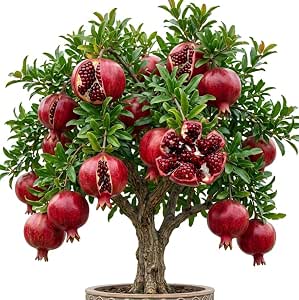 | Best Ready-to-Grow Dwarf Plant | Plant type: Live dwarf, fruit-bearing pomegranate plant | Arrival height: 10–14 inches | Expected mature height: 10 feet | VIEW LATEST PRICE | See Our Full Breakdown |
| Dwarf Pomegranate Tree Seeds, 20 Count |  | Best for Seed-Starting Beginners | Seed count: 20 | Plant type: Dwarf pomegranate | Indoor/outdoor use: Outdoor | VIEW LATEST PRICE | See Our Full Breakdown |
| Pomegranate Tree Seeds (Punica granatum), 30+ Non-GMO Seeds |  | Best for Warm-Climate Seed Growing | Botanical name: Punica granatum | Seed count: 30+ | Expected plant height: 20 feet | VIEW LATEST PRICE | See Our Full Breakdown |
| 35+ Organic Dwarf Pomegranate Tree Seeds for Planting |  | Best Organic Dwarf Seed Value | Quantity: 35+ seeds | Plant: Dwarf pomegranate (Punica granatum) | Mature height: 4–8 feet with pruning | VIEW LATEST PRICE | See Our Full Breakdown |
| Perfect Plants Russian Pomegranate Tree, 1 Gallon |  | Best Cold-Hardy Live Fruit Tree | Plant type: Live pomegranate tree | Container size: 1 gallon | Pollination: Self-pollinating | VIEW LATEST PRICE | See Our Full Breakdown |
| Wonderful Pomegranate Live Starter Plants, 2-Pack |  | Best for a Two-Plant Head Start | Plant type: Fruiting shrub | Botanical name: Punica granatum ‘Wonderful’ | Quantity: 2 plants | VIEW LATEST PRICE | See Our Full Breakdown |
| Red Pomegranate (Punica granatum) Seeds, 50 Count |  | Best for Bulk Seed Starting | Plant: Punica granatum (pomegranate) | Count: 50 seeds | Weight: 13.61 g | VIEW LATEST PRICE | See Our Full Breakdown |
| Perfect Plants Wonderful Pomegranate Tree, 2 Gallon Live Plant |  | Best Established Tree for Warm Climates | Plant type: Fruit tree | Container size: 2 gallons | Mature height and width: 10 feet tall and 10 feet wide | VIEW LATEST PRICE | See Our Full Breakdown |
| Mixrug Dwarf Pomegranate Seeds for Planting, 30 Count |  | Best for Compact Indoor-Outdoor Growing | Brand: Mixrug | Seed count: 30 | Plant type: Dwarf pomegranate | VIEW LATEST PRICE | See Our Full Breakdown |
| pomegranate growing supplie | Plant type |
|---|---|
| Fam Plants Wonderful Pomegrana | — |
| Mixrug Organic Pomegranate See | Perennial fruit plant |
| 50+ Pomegranate Tree Seeds for | — |
| 45 Pomegranate Seeds for Plant | — |
| Agreno Pomegranate Buds and Fr | — |
| Dwarf Pomegranate Live Plant | Live dwarf, fruit-bearing pomegranate plant |
| Dwarf Pomegranate Tree Seeds | Dwarf pomegranate |
| Pomegranate Tree Seeds | — |
| 35+ Organic Dwarf Pomegranate | — |
| Perfect Plants Russian Pomegra | Live pomegranate tree |
| Wonderful Pomegranate Live Sta | Fruiting shrub |
| Red Pomegranate | — |
| Perfect Plants Wonderful Pomeg | Fruit tree |
| Mixrug Dwarf Pomegranate Seeds | Dwarf pomegranate |
More Details on Our Top Picks
Fam Plants Wonderful Pomegranate Trees, 4-Pack, 2-Inch Pots
For buyers who want established seedlings rather than the uncertainty of germination, this four-plant set is the most direct route in this group. The Wonderful variety is listed for both fruit and ornamental growing, and the 3–7-inch plants give you a head start compared with Mixrug Organic Pomegranate Seeds for Planting. Four plants also let you try different spots or keep a backup if one struggles. The tradeoff is that these are small starters, not ready-to-fruit trees, and they need full sun and regular watering while establishing. The listing also conflicts on pot size, giving 2 inches in the title and 1 inch in the description, so I would not rely on that detail when planning containers. Its stated zones are 7–11, which still rules out some colder gardens.
Pros:- Includes four live plants rather than seeds that need germination
- Wonderful variety is described for fruit production and ornamental use
- Plant height and basic care guidance are provided
- Multiple starters allow placement in different sunny locations
Cons:- Pot size conflicts between the 2-inch title and 1-inch description
- Small 3–7-inch plants need care and time before producing fruit
- Full sun and regular watering during establishment may not suit low-attention or shaded gardens
Best for: Gardeners in zones 7–11 who want multiple live Wonderful pomegranate starters and can provide a sunny outdoor spot.
Not ideal for: Buyers seeking a mature, near-fruiting tree, or gardeners who need a clearly specified pot size or live in a climate outside the listed zones.
- Brand:Fam Plants
- Plant variety:Wonderful pomegranate
- Quantity:4 plants
- Plant height:3–7 inches
- Pot size:2 inches in title; 1 inch in description
- Expected mature height:12 feet
- Hardiness zones:7–11
- Sun and soil:Full sun; sandy, well-draining soil
- Watering:Regular while establishing; infrequently once established
Our verdict“Choose this four-pack if you want several live Wonderful starters and can give them sun, establishment care, and time to grow.”
Mixrug Organic Pomegranate Seeds for Planting, 50 Count
Heirloom, open-pollinated seed is the main reason to choose this pack: it suits growers who want to start pomegranates from seed and value those seed characteristics. With 50 seeds, there is room to attempt multiple starts, while the listed indoor or outdoor use offers more flexibility than 45 Pomegranate Seeds for Planting, Non-GMO Heirloom Variety, which is specified for outdoor use. Mixrug also notes that its flowers can attract pollinators. That flexibility does not remove the main growing limits: the plants are listed for zones 8–10 and full sun, and seed growing takes more patience than buying live plants such as the Fam Plants four-pack. The listing does not give mature plant dimensions or germination guidance, so buyers have less information for planning space and care.
Pros:- 50 seeds provide multiple opportunities to start plants
- Described as heirloom, GMO-free, and open-pollinated
- Listed for indoor and outdoor planting
- Flowers are described as attracting pollinators
Cons:- Listed growing range is limited to zones 8–10
- Full sun is required, limiting suitable growing locations
- Mature dimensions and germination details are not provided
Best for: Seed-starting gardeners in zones 8–10 who want heirloom, open-pollinated pomegranates and may grow them indoors or outdoors.
Not ideal for: Buyers who want a fruiting plant soon, need detailed germination instructions, or garden outside the stated hardiness zones.
- Brand:Mixrug
- Seed count:50
- Plant type:Perennial fruit plant
- Seed characteristics:GMO-free, heirloom, open-pollinated
- Hardiness zones:8–10
- Growing location:Indoor or outdoor
- Sunlight:Full sun
- Planting and blooming period:Spring to fall
- Pollinator attraction:Flowers are described as attracting pollinators
Our verdict“Pick these seeds if heirloom traits and indoor-or-outdoor starting matter more to you than a quick start with a live plant.”
50+ Pomegranate Tree Seeds for Planting
These seeds earn their place for growers who want to choose between a garden bed and a container rather than commit to one setup. The listing says the plants tolerate heat and drought and can grow in either location, a useful combination for warm-climate gardeners managing limited space or dry spells. It also links the tree’s flowers and edible fruit to both ornamental and harvest goals. Compared with Mixrug Organic Pomegranate Seeds for Planting, this option does not specify heirloom or open-pollinated status, but it does describe container growing and drought tolerance. The stated count is 50+, though the listing provides little detail on climate zones, seed-starting steps, or expected mature size. Those gaps make it harder to plan than the more specific 45 Pomegranate Seeds for Planting.
Pros:- 50+ seeds offer multiple chances to start plants
- Can be grown in containers or in the ground
- Plants are described as heat- and drought-resistant
- Combines ornamental flowers with edible fruit potential
Cons:- Hardiness zones and detailed planting guidance are not provided
- Expected mature size is not specified for container planning
- Heirloom or open-pollinated status is not stated
Best for: Warm-climate gardeners who want to trial pomegranate seeds in containers or beds and value heat and drought tolerance.
Not ideal for: Buyers who need stated hardiness zones, detailed sowing instructions, or confirmation of heirloom seed characteristics.
- Seed quantity:50+
- Plant:Pomegranate (Punica granatum)
- Sunlight:Full sun
- Growing locations:Containers or garden beds
- Special feature:Low maintenance
- Stated tolerance:Heat and drought
- Item weight:13.61 g
- Color:Red
Our verdict“Choose this pack for growing flexibility across pots and beds, provided you are comfortable filling in care details not listed here.”
45 Pomegranate Seeds for Planting, Non-GMO Heirloom Variety
Among the seed options, this is the clearest choice for someone laying out a dedicated outdoor bed or hedge. Its instructions specify 24-hour soaking, planting about 1/4 inch deep, and spacing trees 10–15 feet apart, giving buyers more practical setup information than the broad guidance for 50+ Pomegranate Tree Seeds for Planting. The non-GMO heirloom description also suits gardeners who prioritize those seed traits. The cost of that planning detail is space: the recommended mature spacing is a poor match for a small patio or compact garden. It is listed for outdoor use and needs 6–8 hours of direct sun, while no hardiness zones are supplied. Compared with Mixrug’s seeds, this pack offers less indoor flexibility but more explicit sowing and spacing guidance.
Pros:- Non-GMO heirloom seed description
- Provides soaking time and planting depth
- Lists recommended spacing for planning a larger planting
- Can serve fruit-growing or ornamental landscape goals
Cons:- Outdoor use and full-sun requirements limit placement options
- 10–15-foot spacing calls for substantial garden space
- Hardiness zones are not specified
Best for: Outdoor gardeners planning a sunny landscape bed, border, or hedge with room to space pomegranate trees 10–15 feet apart.
Not ideal for: Container growers, small-yard gardeners, or buyers who need hardiness-zone guidance before choosing seeds.
- Seed quantity:45
- Seed characteristics:Non-GMO, heirloom variety
- Growing location:Outdoor
- Sunlight:Full sun; 6–8 hours daily
- Planting depth:About 1/4 inch (0.6 cm)
- Soaking time:24 hours
- Recommended spacing:10–15 feet
- Expected blooming period:Year round
Our verdict“Choose this pack for a sunny, space-planned outdoor planting where clear sowing directions matter more than container versatility.”
Agreno Pomegranate Buds and Fruits Booster Organic Fertilizer Granules (450 gm)
Unlike the other picks here, this is a feeding product, not a way to start a pomegranate. The slow-release organic granules are formulated specifically for pomegranate plants, with the stated aim of supporting budding, flowering, and fruiting. That makes it a more targeted follow-on supply than any seed pack, including Fam Plants Wonderful Pomegranate Trees, which provides live starters but no fertilizer. The listing says it can be used in pots, home gardens, orchards, and farms, so it fits several growing scales. Its narrow focus is also its main drawback: buyers tending mixed crops may prefer a fertilizer intended for broader use. No application rate or feeding schedule is supplied in the provided product details, so growers will need to check the package directions rather than infer a dose.
Pros:- Slow-release granules are intended to provide longer-lasting nutrition
- Formulated specifically for pomegranate plants
- Suitable for pots, home gardens, orchards, and farms
- Product description targets budding, flowering, and fruiting
Cons:- Pomegranate-specific formula offers limited usefulness for other crops
- Application rate and feeding schedule are not included in the supplied details
Best for: Growers with established pomegranate plants who want a slow-release organic fertilizer formulated for pomegranate flowering and fruiting.
Not ideal for: Gardeners seeking an all-purpose fertilizer for mixed crops, or anyone who needs an application schedule from the listing.
- Brand:Agreno
- Weight:450 gm
- Product type:Organic fertilizer granules
- Release type:Slow-release
- Intended crop:Pomegranate plants
- Suitable growing settings:Pots, home gardens, orchards, and farms
- Manufacturer:Sansar Green Mission Ltd (P)
- ASIN:B0D87H69BM
Our verdict“Choose Agreno for feeding established pomegranates; skip it if you need seed or plant starts or one fertilizer for a mixed garden.”
Dwarf Pomegranate Live Plant, 10–14 Inches Tall
This live dwarf plant is the most direct route in this group from purchase to growing a pomegranate: it arrives 10–14 inches tall, rather than asking you to start with seeds and wait for germination. Its compact form suits a patio pot or a small garden space, while its flowers and fruit give it both ornamental and edible appeal. Compared with the Dwarf Pomegranate Tree Seeds, 20 Count, it skips soaking and seed-starting but gives you just one plant, not several chances to raise a seedling. The listed 10-foot mature height also means “dwarf” does not guarantee a tiny mature shrub, particularly without pruning. Full sun, regular watering, and zones 9–11 make this a better fit for warm, bright sites than for cold-climate growers hoping to keep it outdoors year-round.
Pros:- Arrives as a live 10–14-inch plant, avoiding seed germination.
- Can be grown in containers, patios, or garden beds.
- Offers both ornamental blooms and fruit-bearing potential.
- Listed for indoor or outdoor use.
Cons:- Needs full sun and regular watering, so it is not a low-attention choice.
- Listed hardiness is limited to USDA zones 9–11.
- Mature height is listed as 10 feet, which can exceed expectations for a compact plant.
Best for: Growers in USDA zones 9–11 who want a single established dwarf pomegranate to place in a sunny patio container or garden bed.
Not ideal for: Cold-climate gardeners seeking a reliably winter-hardy outdoor plant, or buyers who want several seedlings from one purchase.
- Plant type:Live dwarf, fruit-bearing pomegranate plant
- Arrival height:10–14 inches
- Expected mature height:10 feet
- Usage:Indoor or outdoor
- Sunlight:Full sun
- USDA hardiness zone:9–11
- Planting period:Spring to summer
- Soil:Well-draining sandy loam or potting mix
- Watering:Regular; keep moist but not waterlogged
Our verdict“Choose this single live plant if you want a faster start than seeds and can provide a sunny, warm growing spot.”
Dwarf Pomegranate Tree Seeds, 20 Count
These 20 dwarf pomegranate seeds suit growers who want to learn the seed-starting process without committing to a larger packet. The instructions give beginners a clear starting routine: soak the seeds in warm water for 24 hours, sow just below the soil, then provide warmth, sunlight, and regular watering. Germination is expected in 2–4 weeks, though that wait—and the uncertainty of raising seedlings—makes this slower than buying the Dwarf Pomegranate Live Plant, 10–14 Inches Tall. Starting in trays also lets you raise several plants and move successful seedlings into larger pots. The tradeoff is that these seeds are listed for outdoor use and full sun, so they are less flexible for indoor growing than the live dwarf plant. They need patience, steady care, and a suitable sunny location.
Pros:- Twenty seeds offer multiple chances to raise seedlings.
- Specific soaking and sowing instructions give beginners a practical starting method.
- Compact trees are described as suitable for containers and small gardens.
- Seedlings can be started in trays and transplanted as they grow.
Cons:- Germination is expected to take 2–4 weeks, with no immediate plant.
- Requires full sun and regular watering during establishment.
- Listed for outdoor use, offering less growing flexibility than the live dwarf plant.
Best for: New seed growers who want a modest batch of dwarf pomegranate seeds to start in trays and transplant into containers.
Not ideal for: Buyers who want a live plant immediately, or gardeners who cannot provide full sun and regular watering.
- Seed count:20
- Plant type:Dwarf pomegranate
- Indoor/outdoor use:Outdoor
- Sunlight exposure:Full sun
- Expected planting period:Spring
- Soil type:Sandy soil
- Moisture needs:Regular watering
- Germination time:Expected in 2–4 weeks
Our verdict“Pick this packet if you want an approachable seed-starting project and can wait for seedlings to develop.”
Pomegranate Tree Seeds (Punica granatum), 30+ Non-GMO Seeds
For growers who want a standard pomegranate rather than a specifically dwarf variety, this packet offers 30+ non-GMO seeds with the potential to produce edible fruit and bright red flowers. Its stated zones 8–11 give it a broader outdoor climate range than the dwarf seed options in this group, including the 35+ Organic Dwarf Pomegranate Tree Seeds, which are also listed for zones 8–11 but emphasize a compact, pruned form. This plant may reach 20 feet, so it suits buyers with room for a larger shrub or small tree, not just a patio pot. The tradeoff is that germination can be difficult and depends on warm conditions; growers in colder areas may need greenhouse protection. It is a seed packet, so fruit is a longer-term goal rather than an immediate result.
Pros:- Includes 30 or more non-GMO seeds.
- Listed for USDA zones 8–11.
- Can produce edible fruit and bright red flowers.
- Heat-tolerant traits suit warm growing conditions.
Cons:- Germination can be difficult and depends on suitable warmth and care.
- Expected height of 20 feet requires more room than the dwarf seed options.
- Colder climates may need greenhouse protection.
Best for: Warm-climate gardeners with space for a larger pomegranate shrub or small tree who want edible fruit and ornamental flowers.
Not ideal for: Small-space growers seeking a reliably compact plant, or gardeners in cold climates without greenhouse protection.
- Botanical name:Punica granatum
- Seed count:30+
- Expected plant height:20 feet
- USDA hardiness zones:8–11
- Sunlight exposure:Full sun
- Soil type:Loam
- Watering needs:Regular
- Growing conditions:Outdoor; can be grown indoors
- Features:Heat tolerant, GMO-free, heirloom
Our verdict“Choose these seeds if you have a warm site and room for a larger pomegranate, rather than a compact container plant.”
35+ Organic Dwarf Pomegranate Tree Seeds for Planting
This packet pairs a larger seed count with a clear compact-growing purpose: the 35+ organic, non-GMO heirloom seeds are intended for dwarf pomegranates suited to gardens and containers. That makes it a better match for limited space than the Pomegranate Tree Seeds (Punica granatum), 30+ Non-GMO Seeds, which list a possible 20-foot height. The stated mature range here is 4–8 feet with pruning, giving growers a more manageable target while still allowing for fruit and ornamental flowers. Once established, the plants are described as drought tolerant, which can ease ongoing care, though regular watering is still needed as they grow. This is not a quick route to harvest: fruit production may take 2–3 years, and outdoor growing is best suited to zones 8–11.
Pros:- Includes 35 or more organic, non-GMO heirloom seeds.
- Dwarf growth is suited to containers, patios, and smaller gardens.
- Listed mature height is 4–8 feet with pruning.
- Plants are described as drought tolerant once established.
Cons:- Outdoor growing is best suited to USDA zones 8–11.
- Fruit production may take 2–3 years under optimal conditions.
- Regular watering is still needed before plants become established.
Best for: Container and small-garden growers who prefer organic, non-GMO heirloom seeds and are willing to wait for a dwarf plant to mature.
Not ideal for: Gardeners outside zones 8–11 who need a cold-hardy outdoor option, or buyers expecting fruit soon after planting.
- Quantity:35+ seeds
- Plant:Dwarf pomegranate (Punica granatum)
- Mature height:4–8 feet with pruning
- USDA hardiness zones:8–11 outdoors
- Sunlight:Full sun
- Soil:Loam; well-drained
- Watering:Regular watering; drought tolerant once established
- Features:Organic, non-GMO heirloom
Our verdict“Choose this packet for a compact, organic seed-starting project if you can provide warmth and wait for fruit.”
Perfect Plants Russian Pomegranate Tree, 1 Gallon
This one-gallon Russian pomegranate is the strongest fit here for growers who want a live outdoor fruit tree and a wider cold-climate range than the dwarf options. It is listed for USDA zones 6–9, compared with zones 9–11 for the Dwarf Pomegranate Live Plant, 10–14 Inches Tall, and its self-pollinating trait means one tree can set fruit without a second pomegranate nearby. Red-orange spring flowers add ornamental value before the fruit ripens in mid to late September. The tradeoff is space: a mature tree may reach about 10 feet tall and wide, so it is less suitable for compact patios than dwarf plants or seeds. It is strictly for outdoor growing, and shipping is unavailable to California, Arizona, and Hawaii.
Pros:- Self-pollinating, so a second tree is not needed for pollination.
- Listed for USDA zones 6–9, broader than the live dwarf plant’s zones 9–11.
- Produces edible fruit that ripens in mid to late September.
- Red-orange spring flowers provide ornamental appeal.
Cons:- Matures to about 10 feet tall and 10 feet wide, requiring substantial outdoor space.
- Not suitable as a houseplant.
- Does not ship to California, Arizona, or Hawaii.
Best for: Outdoor gardeners in USDA zones 6–9 who have room for a full-size tree and want a self-pollinating live plant.
Not ideal for: Small-space or indoor growers, and buyers in California, Arizona, or Hawaii where this plant does not ship.
- Plant type:Live pomegranate tree
- Container size:1 gallon
- Pollination:Self-pollinating
- Usage:Outdoor
- Mature size:About 10 feet tall and 10 feet wide
- USDA hardiness zones:6–9
- Sunlight:Full sun to partial shade
- Fruit ripening:Mid to late September
- Shipping restrictions:Does not ship to California, Arizona, or Hawaii
Our verdict“Choose this live tree if you have outdoor space in zones 6–9 and want a self-pollinating pomegranate with edible fruit.”
Wonderful Pomegranate Live Starter Plants, 2-Pack
For growers who want living plants rather than a packet of seeds, this two-plant starter set cuts out the early germination stage. Both plants are the Wonderful cultivar, selected for ruby-red fruit, and their biodegradable 2-inch bags can be planted where roots may grow through. Care instructions are included, a useful extra for a first pomegranate planting. Compared with the Perfect Plants Wonderful Pomegranate Tree, these starts take up less room on arrival but are much smaller and need time to grow before they can offer a substantial harvest. The listed range of full sun to shade is broad, though pomegranates generally need strong sunlight for fruiting, so I would not treat shade tolerance as a promise of good yields. Low watering needs do not remove the need to monitor soil moisture, and the plants should receive sunlight soon after delivery.
Pros:- Includes two Wonderful cultivar starter plants rather than seeds that need germinating.
- Biodegradable growing bags allow planting without removing the root container.
- Low stated watering needs can suit growers who prefer a drought-tolerant shrub.
- Care instructions and growing support are provided.
Cons:- The 2-inch containers mean the plants are small and will need further growth before they can produce a meaningful crop.
- Plants need sunlight soon after delivery to reduce stress.
- Low watering needs still require attention to soil moisture, particularly in nutrient-rich, moist soil.
Best for: New growers who want two small Wonderful pomegranate plants, provided they can give them a sunny spot and time to establish.
Not ideal for: Buyers who want a larger, established tree or near-term fruit production; these plants arrive in 2-inch bags and need growing time.
- Plant type:Fruiting shrub
- Botanical name:Punica granatum ‘Wonderful’
- Quantity:2 plants
- Container size:2 x 2 inches
- Expected blooming period:Summer
- Sunlight exposure:Full sun to shade
- USDA hardiness zone:3–10
- Expected plant height:1 foot
- Moisture needs:Low watering
Our verdict“Choose this pair for a supported start with two Wonderful plants, but pick the 2-gallon Perfect Plants tree if you want a more established specimen.”
Red Pomegranate (Punica granatum) Seeds, 50 Count
This 50-seed pack is the lineup’s clearest choice for growers who want to start many plants and select which ones to keep. Pomegranates can be grown in containers, hedges, or a home orchard, so the count offers flexibility for experimenting with different planting spots. Unlike the Wonderful Pomegranate Live Starter Plants, 2-Pack, these seeds require germination and early care before they become shrubs; the larger quantity is useful only if you have the space and patience to raise multiple seedlings. The listing describes ornamental red blossoms and edible fruit, but it does not identify a named cultivar or give germination, mature-size, or harvest-timing details. Full sun is specified for outdoor use, so I would skip this if your planned growing area is shaded. This is a basic seed-starting option, not a shortcut to an established fruiting plant.
Pros:- Provides 50 seeds for starting multiple plants or testing different growing locations.
- Can be used for container, hedge, or standalone garden planting.
- Described as producing ornamental red blossoms and edible pomegranate fruit.
Cons:- Seeds require germination and seedling care before they can become established plants.
- The listing does not specify a cultivar, expected plant size, or fruiting timeline.
- Outdoor use calls for sunny growing conditions, limiting suitability for shaded sites.
Best for: Gardeners with a sunny outdoor growing area who want to start several pomegranate plants for containers, hedging, or an orchard project.
Not ideal for: Buyers seeking a named cultivar, detailed germination guidance, or a ready-to-plant shrub; this listing provides seeds and limited growing specifics.
- Plant:Punica granatum (pomegranate)
- Count:50 seeds
- Weight:13.61 g
- Usage:Outdoor
- Growing uses:Containers, hedges, or standalone planting
- Flowers:Red blossoms
- Fruit:Described as edible pomegranate fruit
Our verdict“Pick this pack for a sunny, large-scale seed-starting project, but choose live starters if you want to bypass germination.”
Perfect Plants Wonderful Pomegranate Tree, 2 Gallon Live Plant
Among these four options, this is the most established planting choice: the 2-gallon tree avoids the germination stage and the slow build-up from tiny starter plants. Its self-pollinating habit means a second tree is not required for fruit production, while spring flowers add ornamental value before large red fruit ripens in mid to late September. That makes it a more direct fit for a warm-climate landscape than the Red Pomegranate Seeds, which offer a larger starting quantity but no named cultivar or harvest schedule. The tradeoff is a demanding site requirement: it is listed for full sun and zones 8–11, and it can reach 10 feet tall and wide. It also needs moderate watering, unlike the low-watering Wonderful starter pair. Shipping restrictions exclude Arizona and California, so location may rule it out before planting plans do.
Pros:- Self-pollinating, so a second tree is not needed for fruit production.
- Named Wonderful cultivar produces large red fruit listed to ripen in mid to late September.
- Spring flowers provide ornamental interest as well as a fruit crop.
- Arrives in a 2-gallon container rather than as seeds or a very small starter.
Cons:- Limited to full-sun sites in hardiness zones 8–11.
- Can grow to 10 feet tall and 10 feet wide, requiring substantial planting space.
- Does not ship to Arizona or California.
Best for: Gardeners in USDA zones 8–11 who want a larger Wonderful tree, a defined fruit-ripening window, and no need to plant a pollination partner.
Not ideal for: Growers outside zones 8–11, anyone without room for a tree that can reach 10 feet wide, or buyers in Arizona or California where it cannot ship.
- Plant type:Fruit tree
- Container size:2 gallons
- Mature height and width:10 feet tall and 10 feet wide
- Pollination:Self-pollinating
- Fruit and ripening:Large red pomegranates; mid to late September
- Blooming period:Spring
- Sunlight and hardiness:Full sun; USDA zones 8–11
- Watering needs:Moderate
- Shipping restrictions:Does not ship to Arizona or California
Our verdict“Choose this tree for a sunny, spacious zone 8–11 garden where a more established, self-pollinating Wonderful plant is worth its size and shipping limits.”
Mixrug Dwarf Pomegranate Seeds for Planting, 30 Count
The dwarf pomegranate seed format suits growers who want to try a compact plant in a container or test indoor growing, rather than commit to a full-size tree. This pack lists 30 non-GMO, heirloom, open-pollinated seeds and allows indoor or outdoor use, giving it a different angle from the 50-count Red Pomegranate Seeds, which are listed for outdoor planting. Fragrant flowers and edible fruit add appeal for gardeners interested in both ornamental and culinary use. Still, the listing gives no mature dimensions or germination details, so “dwarf” alone does not tell me how much room a mature plant will need or how readily the seeds will sprout. Its specified zones are 8–10, and full sun is preferred; indoor use does not remove the need to provide bright light.
Pros:- Indoor and outdoor use gives growers more placement options than the outdoor-only Red Pomegranate Seeds.
- Thirty seeds offer several opportunities to start plants.
- Listed as non-GMO, heirloom, and open-pollinated.
- Fragrant flowers and edible fruit are described as part of the plant’s appeal.
Cons:- Seeds need germination and seedling care before producing a plant.
- Best suited to USDA zones 8–10, limiting outdoor use in colder climates.
- The listing provides no mature plant dimensions or germination details.
Best for: Container gardeners who want to start dwarf pomegranates from seed and can provide a bright, sunny location indoors or outdoors.
Not ideal for: Buyers who need a ready-grown compact plant or dependable guidance on mature size and germination; this listing supplies seeds without those details.
- Brand:Mixrug
- Seed count:30
- Plant type:Dwarf pomegranate
- Indoor/outdoor use:Indoor and outdoor
- Sunlight exposure:Full sun
- Expected planting period:Spring to fall
- Hardiness zones:USDA zones 8–10
- Seed type:Non-GMO, heirloom, open-pollinated
- Plant life cycle:Perennial
Our verdict“Choose these seeds for a sunny container-growing project with indoor flexibility, but opt for a live plant if you want to skip seedling care.”

How We Picked
I ranked these 14 supplies by how directly they address a pomegranate grower’s main decision: start with a living plant, grow from seed, choose a compact type, or support an established tree. I weighed the clarity of the product identity and format, the likely time and uncertainty involved in getting started, suitability for different growing spaces, and how much useful choice each option gives a buyer. Live plants rank ahead when they offer a clearer route to an established tree; seed products remain worthwhile for patient growers and buyers who value experimentation.
The ranking also reflects limits in the listings. Packet counts alone do not establish germination performance, and variety labels do not promise identical outcomes in every climate or growing setup. I placed the Wonderful 2-gallon tree first for its established-plant format and recognizable variety, then distinguished the Russian tree, smaller live plants, multi-plant packs, and seed packets by their intended use. Agreno fertilizer ranks as a supporting supply rather than a stand-alone answer to establishing a tree.
| pomegranate growing supplie | Plant type |
|---|---|
| Fam Plants Wonderful Pomegrana | — |
| Mixrug Organic Pomegranate See | Perennial fruit plant |
| 50+ Pomegranate Tree Seeds for | — |
| 45 Pomegranate Seeds for Plant | — |
| Agreno Pomegranate Buds and Fr | — |
| Dwarf Pomegranate Live Plant | Live dwarf, fruit-bearing pomegranate plant |
| Dwarf Pomegranate Tree Seeds | Dwarf pomegranate |
| Pomegranate Tree Seeds | — |
| 35+ Organic Dwarf Pomegranate | — |
| Perfect Plants Russian Pomegra | Live pomegranate tree |
| Wonderful Pomegranate Live Sta | Fruiting shrub |
| Red Pomegranate | — |
| Perfect Plants Wonderful Pomeg | Fruit tree |
| Mixrug Dwarf Pomegranate Seeds | Dwarf pomegranate |
Factors to Consider When Choosing Best Pomegranate Growing Supplies
Before choosing a listing, decide what kind of progress you want: a living plant to establish, seeds to raise over time, or a supporting input for a tree you already have. These broader checks can prevent a mismatch between the product format and your space, climate, or expectations.
Choose Seeds or a Live Plant Based on Your Timeline
Seeds can be a good fit when you enjoy propagation and are comfortable with a slower, less predictable start. A live plant gives you a growing tree sooner, but it still needs time to settle into its new location and may face shipping stress. Do not read a high seed count as a promise that every seed will sprout or grow into a fruiting tree. If your goal is fruit as soon as conditions allow, favor a healthy live plant over a packet. If learning propagation is part of the goal, seeds make the delay part of the project rather than a drawback.
Match Mature Size to Your Growing Space
Plan around the space a plant will occupy after several seasons, not just the pot or seed packet it arrives in. Dwarf types can be more manageable for containers and tight patios, while standard trees need room for roots, canopy, and access for pruning. Container growing can limit size, but it also raises the importance of drainage, watering consistency, and pot capacity. A compact plant still needs enough direct light to grow well. Before buying, decide where the plant will live year-round and whether you can move or protect it when weather turns cold.
Read Variety Labels as Useful Clues, Not Guarantees
A named variety such as Wonderful or Russian gives more information than a generic pomegranate seed listing, but a name alone does not promise a particular harvest in your garden. Seed-grown plants may not reproduce the parent’s traits consistently, so buyers seeking a known fruit type should favor a clearly labeled live plant. Ask whether the listing identifies the plant as a seedling, cutting, or established specimen if that detail affects your choice. Also check whether the seller describes the plant’s expected size and growing conditions. Treat broad terms such as heirloom or non-GMO as labeling information, not proof of local performance.
Check Climate Fit Before Selecting a Variety
Pomegranates need a suitable growing season, and cold exposure can limit what thrives outdoors. Look up local winter conditions and compare them with the seller’s stated guidance before ordering a live tree or choosing a seed variety. Container growers have more flexibility because some plants can be moved to sheltered locations, though a large pot becomes harder to handle. In cooler areas, prioritize a realistic winter plan over a promise implied by a variety name. A plant that fits your climate is a better investment than one selected only for its fruit label.
Treat Fertilizer as One Part of Plant Care
A fruit- and bud-focused fertilizer may complement care for a growing pomegranate, but it cannot repair poor drainage, insufficient light, or a plant stressed by unsuitable temperatures. Check the package directions and use rate before applying any granules, especially around a young or newly delivered plant. More fertilizer is not a shortcut to fruit and can create avoidable stress if used improperly. Establish a steady routine for watering and site care first, then decide whether a targeted fertilizer belongs in it. Buyers starting with seeds may not need a specialized fruit booster at the beginning.
Compare the Full Growing Commitment, Not Just the Package
A multi-plant pack can give you several starts, but it also means more space, care, and decisions if every plant grows. A single larger live plant asks for more confidence in the variety and placement, while seed packets allow a smaller initial commitment but add uncertainty. Think through the number of plants you can realistically maintain and whether you have room to separate seedlings as they grow. For a first attempt, one live plant or a modest seed project may be easier to manage than several varieties at once. Choose supplies around the time and growing space you can provide, not just the number of items in the listing.
Frequently Asked Questions
Should I buy a live pomegranate tree or start from seeds?
Choose a live tree if you want a more direct start and value a named variety, particularly for a plant such as the Wonderful or Russian tree in this lineup. Seeds suit patient growers who enjoy propagation and accept that germination and eventual plant traits can vary. A seed packet’s count does not tell you how many seedlings will thrive. Either route still depends on suitable light, climate, and ongoing care. If you are unsure, a single live plant gives you a simpler first step than raising several seedlings.
Will a seed-grown pomegranate produce fruit like the named variety on the packet?
Not necessarily. A seed-grown tree may differ from the parent plant, so a variety name on a seed listing is not the same assurance as buying a live plant sold as that variety. Seed packets are better suited to growers who are open to variation and want to try propagation. If matching a known type is a priority, look for a clearly identified live plant and confirm how the seller describes it. No product label can guarantee how a tree will perform in a different climate or garden.
Is a dwarf pomegranate a better choice for growing in a pot?
A dwarf type is often a more practical starting point when space is limited, which is why the dwarf live plant and dwarf seed options serve different needs in this roundup. A live dwarf plant gives you a more immediate container candidate, while dwarf seeds still require propagation and selection. Pot growing does not remove the need for strong light, drainage, or room for roots as the plant develops. Check the seller’s size guidance and plan for a pot that can support growth rather than choosing the smallest container available. Also think about whether you can move the pot to a protected place during cold weather.
Do I need a pomegranate fertilizer when I plant a new tree?
No specialized fertilizer is automatically required at planting, and the Agreno booster is better treated as a possible supplement than a complete growing plan. A newly planted or shipped tree may need time to settle before you add extra inputs. Follow the product label rather than applying granules based on the promise of more buds or fruit. First address light, drainage, watering, and climate suitability, since fertilizer cannot correct those problems. Seed starters may have little reason to use a fruit-focused booster before they have an established plant.
Which option makes the most sense if I want a named fruit variety?
The live Wonderful and Russian trees provide clearer variety information than generic seed listings, so they are the stronger starting point for buyers choosing by name. The Wonderful options include both a 2-gallon tree and a 2-pack of starter plants, giving different planting formats. The Russian tree offers another named choice rather than another seed-count variation. Before ordering, verify the seller’s description of the plant and its size, and check whether your climate suits it. A named plant still needs appropriate care to establish and fruit.
Conclusion
For most buyers who want a clear path to an established, named tree, I recommend the Perfect Plants Wonderful Pomegranate Tree, 2 Gallon Live Plant as the best overall pick. The best value depends on your goal: seed packets offer a lower-commitment propagation project, while the Wonderful Pomegranate Live Starter Plants, 2-Pack gives buyers seeking more than one live start a ready-to-grow format. For a best premium choice, pick the 2-gallon Wonderful tree for its larger live-plant format; choose the Russian Pomegranate Tree instead if that variety better matches your plans. Beginners who want to skip seed uncertainty should start with a live plant, while patient beginners can try a seed packet. For small-space growing, select the Dwarf Pomegranate Live Plant; for an established tree that may benefit from a targeted supplement, consider Agreno fertilizer only after basic care is in place.
Fall Picks
fall essentials
As an affiliate, we earn on qualifying purchases.