To stop losing money to rain and trampling, place your mineral feeders on elevated, well-drained spots away from flat, water-collecting areas. Use covers or shelters to protect feed from rain, and install feeders on sturdy platforms to prevent damage from trampling. Position them along natural animal routes and near water sources for easier access. Proper placement reduces waste and boosts mineral intake—keep going to discover more tips to optimize your feeder setup.
Key Takeaways
- Place mineral feeders on elevated, well-drained ground away from water accumulation to prevent spoilage.
- Use weather-resistant covers or shelters to protect minerals from rain and reduce spoilage.
- Position feeders along natural animal travel routes and near water sources to minimize unnecessary trampling.
- Regularly inspect and maintain feeders to ensure stability, cleanliness, and proper protection from weather.
- Incorporate drainage solutions and stable platforms to keep feed dry, reduce erosion, and extend feeder lifespan.
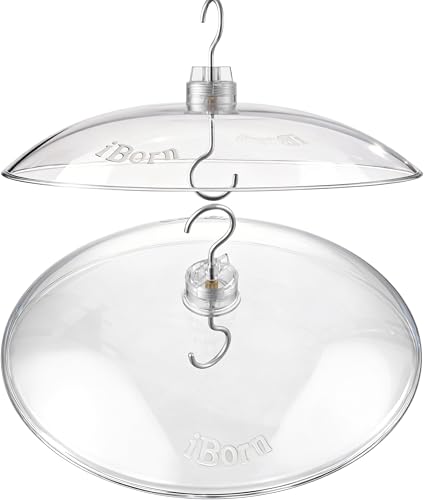
iBorn Baffles for Bird Feeders, 13” Bird Feeder Cover for Rain Guard, Birds Feeders Rain Guard, Full Protection for Feeders for Outdoors, Chew-Proof Polycarbonate, Pack of 2, Transparent
- Large 13-inch Size: Provides full protection for feeders
- All-around Weather Defense: Prevents rain and snow from soaking seeds
- Integrated Central Hook: Ensures seamless protection against water ingress
As an affiliate, we earn on qualifying purchases.
As an affiliate, we earn on qualifying purchases.
How Proper Feeder Placement Saves Money and Keeps Animals Healthy
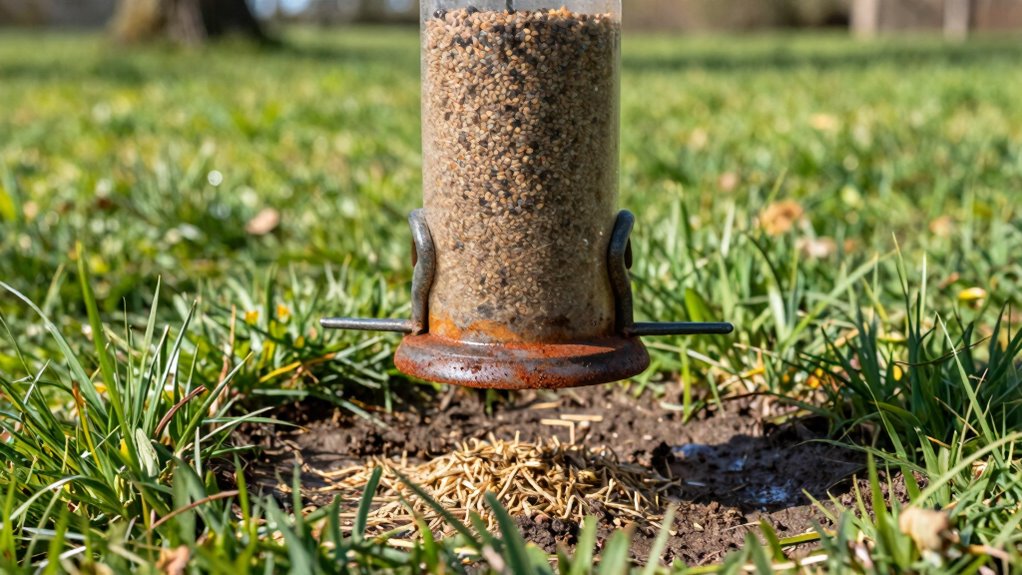
Proper mineral feeder placement can considerably reduce feed waste and prevent animals from becoming stressed or injured. When you position feeders correctly, you promote better mineral absorption, ensuring animals get the nutrients they need without excess spillage. Correct placement also influences animal behavior, encouraging natural grazing and reducing aggressive competition at feeders. This stability minimizes injuries caused by fighting or trampling, keeping your herd healthier. Additionally, by preventing feed from becoming contaminated or spoiled, you save money on wasted supplements. Proper placement makes your feeding system more efficient, leading to healthier animals and lower costs. When animals can easily access minerals in a calm environment, their overall well-being improves, supporting better growth, reproduction, and productivity. Implementing correct placement techniques based on animal habits and environment can further enhance feeding efficiency and safety. Understanding animal behavior patterns can help you optimize feeder location for better results and more sustainable feeding practices. Proper placement also reduces the likelihood of rain and trampling damaging the feed, further enhancing feed preservation.
Where Are the Best Spots to Place Mineral Feeders to Prevent Rain Damage
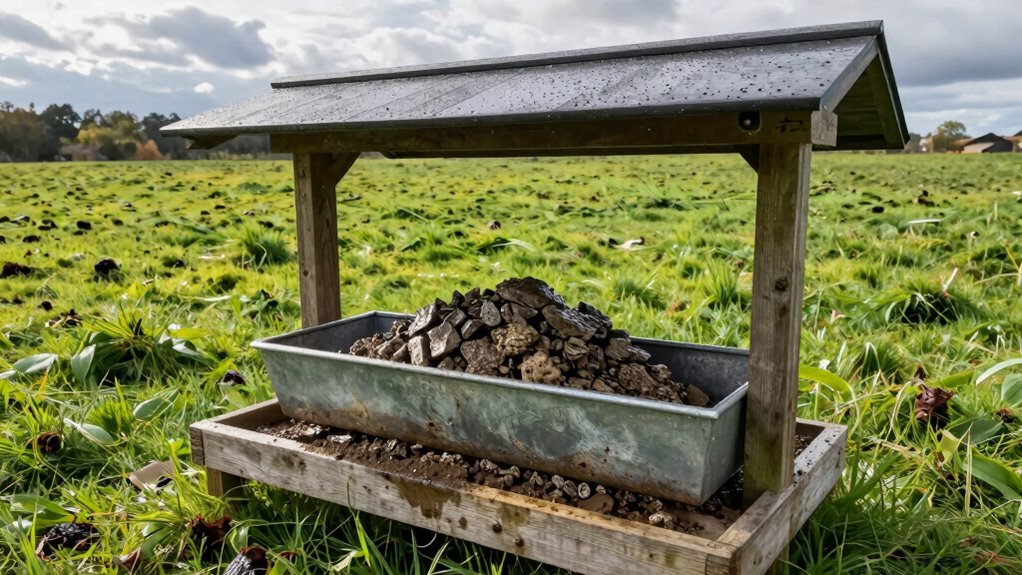
To protect mineral feeders from rain damage, you should place them in elevated, well-drained areas away from standing water or low-lying spots where water tends to collect. These locations help manage water runoff, preventing rain from pooling around the feeder and causing spoilage. Look for spots with natural or artificial shade coverage, such as under trees or near structures, to shield feeders from direct sunlight and reduce moisture exposure. Avoid placing feeders in depressions or flat areas prone to flooding, as continuous water exposure accelerates rust and spoilage. Using at‑home tech like weather-resistant enclosures or protective covers can further extend the lifespan of your feeders. Additionally, observing local weather patterns can help you choose the most suitable placement based on seasonal rainfall. Being aware of storm season trends can help you anticipate heavy rain periods and adjust feeder placement accordingly. Proper placement in high, dry locations with some shade will keep mineral supplements dry, reduce waste, and extend the life of your feeders. Incorporating drainage solutions can help prevent water accumulation around the feeders, further minimizing rain damage. Regularly inspecting your water runoff management strategies ensures continued protection of your feeders during heavy rains. Proper placement minimizes rain damage and keeps your animals healthy.
Common Mistakes in Mineral Feeder Placement You Want to Avoid
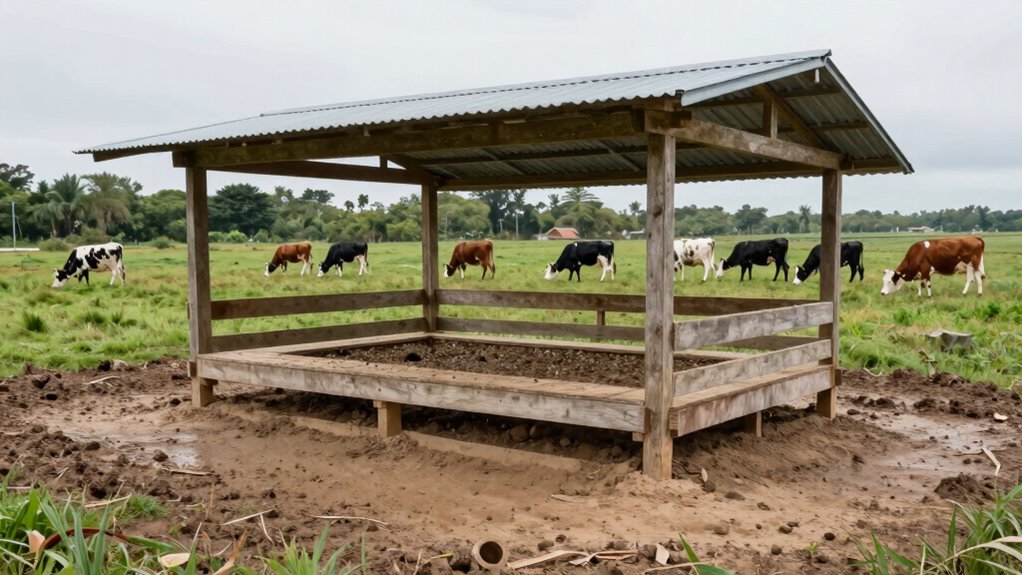
Avoid neglecting shelter design, as poor protection can spoil mineral feeders quickly. Poor drainage placement can cause water to pool, leading to rust and contamination. Ignoring animal traffic patterns might result in feeders being overlooked or damaged, so plan placement carefully. Additionally, considering cookie management and compliance can help ensure your setup aligns with best practices for maintaining a safe and effective feeding environment. Proper drainage systems are essential to prevent water accumulation and preserve feeder longevity. Implementing architectural solutions can also enhance shelter durability and protect against weather elements, prolonging the life of your feeders. Regular inspection routines are crucial to catching potential issues early and preventing costly damage, ensuring feeders remain in optimal condition.
Inadequate Shelter Design
Inadequate shelter design can substantially impact how effectively animals access mineral feeders, leading to wasted feed and reduced intake. Choosing the right shelter materials is vital; flimsy or poorly constructed structures won’t withstand weather conditions and can collapse or create gaps. Weather considerations, such as wind, rain, and snow, should guide your shelter design. Properly designed shelters protect animals from rain and harsh elements, encouraging consistent mineral intake. Avoid open-sided or poorly ventilated shelters that trap moisture or allow wind to blow in, which can discourage animals from approaching. A sturdy, weather-resistant shelter with appropriate materials ensures animals stay dry and comfortable, maximizing mineral consumption and minimizing feed wastage. Good shelter design is a fundamental element in effective mineral feeder placement. Additionally, understanding pool hydraulics can help optimize shelter placement for better protection and durability in outdoor settings. Incorporating proper drainage systems is also crucial to prevent water accumulation around feeders, further protecting the feed and animals. Proper shelter positioning should also consider local climate patterns to ensure maximum effectiveness throughout different seasons.
Poor Drainage Placement
Poor drainage around mineral feeders can quickly turn a good placement into a problem. If you don’t consider proper drainage systems, water can pool around your feeders, leading to muddy, eroded areas that discourage animals from visiting. Poor runoff management allows rainwater to wash away minerals and degrade the surrounding soil, increasing maintenance costs. To avoid this, you should choose sites with natural slope or install drainage channels that direct excess water away from the feeders. Elevating the feeders slightly can also improve runoff flow. Proper drainage not only keeps the area dry and accessible but also prevents costly repairs and minimizes livestock trampling, ultimately saving you money and ensuring consistent mineral intake. Effective drainage systems help maintain soil stability and reduce erosion around the feeders. Additionally, understanding soil permeability can help you select the best placement to enhance drainage efficiency.
Ignoring Animal Traffic Patterns
Ignoring how animals naturally move and gather around feeders can lead to uneven mineral intake and increased wear on the placement site. Understanding animal behavior and grazing patterns helps you position feeders where animals naturally congregate, ensuring consistent access. If you place feeders in areas animals rarely visit, some may miss out on minerals, while others trample the ground, causing erosion and damage. Pay attention to their grazing routes and preferred resting spots to identify high-traffic areas. Properly considering animal movement also minimizes stress and competition, making mineral intake more efficient. Recognizing animal traffic patterns and adjusting feeder placement accordingly can significantly improve mineral consumption and land health. Additionally, observing grazing behavior helps you adapt your placement strategies to changing seasonal patterns. Being aware of seasonal grazing shifts ensures your placement remains effective throughout the year. Incorporating land topology and natural features can further direct animal movement toward your feeders and reduce land degradation.
How to Protect Feeders From Trampling and Minimize Mineral Waste
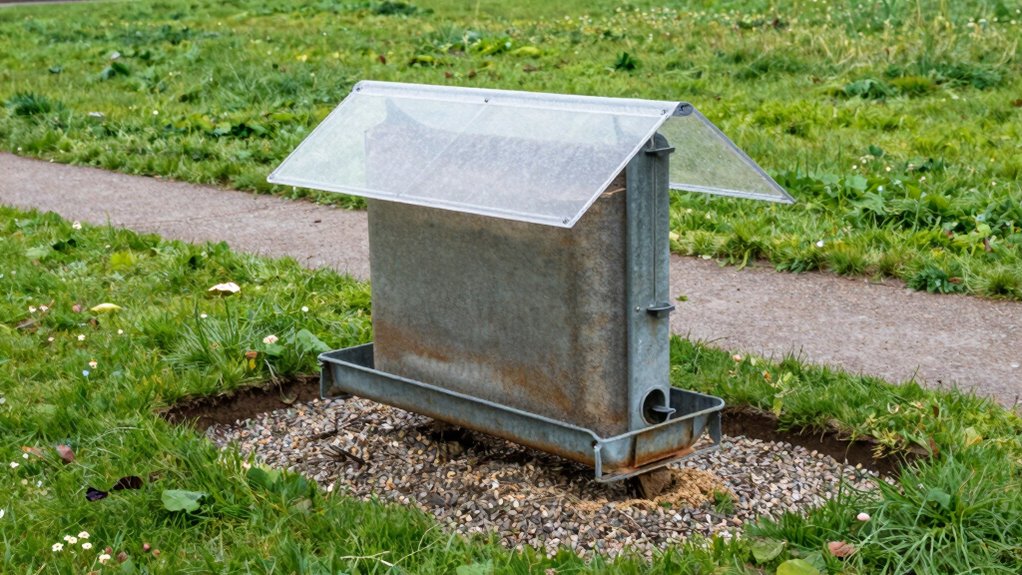
To protect your mineral feeders from trampling and reduce mineral waste, careful placement is essential. Position feeders where animals naturally gather, such as near water sources or along regular travel routes, to minimize unnecessary movement and trampling. Using a sturdy, well-anchored feeder can also prevent tipping and destruction. Consider installing feeders on stable ground or platforms to keep them dry and accessible, reducing spoilage from rain and mud. Understanding animal behavior helps you anticipate how they approach feeders, encouraging gentle, controlled access rather than frantic feeding that causes waste. By strategically placing feeders and selecting durable designs, you can improve mineral consumption efficiency, lower waste, and extend the lifespan of your feeders—all while keeping your cattle comfortable and minimizing unnecessary damage.
Are Elevated or Covered Feeders Better for Rain Protection?

When choosing between elevated or covered feeders for rain protection, you need to take into account what’s more important for your herd. Elevated feeders keep rainwater out, preventing mineral dilution, but covered feeders can minimize trampling damage. Knowing the advantages of each helps you decide which option best suits your needs.
Elevated Feeders Prevent Rainwater
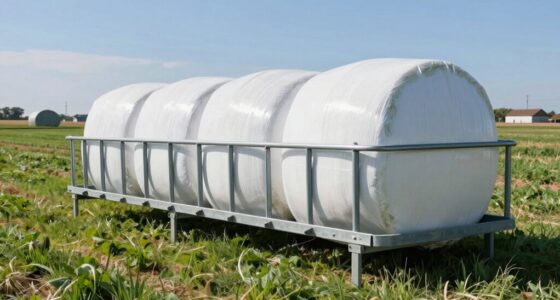
Elevated feeders are effective at preventing rainwater from contaminating feed because they keep the feed off the ground and away from puddles. By reducing contact with pooled water, you minimize the risk of spoilage and mold growth. Proper soil testing around your feeders helps identify drainage issues that could still allow water to collect nearby. Ensuring soil is well-drained prevents runoff from seeping into the feed area. Additionally, mineral mixing should be done carefully to avoid creating muddy conditions that attract water. Elevated feeders also make it easier to keep the feed dry during heavy rain, saving money by preventing waste. Overall, raising your feeders is a simple, effective way to protect feed quality and reduce losses caused by rainwater.
Covered Feeders Reduce Trampling
Covered feeders effectively reduce trampling by providing a designated, protected space for animals to access their feed. By implementing weatherproofing strategies, you prevent animals from knocking over or trampling the feeder, which minimizes damage and feed waste. Covered feeders also keep feed dry and clean, encouraging animals to eat calmly without rushing or crowding. When considering aesthetic considerations, choose covers that blend with your farm’s overall look to maintain visual appeal. Elevated or covered feeders offer better rain protection and reduce the risk of muddy, trampled feed areas. The right design encourages calmer behavior, less waste, and healthier animals. Overall, installing covered feeders is a straightforward way to improve feed management, protect your investment, and promote a more efficient feeding environment.
How to Monitor and Adjust Feeder Placement for Optimal Mineral Intake

Monitoring and adjusting feeder placement is essential to ensuring your livestock receive the right amount of minerals. Regularly observe how animals interact with the feeders and identify any issues like water contamination or uneven mineral intake. To optimize placement, consider these steps:
- Check if feeders are near water sources to prevent water contamination.
- Adjust placement based on feeding schedule times to maximize intake.
- Move feeders away from trampling zones to reduce damage and loss.
- Observe mineral consumption patterns to identify low intake areas.
Extra Tips to Improve Mineral Efficiency and Reduce Losses

To improve mineral efficiency and minimize losses, focus on ensuring that minerals are readily accessible and less prone to spillage or contamination. Proper placement, combined with good soil health, helps maintain mineral quality. Adjust your feed formulation to include balanced minerals that match your herd’s needs, reducing waste. Consider using mineral feeders with tight-fitting lids or shields to prevent rain and trampling from contaminating or dispersing minerals. Additionally, regularly inspect and clean feeders to prevent buildup and spoilage. Incorporate these strategies to optimize mineral intake and reduce losses:
| Tip | Benefit | Implementation |
|---|---|---|
| Use covered feeders | Protects from rain, trampling | Install lids or shields |
| Adjust mineral placement | Enhances accessibility | Place near watering or feeding areas |
| Monitor soil health | Maintains mineral quality | Conduct soil tests regularly |
Frequently Asked Questions
How Often Should Mineral Feeders Be Checked for Damage or Wear?
You should perform maintenance checks on your mineral feeders at least once a month. During each wear inspection, look for any signs of damage, rust, or worn-out parts that could affect their functionality. Regular maintenance guarantees the feeders stay in good condition, preventing losses from rain or trampling. Staying consistent with these checks helps you catch issues early, saving money and keeping your livestock well-nourished.
What Are Signs That Mineral Feed Is Being Wasted or Spoiled?
Think of mineral feed as a treasure chest—you don’t want it to turn into a soggy, spoiled mess. Signs of mineral wastage and spoilage indicators include mold, a sour smell, or a slimy texture. If you notice animals avoiding the feeder or the mineral level dropping quickly, it’s time to check for contamination or spoilage. Regularly inspect and clean to keep your mineral treasure safe and effective.
Can Different Animal Species Share Mineral Feeders Safely?
Yes, different animal species can share mineral feeders safely if you consider species compatibility and use appropriate feeder design. Guarantee the feeder is sturdy and accessible for all species without causing stress or injury. You should also monitor their behavior to prevent aggressive competition. Properly designed feeders minimize spoilage, reduce waste, and promote healthy mineral intake across multiple species, saving you money and maintaining animal health.
How Does Seasonal Weather Affect Mineral Feeder Placement Strategies?
You should adjust mineral feeder placement based on seasonal moisture and temperature fluctuations. During wet seasons, place feeders in well-drained areas to prevent rain damage and minimize trampling. In hot, dry periods, locate feeders where animals naturally congregate for shade and water, encouraging consistent intake. Regularly monitor weather patterns and move feeders accordingly to safeguard your investment and ensure animals access minerals without waste or loss.
Are There Specific Materials That Best Resist Weathering and Trampling?
You should choose mineral feeders made from weatherproof materials like heavy-duty plastic, galvanized steel, or rubberized coatings, which resist rain and moisture. Opt for durable construction that can withstand trampling, such as reinforced frames or thick, impact-resistant materials. These options help prevent corrosion, damage, and wastage, ensuring your feeders last longer and reduce costs. Investing in weatherproof, durable feeders keeps your mineral supply protected and minimizes losses caused by weather and livestock activity.
Conclusion
Proper feeder placement saves you money and keeps your animals healthy, much like choosing the right spot prevents rain damage and trampling. When you avoid common mistakes and protect your feeders, you reduce waste and ensure consistent mineral intake. Think of your feeders as investments—elevate or cover them to shield from weather, and monitor regularly. With these simple steps, you turn potential losses into gains, making your operation more efficient and your animals happier.