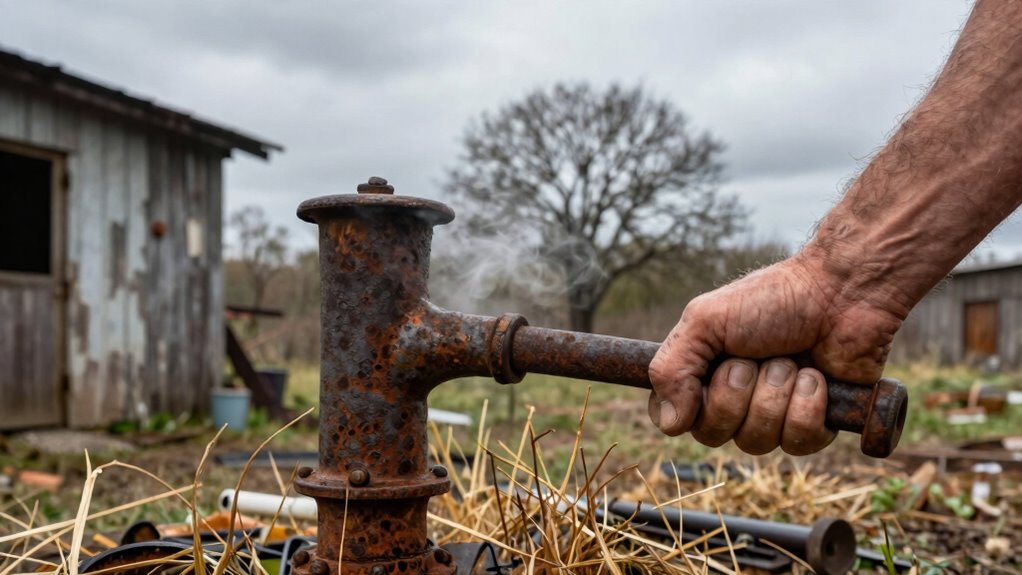
When your well stops working during an outage, first determine if the power loss affects only your property or the entire neighborhood. Avoid trying to manually operate the pump or resetting circuit breakers hastily. Check if power has been restored before inspecting the water system. If your well still isn’t functioning after power returns, there could be electrical or pressure issues to address. Continue exploring for tips on fixing common problems and preventing future outages.
Key Takeaways
- Confirm if the power outage affects only your property or the entire neighborhood.
- Avoid manually operating or forcing the well pump back on during the outage.
- Wait for power to be restored before attempting to use or troubleshoot the well system.
- Check if the circuit breaker has tripped after power returns; reset cautiously if needed.
- Observe water pressure and listen for unusual noises once power is back to identify potential issues.

Have you ever faced a well suddenly stopping during a power outage? It’s a situation that can feel overwhelming, especially if you rely on your well for daily water needs. When the power cuts out, your well pump stops working, which directly impacts your water supply. The first thing to do is to stay calm and evaluate the situation. Many water pressure issues during an outage are caused by the pump stopping unexpectedly, so understanding what’s happening can help you troubleshoot effectively.
Start by checking if the power outage is affecting only your property or if your entire neighborhood is without electricity. If it’s just your home, then the problem likely lies within your well system or electrical connections. If the outage is widespread, you’ll need to wait for power to be restored before your well can resume operation. In the meantime, avoid trying to operate the pump manually or force it back on, as this could cause further damage.
Check if the outage affects only your home or the whole neighborhood before troubleshooting your well system.
Once power is restored, you may notice that your water pressure seems lower or that the water isn’t flowing at all. This is common after outages and may require well pump troubleshooting. First, ensure the circuit breaker hasn’t tripped. Sometimes, a power surge or outage can cause the breaker to shut off, preventing the pump from functioning when power returns. Reset the breaker if needed, but do so cautiously. If resetting the breaker doesn’t restore water flow, check the pressure tank and pressure switch. Water pressure issues can sometimes stem from a malfunctioning pressure switch or a loss of air in the tank.
If the well pump still doesn’t turn on after power is restored, you might have a more complex problem, such as a burnt-out motor or a faulty relay. In this case, it’s best to contact a professional for well pump troubleshooting. Attempting to repair the pump yourself without proper knowledge can lead to safety hazards or further damage. Also, power outages can sometimes cause electrical components to fail, so inspecting the electrical connections is important. Additionally, understanding well system components can help you identify potential issues more effectively. Regular maintenance and understanding the signs of malfunction can prevent extended disruptions. Recognizing electrical issues early can save you time and money in repairs. Keep an eye out for warning signs like strange noises from the pump or persistent water pressure drops, which can indicate underlying issues needing expert attention. Being familiar with well pump troubleshooting steps can assist you in addressing minor problems before they escalate.

Blue Sea Systems 7054 Push Button Reset Only Quick Connect Circuit Breaker – 10 Amp
- Branch circuit protection: Suitable for 24-hour circuits
- Compact design: Enables high-density configurations
- Push-to-reset: Easy reset operation
As an affiliate, we earn on qualifying purchases.
As an affiliate, we earn on qualifying purchases.
Frequently Asked Questions
How Can I Tell if the Well Is the Problem or the Power Supply?
To determine if the well pump or power outage is the problem, first check if other electrical devices in your home are working. If they are, it’s likely a well pump issue. Turn off the well pump, then turn it back on. If it doesn’t start or makes strange noises, the pump may be faulty. If no power is available, it’s probably a power outage or electrical problem.
Should I Contact a Professional Immediately or Try Fixing It Myself?
Think of fixing your well like steering a stormy sea—you might have some skills, but unpredictable waves can cause trouble. If you’re comfortable with DIY troubleshooting, you can try simple checks like inspecting the power source or resetting the system. However, if you’re unsure or the problem persists, it’s best to seek professional consultation. This approach guarantees safety and prevents further damage, giving you peace of mind.
What Safety Precautions Should I Take When Inspecting the Well?
When inspecting your well, always prioritize safety by wearing proper safety gear like gloves, goggles, and a mask to prevent exposure to potential well contamination. Make certain the power is off before opening the well to avoid electrical hazards. Keep children and pets away, and work in a well-ventilated area. If you notice signs of contamination or damage, contact a professional immediately to assess and fix the issue safely.
How Long Can I Safely Use Stored Water During an Outage?
A stitch in time saves nine, so you should limit your water use promptly. You can safely use stored water for about 3-7 days, depending on your household’s needs. To extend its usability, practice water conservation and consider water filtration options if the stored water isn’t clean. After this period, it’s best to find alternative water sources or solutions to guarantee safety and health.
Are There Alternative Water Sources I Can Use Temporarily?
Yes, you can use alternative water sources temporarily, like rainwater harvesting. Collect rainwater in clean containers, but always filter it thoroughly before use. Use a reliable water filtration system to remove impurities and pathogens. Remember, rainwater isn’t always safe without treatment, so boil it or use proper filtration methods before drinking or cooking. This guarantees you stay safe while your well is out of service.
Conclusion
When your well stops working during an outage, remember that patience and quick action are your best allies. By checking your power supply, inspecting for obvious issues, and consulting a professional if needed, you can navigate this challenge with confidence. Don’t let frustration drown out hope—think of your well as a silent sentinel, waiting to spring back to life. With calm persistence, you’ll restore your water supply and turn this setback into a story of resilience.