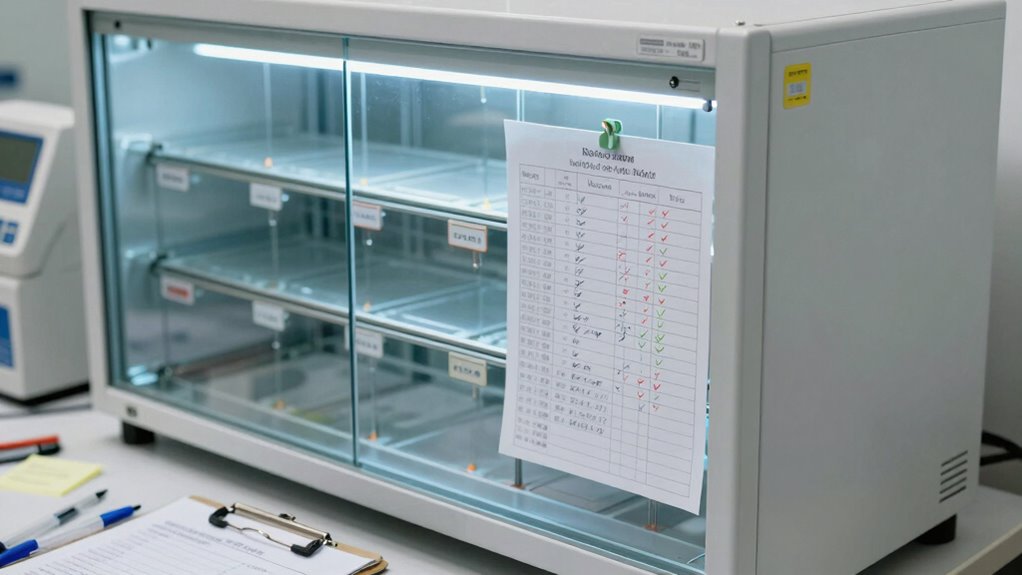

Using a record sheet for your cabinet incubator helps you keep precise track of temperature, humidity, and other critical conditions. Relying on guesswork or memory can lead to undetected fluctuations that affect hatch rates and equipment lifespan. Accurate logs let you identify problems early and maintain ideal settings consistently. By documenting routine checks and maintenance, you ensure reliable results and better decision-making. Keep going to discover how organized record-keeping can boost your incubation success even further.
Key Takeaways
- Record sheets ensure consistent monitoring of incubation parameters, reducing reliance on memory and guesswork.
- They enable quick identification of issues, preventing potential failures and ensuring optimal conditions.
- Accurate documentation helps track performance trends and supports proactive troubleshooting.
- Proper records facilitate maintenance scheduling, calibration checks, and equipment longevity.
- Using record sheets promotes adherence to industry standards and enhances incubation success rates.

Have you ever wondered how to guarantee ideal conditions and monitor progress effectively in your cabinet incubator? The key is maintaining consistent, reliable records through a well-organized record sheet. Relying on guesses or memory isn’t enough when it comes to incubator management. Instead, you need a system that promotes precise incubator maintenance and guarantees data accuracy. This way, you can quickly identify issues, track performance over time, and make informed decisions to enhance your incubation process.
Consistent, organized records are essential for maintaining optimal incubator conditions and tracking performance effectively.
A record sheet serves as your central tool for documenting temperature, humidity levels, and other critical parameters. When you keep detailed, accurate records, you’re not just tracking numbers—you’re creating a history that shows how your incubator performs daily, weekly, and monthly. This historical data helps you spot trends, identify deviations, and implement corrective measures promptly. Without a record sheet, you risk overlooking subtle changes that could impact the success of your incubation process. It’s the difference between reacting to problems after they occur and proactively preventing them through vigilant monitoring. Additionally, a well-maintained record sheet can help you comply with industry standards and ensure consistent results. Keeping accurate data also supports preventive maintenance strategies, which are essential for long-term reliability. Regular documentation of sensor calibration checks ensures that your readings remain precise and trustworthy. Furthermore, maintaining detailed records can help streamline troubleshooting by providing clear evidence of your incubator’s performance over time.
In terms of incubator maintenance, a record sheet becomes your best ally. Regularly logging calibration checks, cleaning schedules, and parts replacements ensures that you stay on top of routine upkeep. This consistent documentation helps prevent equipment failures, prolongs the lifespan of your incubator, and guarantees stable conditions. When every detail is recorded, you’re less likely to skip essential maintenance tasks or forget to verify sensor accuracy. Additionally, maintaining accurate data helps ensure reliable results and informed troubleshooting. Over time, these records serve as evidence that your incubator is functioning effectively, giving you confidence in your setup and results.
As an affiliate, we earn on qualifying purchases.
Frequently Asked Questions
How Often Should I Update My Cabinet Incubator Record Sheet?
You should update your cabinet incubator record sheet daily to maintain temperature consistency and track humidity levels. Regular updates help you spot fluctuations early and guarantee ideal conditions for your eggs. During egg candling, note development progress and any abnormalities. Frequent updates give you a clear picture of incubation trends, allowing you to make timely adjustments and increase hatch success rates. Consistency is key to successful hatching.
What Specific Data Points Should Be Included in the Record Sheet?
You should include specific data points like temperature tracking and humidity control in your record sheet. Record the exact temperature and humidity levels at regular intervals to guarantee ideal hatch conditions. Also, note any adjustments made and observe any fluctuations. This detailed info helps you monitor trends, catch issues early, and maintain consistent incubation conditions, increasing hatch success and making troubleshooting much easier.
Can Digital Record Sheets Improve Incubation Accuracy?
Digital record sheets can substantially improve incubation accuracy by providing real-time data on egg hatching progress and incubator maintenance. You can easily track temperature, humidity, and turning schedules, reducing human error. This precise monitoring helps you identify issues early, ensuring ideal conditions for eggs. Overall, digital records streamline your routine, making it easier to maintain consistency and increase hatch success rates.
How Do I Troubleshoot Errors Found in the Record Sheet?
Like troubleshooting a vintage radio, you start by reviewing your error logging carefully. Check if equipment calibration is accurate—miscalibrated thermostats or sensors often cause errors. Cross-verify recorded data against actual conditions, then recalibrate if needed. Document any fixes in your record sheet. This process helps identify recurring issues and guarantees your incubator maintains precise temperature and humidity levels, improving overall incubation success.
Are There Templates Available for Cabinet Incubator Record Sheets?
Yes, you can find templates for cabinet incubator record sheets online. These templates help with effective incubator maintenance and guarantee precise record keeping, which is crucial for tracking temperature, humidity, and incubation cycles. Using a standardized record sheet simplifies troubleshooting errors and maintains consistency. Downloading or customizing a template ensures you’re systematically recording essential data, making it easier to identify issues and keep your incubator running smoothly.
Conclusion
Think of your cabinet incubator as a finely tuned orchestra—without a proper sheet music, the harmony falters. Your record sheet is that essential score, guiding each note and ensuring everything stays in sync. By keeping detailed records, you’re the conductor who knows exactly when to adjust, when to listen, and when to let the music flow. Don’t leave your success to chance—let your record sheet be the melody that leads to hatchery harmony.