
As a livestock owner, you should know how to assess injuries quickly, starting with identifying if a wound is superficial or severe. Clean any dirt or debris with saline or clean water, avoiding harsh chemicals. Apply antiseptic ointment and cover the wound with a sterile bandage, ensuring it’s not too tight. Keep the animal calm, limit movement, and regularly monitor for signs of infection like swelling or foul odor. Continuing will help you master essential first-aid habits to keep your animals safe.

Get garden gear delivered free with Prime
- Fast, free delivery on millions of items
- Prime Video, Amazon Music and more included
- Member-only deals all year
Key Takeaways
- Regularly inspect livestock for injuries and promptly clean and disinfect wounds to prevent infection.
- Keep a well-stocked first-aid kit with antiseptics, bandages, and wound care supplies accessible.
- Learn to recognize signs of pain or distress to provide timely assistance and prevent worsening injuries.
- Ensure animals are calm and restrained during treatment to reduce stress and prevent further harm.
- Educate yourself on injury prevention techniques and proper wound management for faster recovery.
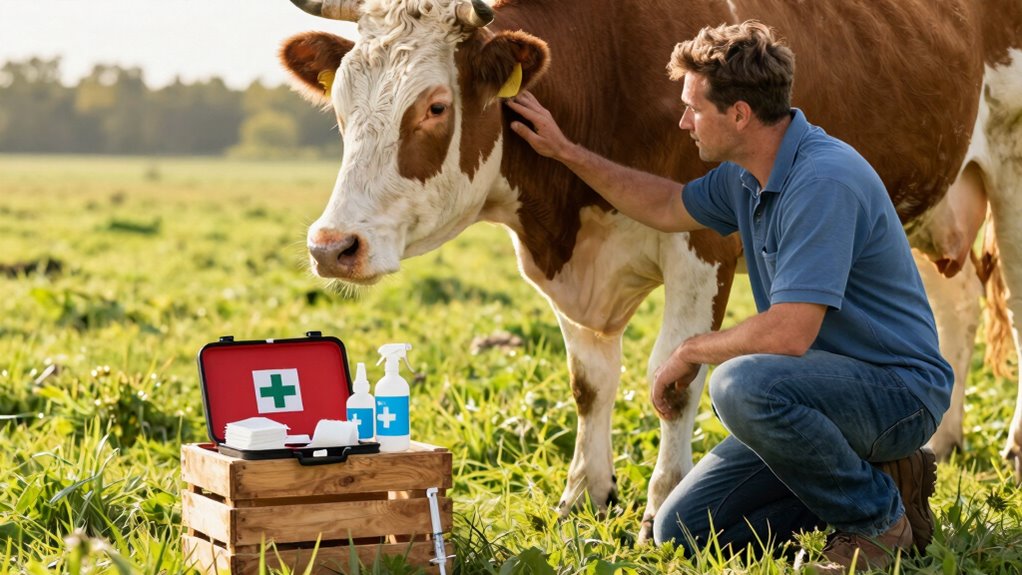
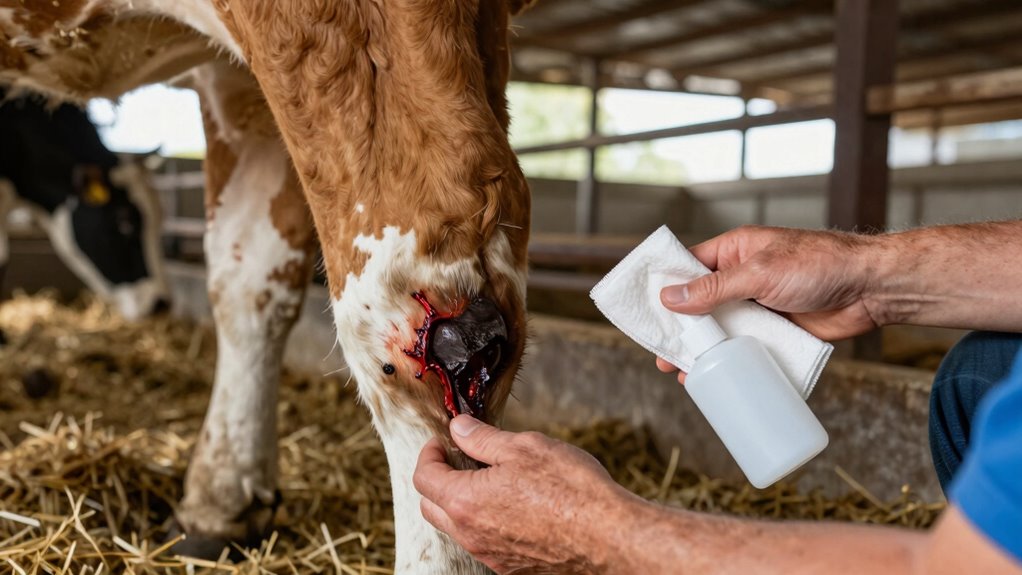
When an injury happens, your first step is to assess the extent of the damage. For superficial cuts or scrapes, gently clean the wound with saline or clean water to remove dirt and debris. Avoid using harsh chemicals that could irritate the tissue. After cleaning, apply an antiseptic ointment and cover the wound with a sterile bandage. Make sure the bandage isn’t too tight, as this can restrict circulation. For deeper or more severe wounds, it’s crucial to seek veterinary assistance promptly. While waiting for help, keep the animal calm and prevent it from aggravating the injury by limiting movement. Additionally, understanding biodiversity and the specific needs of different livestock can help in recognizing and preventing injuries caused by environmental factors. Recognizing animal behavior signs associated with pain or distress can also aid in early intervention, preventing minor injuries from worsening. Learning about injury prevention techniques can further reduce the likelihood of accidents occurring in the first place.
Incorporating good wound management practices into your routine helps prevent infections and speeds healing. Always monitor the wound for signs of swelling, pus, or foul odor, which indicate infection. Change bandages regularly and keep the area clean. Educating yourself about common injuries and appropriate responses ensures you’re prepared to handle situations efficiently. Proper hygiene practices are essential to reduce the risk of infection and support faster recovery. Remember, swift, confident action can reduce pain, prevent infection, and save your livestock’s life. Being proactive with emergency preparedness and mastering wound management are essential habits every livestock owner should cultivate. These practices not only safeguard your animals’ health but also give you peace of mind, knowing you’re ready to handle emergencies effectively.
As an affiliate, we earn on qualifying purchases.
Frequently Asked Questions
What Are the Signs of Internal Injuries in Livestock?
You’ll notice signs of distress like difficulty breathing, swelling, or unusual behavior. Watch for internal bleeding, which may cause pale gums, rapid heartbeat, or blood in stool or vomit. If your livestock shows these signs, act quickly. Internal injuries can worsen without prompt attention. Keep a close eye on their behavior and physical condition, and seek veterinary help immediately if you suspect internal injuries or bleeding.
How Often Should I Check My Livestock for Injuries?
You should check your livestock for injuries at least twice daily, especially during morning and evening routines. Watch for changes in animal behavior, such as limping or reluctance to move, which could indicate injury. Regular inspections help with injury prevention and allow you to catch issues early. By staying vigilant and monitoring behavior closely, you guarantee your animals stay healthy and reduce the risk of more serious problems.
What Emergency Supplies Should I Keep on Hand?
You should keep a well-stocked first aid kit on hand with items like bandages, antiseptic, scissors, and gloves. Additionally, maintain a list of emergency contacts, including your veterinarian and local animal rescue services. This way, you’re prepared to handle injuries swiftly and effectively. Regularly check your supplies for expiration dates and restock as needed, ensuring you’re always ready for unexpected emergencies with your livestock.
When Should I Call a Veterinarian Instead of Treating Myself?
Think of calling a veterinarian as calling in a specialist when the situation’s beyond your toolbox. You should call a vet immediately if there’s severe bleeding, difficulty breathing, or a suspected fracture. Rely on emergency communication and consider veterinarian qualifications before attempting complex treatments. If you’re unsure or the injury is serious, don’t hesitate—professional help is the best bet to guarantee your livestock’s health and safety.
How Can I Prevent Common Livestock Injuries Effectively?
You can prevent common livestock injuries by implementing preventative measures like regular inspections, maintaining clean, safe environments, and using proper fencing. Follow animal safety protocols, such as providing adequate shelter and avoiding overcrowding, to minimize risks. Training yourself and any staff on these protocols guarantees everyone handles animals safely. Routine health checks also catch issues early, reducing injury chances and keeping your livestock healthier and more productive.
Conclusion
Mastering first-aid for your livestock is like holding a steady lighthouse beam in a stormy sea—guiding them safely back to calm waters. With quick, confident actions, you become the hero in their story, turning potential chaos into a tale of rescue and recovery. Remember, your knowledge and prompt care are the keys to safeguarding their health and your peace of mind. Stay prepared, stay vigilant—your livestock’s well-being depends on it.
Fall yard work Picks
leaf blowers
As an affiliate, we earn on qualifying purchases.