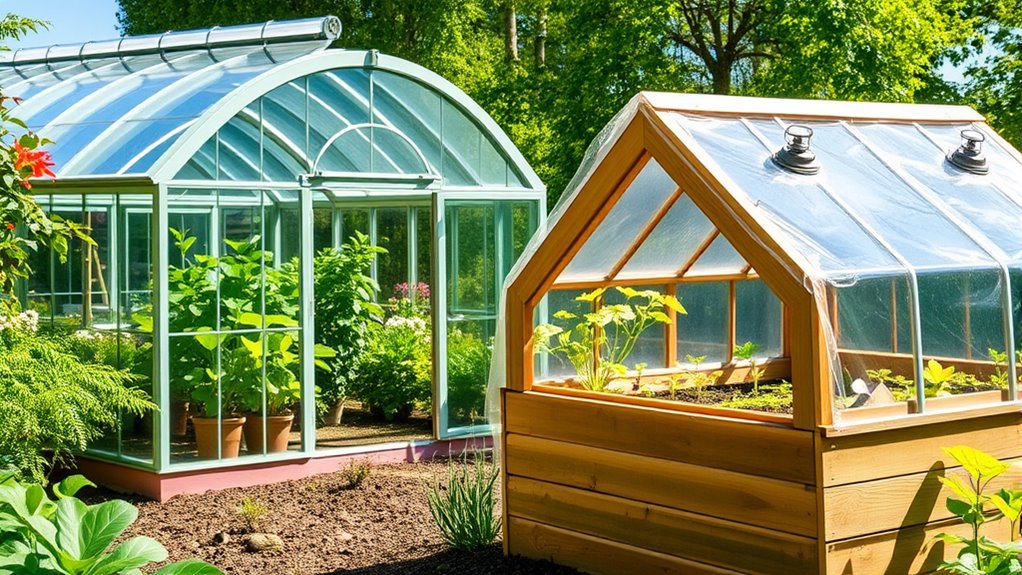

By using cold frames and greenhouses, you can extend your growing season and enjoy fresh produce longer. These structures create controlled environments that protect your plants from harsh weather, help regulate temperature and humidity, and allow you to start planting early or keep harvesting later. Choosing hardy plants and managing microclimates further boost your success. Keep exploring to discover more effective techniques and tips to maximize your growing potential year-round.

Get garden gear delivered free with Prime
- Fast, free delivery on millions of items
- Prime Video, Amazon Music and more included
- Member-only deals all year
Key Takeaways
- Use cold frames and greenhouses to create controlled environments that protect plants from harsh weather.
- Select hardy, fast-growing crops suited for extended seasons, like greens and cold-tolerant vegetables.
- Implement proper insulation, ventilation, and climate control to maintain optimal temperature and humidity levels.
- Adjust environmental conditions based on weather forecasts to prevent overheating or frost damage.
- Microclimate management and tailored setups help maximize harvests and prolong the growing period.
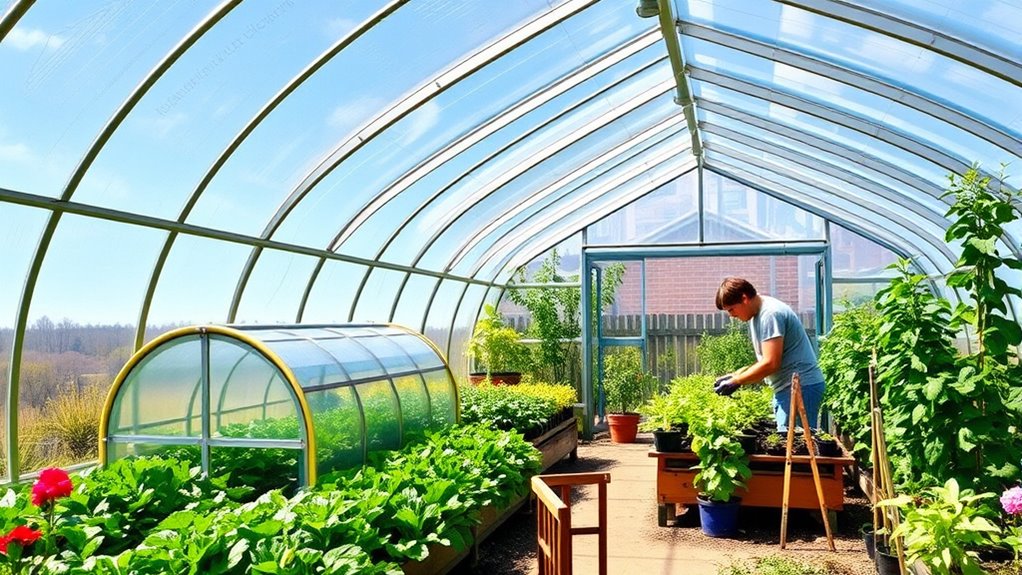
If you want to maximize your harvest and enjoy fresh produce longer into the year, extending your growing season is a smart strategy. One of the most effective ways to do this is by using cold frames and greenhouses, which create controlled environments that protect your plants from harsh weather. To succeed, you need to focus on plant selection carefully. Choosing hardy varieties that can tolerate cooler temperatures or have a shorter growing period allows you to start earlier in spring and extend into fall. For example, cold-tolerant greens like spinach, kale, and lettuce thrive in these setups, giving you fresh greens well beyond the typical growing season. Additionally, selecting plants suited for your climate helps you adapt your garden to local conditions, minimizing the risk of frost damage and maximizing yields. Understanding your local climate conditions can help you tailor your greenhouse setup effectively for year-round growth. Proper microclimate management is essential for maintaining optimal conditions and encouraging healthy plant development throughout the extended season. A well-designed ventilation system can help control humidity and temperature, reducing the risk of diseases and creating a healthier environment for your crops. Implementing climate adaptation techniques allows you to better respond to unpredictable weather patterns and safeguard your crops from adverse conditions. Proper insulation and ventilation are critical, allowing you to maintain ideal conditions and prevent overheating during warm spells. This way, you can extend your growing season without constantly battling temperature swings. Incorporating climate control techniques further enhances your ability to adapt to changing weather conditions and optimize plant growth. By customizing your setup based on climate conditions, you create a resilient environment that supports your plant selection choices and prolongs your harvest.
As an affiliate, we earn on qualifying purchases.
Frequently Asked Questions
What Are the Best Materials for Constructing Cold Frames?
You should choose materials that provide excellent insulation options and durability for your cold frame. Polycarbonate and acrylic panels are popular because they’re sturdy and insulate well, protecting your plants from cold temperatures. Wooden frames are durable but need proper sealing for insulation. Consider using double-glazed glass for maximum insulation, but keep in mind it’s heavier. Overall, prioritize materials that balance durability with effective insulation to extend your growing season successfully.
How Do I Prevent Overheating in Greenhouses During Summer?
When summer heat starts to play hide and seek, you can keep your greenhouse cozy by using clever ventilation strategies and shading techniques. Gentle airflow prevents overheating, making sure your plants stay happy. Shade cloths or roll-up sides offer relief from the sun’s intensity, creating a pleasant environment. By staying proactive with these methods, you guarantee your green oasis remains productive and inviting all season long.
Can Cold Frames Be Used for Starting Seedlings Indoors?
Yes, cold frames are excellent for seedling propagation and indoor gardening. You can start seedlings indoors in a cold frame, providing a controlled environment that protects young plants from harsh weather. This method speeds up germination and growth, giving your seedlings a head start before transplanting them outside. Cold frames are versatile tools that extend your planting season and improve success rates for your indoor gardening efforts.
What Are Common Pests in Greenhouses and How to Control Them?
You’ll want to identify common greenhouse pests like aphids, whiteflies, and spider mites through pest identification. Once identified, you can control them with natural methods such as introducing beneficial insects like ladybugs, using insecticidal soap, or applying neem oil. Regular inspection and maintaining good airflow also help prevent infestations. These strategies keep your greenhouse healthy without relying on chemical pesticides, ensuring a thriving, pest-free environment.
How Much Does It Typically Cost to Build a Greenhouse?
Ever wondered how much it costs to build a greenhouse? You’ll want to do a thorough cost analysis and budget planning first. On average, a simple DIY greenhouse can cost around $1,000 to $3,000, while larger, professional setups might range from $5,000 to $20,000 or more. Your choice of materials and size markedly impacts the price. Are you ready to start planning your ideal greenhouse?
Conclusion
By using cold frames and greenhouses, you can stretch your growing season well beyond the usual limits. These tools give you a head start in spring and a longer harvest in fall, helping your garden thrive year-round. Don’t let the weather hold you back — with a little effort, you can keep your green thumb busy no matter the season. Remember, the early bird catches the worm, so get started now and enjoy fresh produce longer!
Halloween Picks
halloween
As an affiliate, we earn on qualifying purchases.