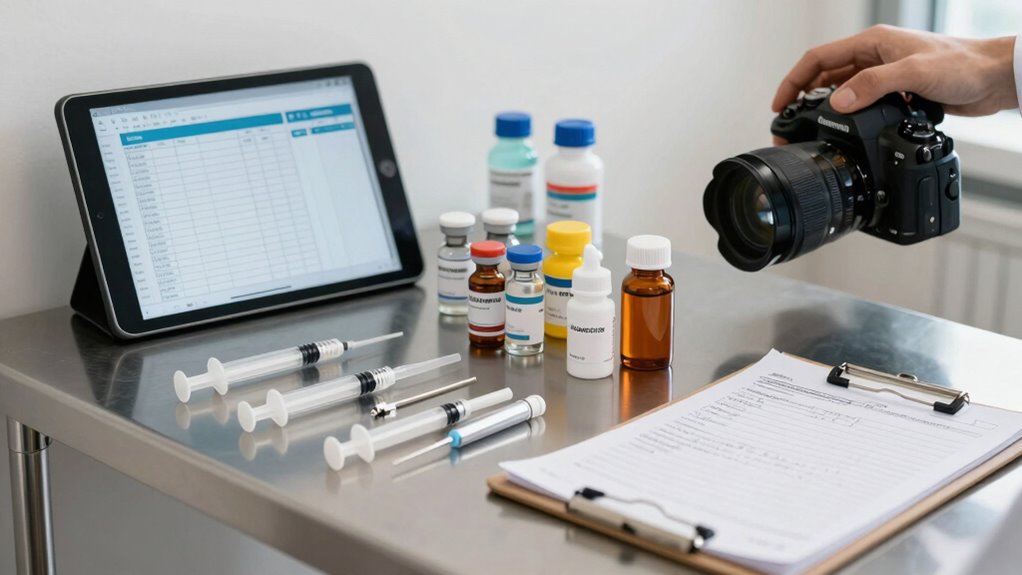

The best way to track vaccines, deworming, and treatments is by using a reliable record-keeping system tailored to your needs. You can opt for digital tools that send reminders and make data retrieval quick, or manual logs if you prefer physical records. Organize your records regularly and review them to guarantee no animal is overlooked. Keeping detailed, up-to-date records helps prevent missed treatments and boosts herd health—discover more ways to optimize your tracking methods below.
Key Takeaways
- Use a digital record-keeping system with automated reminders for timely vaccinations and treatments.
- Maintain organized logs detailing each animal’s treatment history, dates, and medication specifics.
- Implement regular reviews to identify gaps and adjust schedules for optimal health management.
- Combine manual logs with digital tools to enhance accessibility and ensure data accuracy.
- Keep detailed, up-to-date records to facilitate veterinary visits and ensure regulatory compliance.
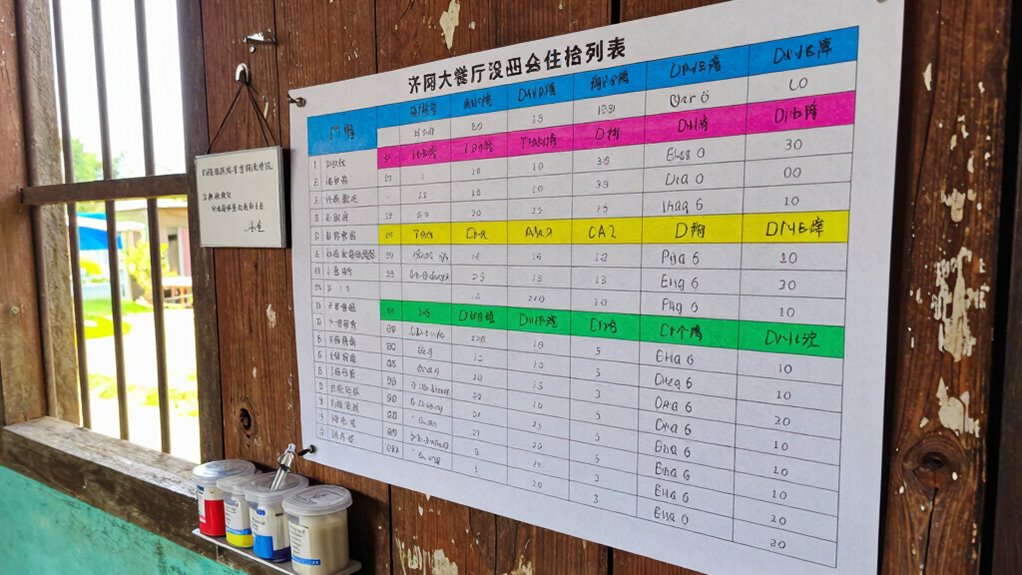
Have you ever wondered how farmers and veterinarians guarantee animals stay healthy? It all comes down to meticulous tracking of vaccines, deworming, and treatments. Staying organized isn’t just about keeping records; it’s about ensuring each animal receives the right care at the right time. One of the most effective ways to do this is by maintaining detailed vaccine schedules. These schedules help you plan when each animal needs their vaccines, preventing missed doses that could leave them vulnerable to disease. By following a clear schedule, you reduce the risk of outbreaks and keep your herd or flock protected.
But having a schedule isn’t enough if you don’t record what’s been done. Treatment records serve as a reliable history of every vaccine, deworming, or medication administered. When you keep detailed records, you can easily track which animals have been treated, when, and with what. This information becomes invaluable if an animal shows signs of illness or if you need to verify treatment history for health inspections or sales. Plus, treatment records help prevent over- or under-treatment, ensuring animals aren’t receiving unnecessary medication or missing essential doses. Consistent record-keeping is especially important in health management, as it allows for better decision-making and timely interventions.
The best way to manage these records is through a systematic approach. Whether you prefer a physical logbook or digital software, consistency is key. Digital tools often offer reminders for upcoming vaccinations and treatments, reducing the chance of human error. They also make it easier to pull up historical data quickly, which is especially helpful during health emergencies. Proper record organization can significantly improve the accuracy and efficiency of your record-keeping process. Implementing automated alerts for upcoming treatments can further enhance your scheduling and ensure nothing is overlooked. On the other hand, paper records can work well if you keep them organized and up-to-date. Whichever method you choose, make it a habit to update the records immediately after each treatment or vaccination. Additionally, integrating digital record-keeping with manual logs can enhance accuracy and accessibility, especially in busy operations.
Integrating these practices into your routine improves overall animal health management. Regularly reviewing your vaccine schedules and treatment records ensures that no animal slips through the cracks. It helps you identify patterns, like which vaccines are most effective or when deworming should be repeated. Over time, this proactive approach reduces illness and enhances productivity. Additionally, clear records facilitate compliance with health regulations and make veterinary visits more efficient, since you can provide accurate, up-to-date information instantly. Proper record-keeping practices are essential for maintaining a healthy, productive herd and ensuring compliance with health standards.
digital vaccine record keeping system for livestock
As an affiliate, we earn on qualifying purchases.
As an affiliate, we earn on qualifying purchases.
Frequently Asked Questions
How Can Digital Tools Improve Vaccine Record Accuracy?
Digital tools improve vaccine record accuracy by enabling seamless digital integration, which reduces manual errors and guarantees real-time updates. You can easily validate data through automated checks, catching inconsistencies early. By using digital records, you gain a centralized, reliable system that minimizes mistakes, streamlines record-keeping, and enhances overall accuracy. This approach assures your vaccine, deworming, and treatment data stay precise, up-to-date, and easily accessible.
What Are the Privacy Concerns With Tracking Treatment Data?
You might feel like you’re walking a tightrope when tracking treatment data, as privacy concerns loom large. Data security is essential to prevent breaches, and consent management guarantees you’re in control of who accesses your info. Protecting sensitive data builds trust, but you need robust systems to guard against misuse. Be aware of potential privacy pitfalls, and always stay informed about how your treatment records are managed and shared.
How Often Should Vaccine and Treatment Records Be Updated?
You should update vaccine and treatment records immediately after each appointment to guarantee accurate vaccine scheduling and treatment compliance. Regular updates help prevent missed doses and secure your pet stays protected. By keeping records current, you make it easier to follow recommended schedules, avoid lapses, and quickly access essential information in emergencies. Staying diligent with updates ensures your pet’s health remains a top priority and treatment plans stay on track.
What Is the Cost of Implementing Comprehensive Tracking Systems?
The cost of implementing extensive tracking systems varies depending on your scale and technology choice. Conducting a careful cost analysis helps you understand expenses for software, hardware, and training. Implementation challenges like data migration, staff training, and ongoing maintenance can increase costs. While initial investments might seem high, the long-term benefits, such as improved health management and reduced errors, often outweigh these challenges.
How Do Tracking Methods Vary Across Different Regions?
Tracking methods vary across regions mainly due to differences in regional infrastructure and cultural practices. In areas with strong digital infrastructure, electronic records and mobile apps are common, making tracking efficient. Conversely, regions with limited access rely on paper records or community-based approaches. Cultural practices influence record-keeping; some communities prefer verbal communication or traditional methods, which require tailored strategies to guarantee accurate and consistent tracking of vaccines, deworming, and treatments.
Conclusion
By keeping a detailed record of vaccines, deworming, and treatments, you’re the captain steering your health ship through stormy seas. Think of your logs as a lighthouse, guiding you safely past hidden dangers and ensuring every milestone is hit on time. With this simple yet powerful tool, you’ll navigate your wellness journey with confidence, turning chaos into clarity. So, chart your course today—your health’s bright beacon depends on it.